There are journeys measured in distance and others remembered through feeling: the low growl of an engine beneath an open sky, the anticipation of an unfamiliar road and the moment a mountain catches the last light of the day.
For Louis Vuitton, travel has always belonged to this more romantic world. Long before airports and express trains compressed the distance between one place and another, a journey was an event in itself. It required time, preparation and a certain spirit of adventure. Luggage was not merely packed; it was commissioned. Routes were plotted, cars were readied and every departure promised the possibility of discovery.
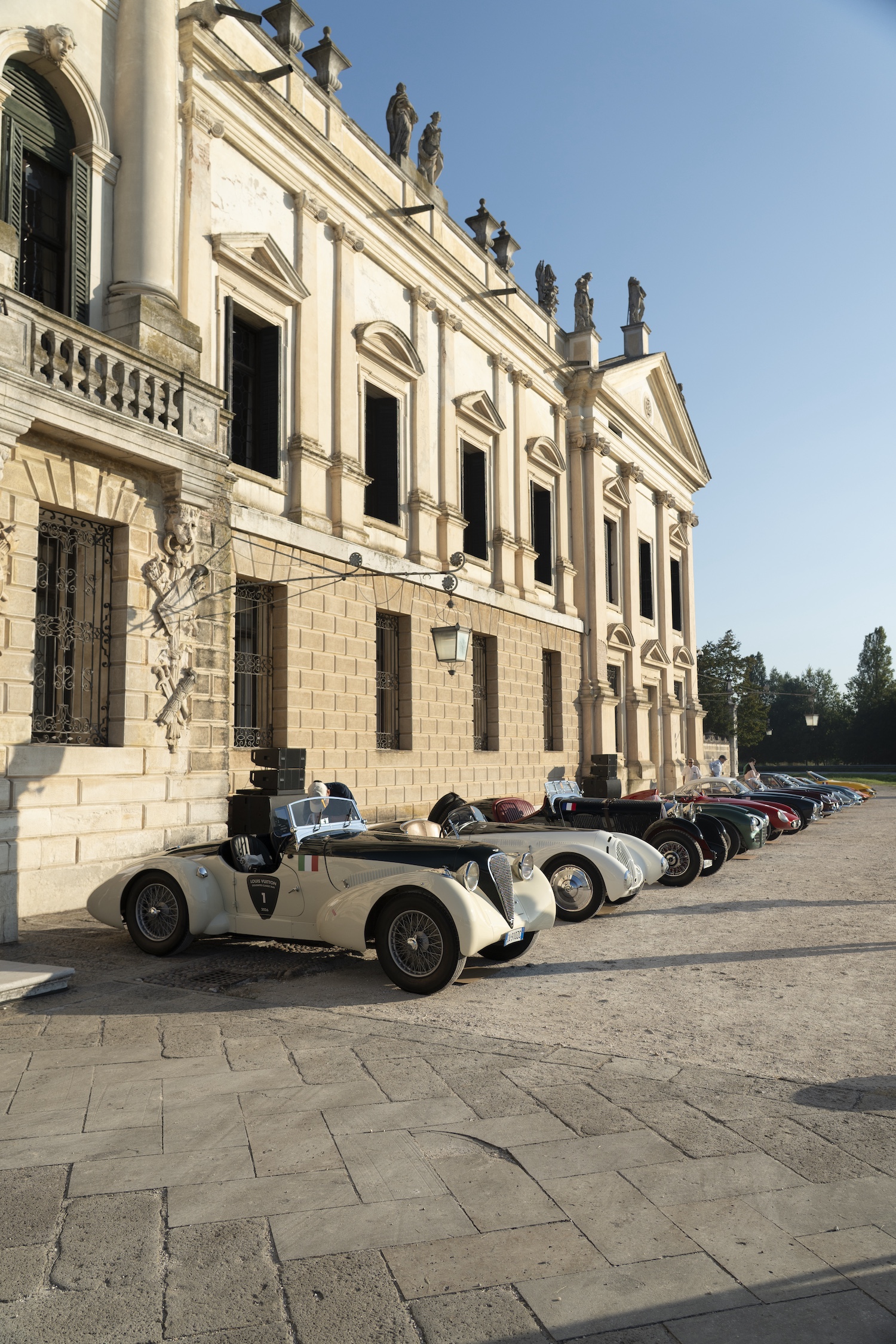
It was this almost-forgotten sense of the grand tour that returned for the Louis Vuitton Dolomites Classic Run 2026, a four-day journey beginning among the palaces and waterways of Venice before travelling through the dramatic peaks of the Dolomites and descending towards Monza, one of the most storied destinations in motorsport.
Across approximately 600 kilometres, a fleet of 22 exceptional vintage cars brought together engineering, design, cultural heritage and the enduring romance of the open road. These were not cars intended to remain motionless beneath museum lights. They arrived to be seen in motion, carrying the lives, races and adventures of decades past into a new chapter.
The Return Of The Grand Tour
The Louis Vuitton Classic Run has been part of the House’s history since 1993, when the Louis Vuitton Vintage Equator Run crossed Malaysia’s jungle landscapes and rubber plantations.
Further journeys followed: the Italia Classica rallies travelled through the vineyards and historic towns of Tuscany in 1995 and 1997; the 1998 Louis Vuitton Classic China Run traced a route from Dalian to Beijing through rice paddies and mountains; and the 2006 Boheme Run passed through the ancient forests and great cities of Central Europe, travelling from Budapest to Prague via Vienna.
The last Classic Run, the Serenissima Run of 2012, ended in Venice. Fourteen years later, Venice became the beginning.
It was a carefully chosen point of return. Rising from the lagoon with its marble façades, narrow canals and extraordinary concentration of artistic history, Venice is a city that seems to exist somewhere between reality and imagination. It offered the perfect prologue to a journey built around beauty, craftsmanship and the pleasures of moving through a landscape slowly enough to truly see it.
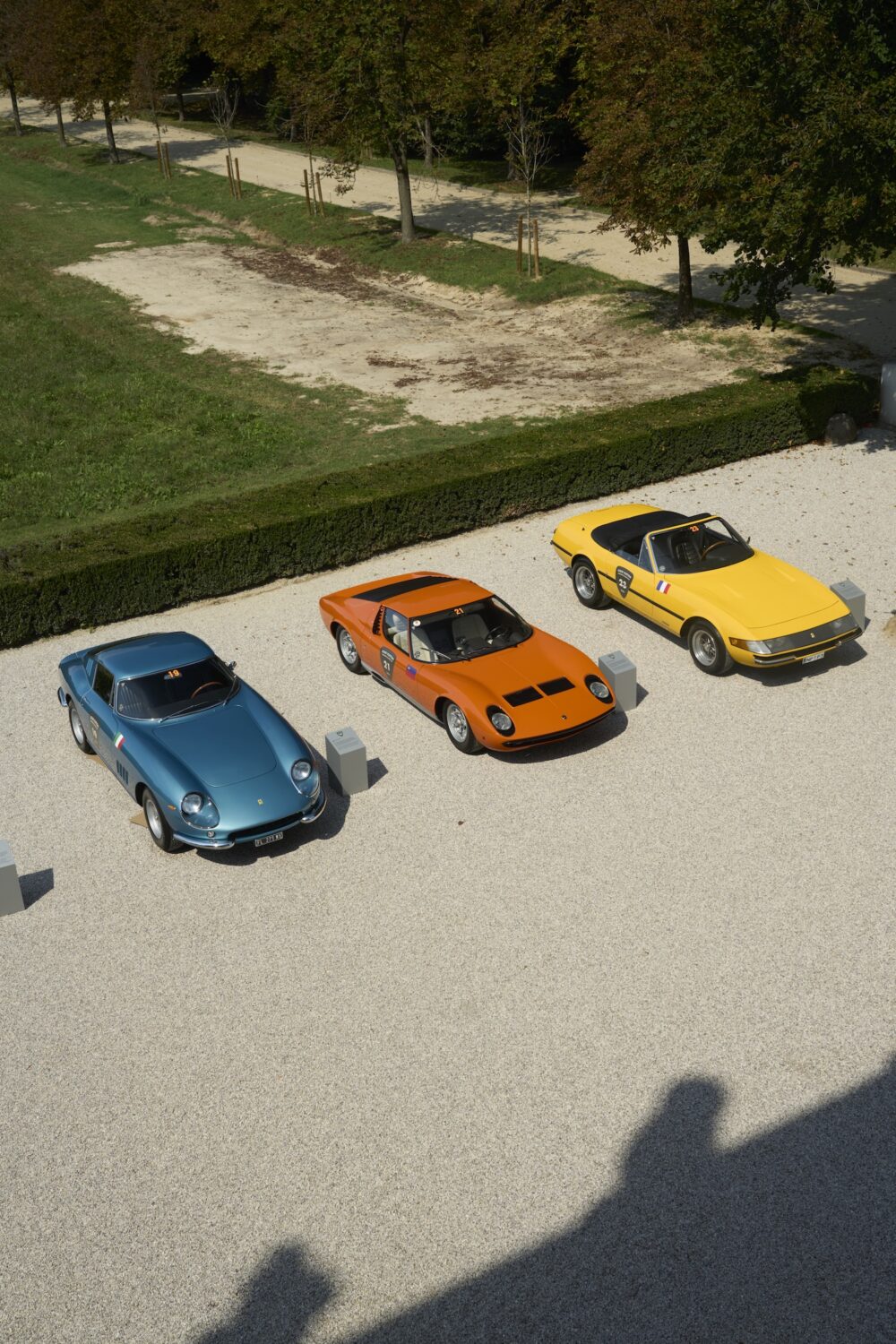
The opening chapter unfolded at Villa Pisani in Stra, known as the “Queen of Venetian Villas”. Built in 1720 and surrounded by almost 14 hectares of Versailles-inspired gardens, the monumental estate has hosted figures including Napoleon Bonaparte and members of the Habsburg royal family.
For the occasion, the Villa opened its doors to the public, revealing the fleet against a backdrop of neoclassical architecture and newly restored gardens. Twenty-two cars, spanning 1931 to 1969, stood within the historic estate: polished bodywork reflecting stone, sky and greenery; each bonnet concealing an entirely different story.
Louis Vuitton also partnered with the Venetian Heritage Foundation to support the restoration of Villa Pisani’s 18th-century Sala di Bacco, an ornate room created for musical performances and decorated by the Venetian painter Jacopo Guarana.
A few kilometres away, another expression of craftsmanship continues at Louis Vuitton’s shoe workshop in Fiesso d’Artico. Opened in 2009, the workshop is where each pair of shoes passes through almost 200 meticulous operations, combining hand-finished traditions with contemporary techniques. Its proximity to Villa Pisani seemed particularly fitting. On one side, historic cars shaped by coachbuilders and engineers; on the other, shoes constructed by artisans. Different objects, perhaps, but connected by the same belief that true luxury reveals itself through precision.
A Trophy Made To Travel
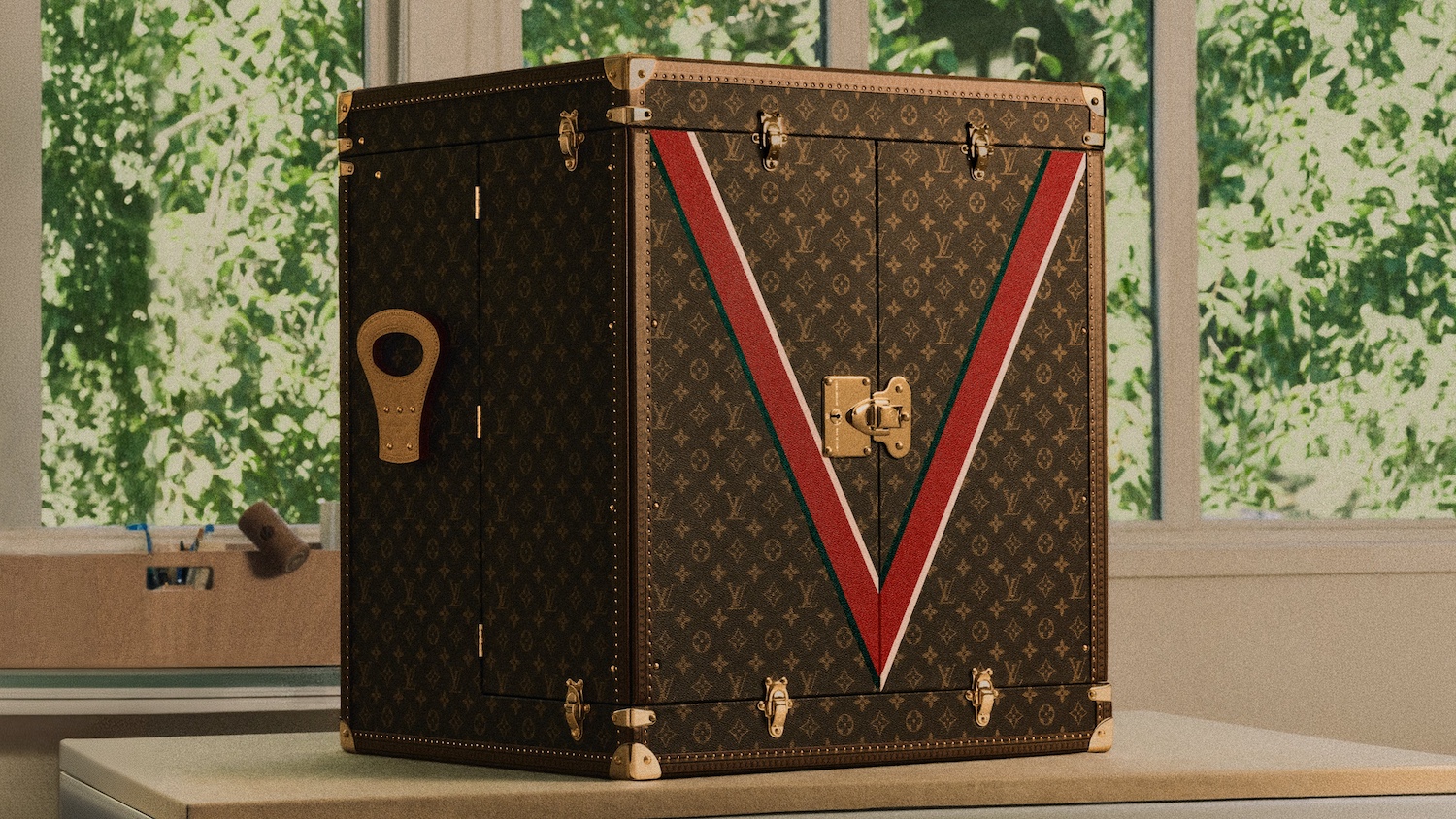
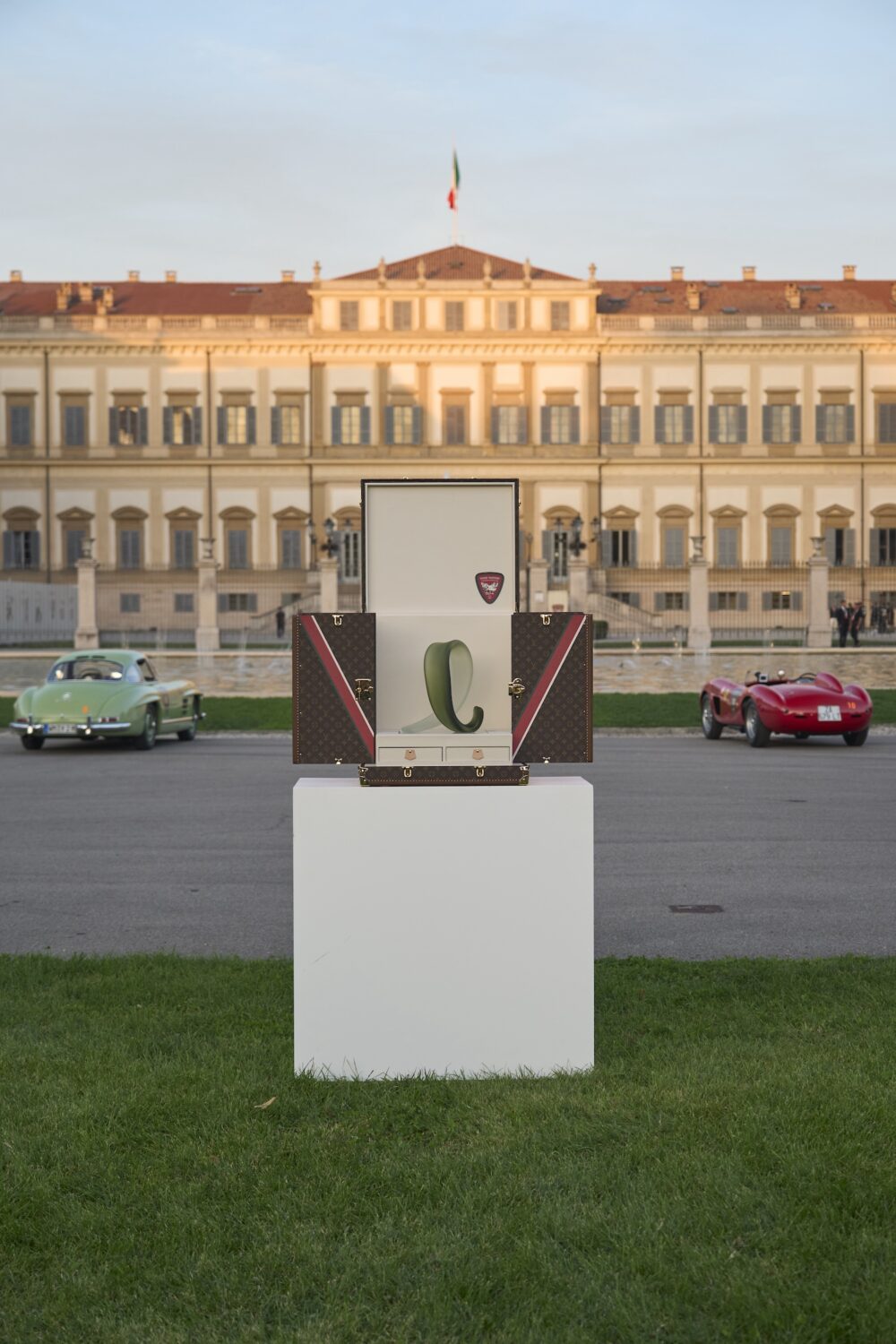
As dusk fell over Venice, the journey moved to the extraordinary surroundings of the Palazzo Ducale, where Louis Vuitton unveiled the trophy created for the Run and the bespoke trunk designed to protect it.
The reveal followed a performance imagined and staged by Fabio Cherstich, exploring movement, heritage and artistic metamorphosis. Within one of Venice’s most recognisable buildings, the golden age of travel was brought into conversation with contemporary art.
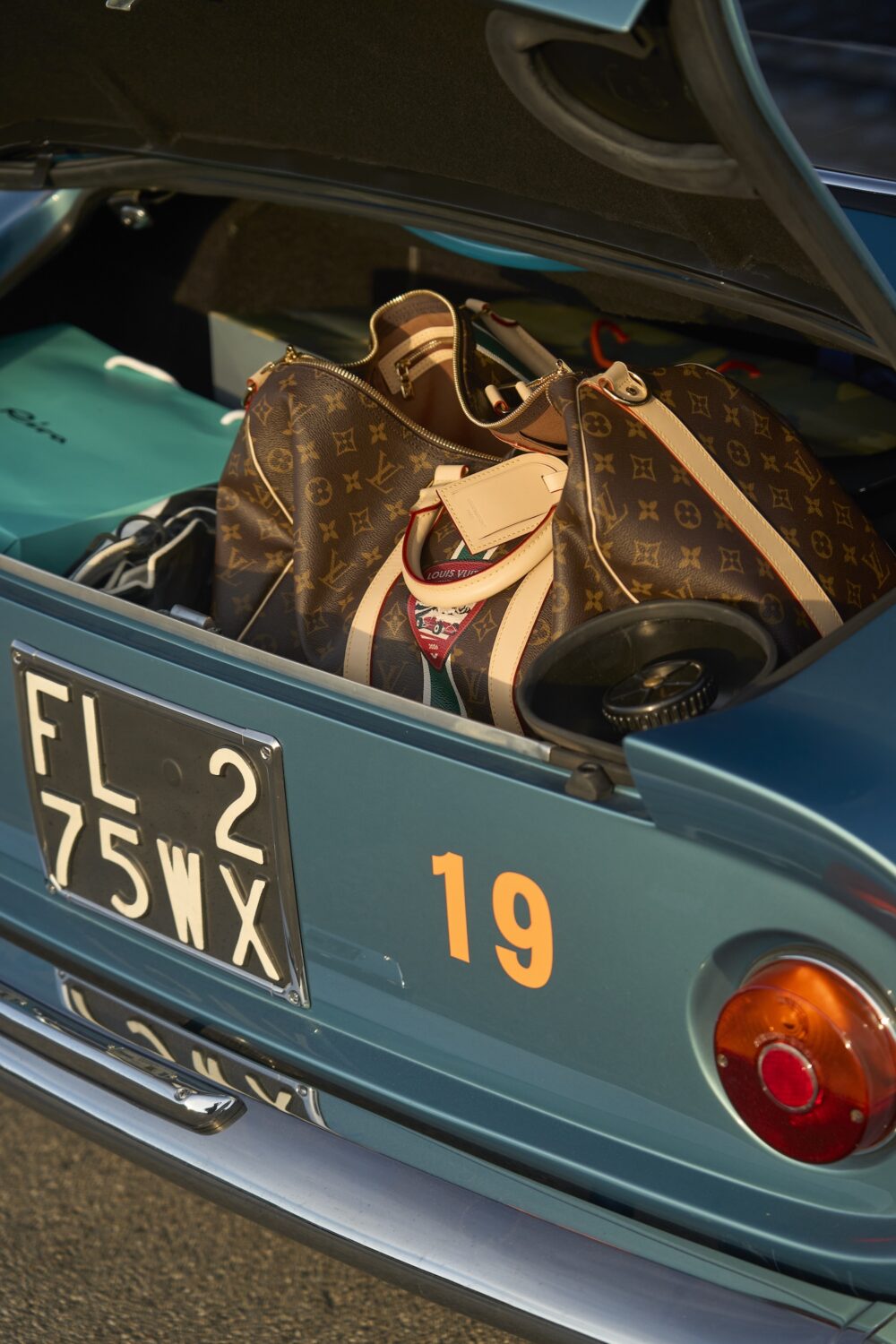
Commissioned from designer Sabine Marcelis and produced by Italian glassmaker Venini, the trophy was presented by Friend of the House Giulia Maenza. Its sculptural glass form appeared inside a handcrafted Louis Vuitton Trophy Trunk made at the House’s historic ateliers in Asnières-sur-Seine.
Covered in Monogram canvas, the trunk was marked with the unmistakable “V” for both “Victory” and “Vuitton”. Traditional lozines, golden brass corners and locks connected it to the construction codes that have defined Louis Vuitton trunks for generations.
The creation belongs to a tradition dating back to 1988, through which Louis Vuitton has produced trunks for some of the world’s most prestigious sporting trophies. From the FIFA World Cup and the Ballon d’Or to the America’s Cup, Formula 1 and tennis’s greatest championships, the House has repeatedly transformed protection into ceremony. The trophy does not simply arrive; it travels within an object worthy of its meaning.
The evening also honoured Louis Vuitton’s relationship with Venice’s Civic Museums. Through its partnership with the Fondazione MUVE, more than 200 artworks have been restored and returned to the city since 2013. It was another reminder that the Run was not taking place around Italy’s cultural heritage as a decorative backdrop. Preservation was woven into the journey itself.
When The Cars Awakened
The following morning, Villa Pisani changed character.
The serenity of the estate gave way to the sound of engines as the fleet prepared to leave Stra and begin its first official miles. For cars accustomed to concours lawns and private collections, the road offered a different kind of beauty. Chrome caught the morning light, doors closed, navigators studied their instructions and decades of automotive history rolled out towards the mountains.
The line-up represented some of the most significant years in 20th-century motoring. Among the earliest was a 1931 Bentley 8 Litre Vanden Plas Two-Seater Drophead, originally commissioned by the 22-year-old Lord Brougham & Vaux. Its lost one-off coachwork had been painstakingly recreated using the few surviving period photographs.
Alongside it was the 1931 Bugatti Type 51 Grand Prix, created as the successor to the legendary Type 35 and powered by a supercharged 2.3-litre straight-eight engine. Designed for competition, the Type 51 became part of motorsport history at Monaco in 1933, where Achille Varzi and Tazio Nuvolari spent the race exchanging the lead before Varzi took victory.
A 1939 Aston Martin C-Type Speed Model Roadster Bertelli, affectionately known as The Flying Pea, recalled an era when aerodynamics was beginning to change the shape of performance cars. One of only eight C-Type Speed Models built, it competed in the 1939 RAC Rally and had reached Le Mans before the outbreak of the Second World War brought international motor racing to a halt.
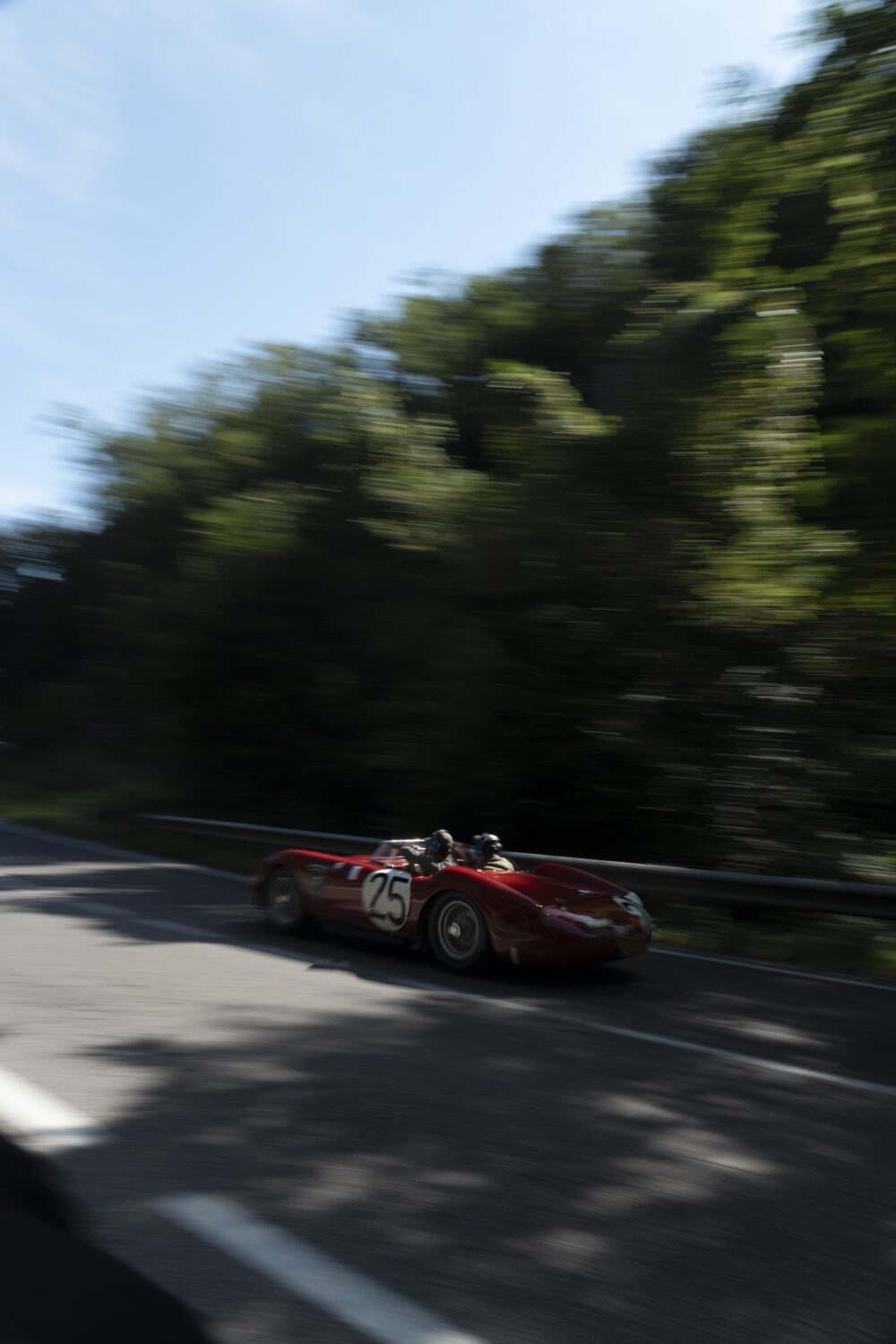
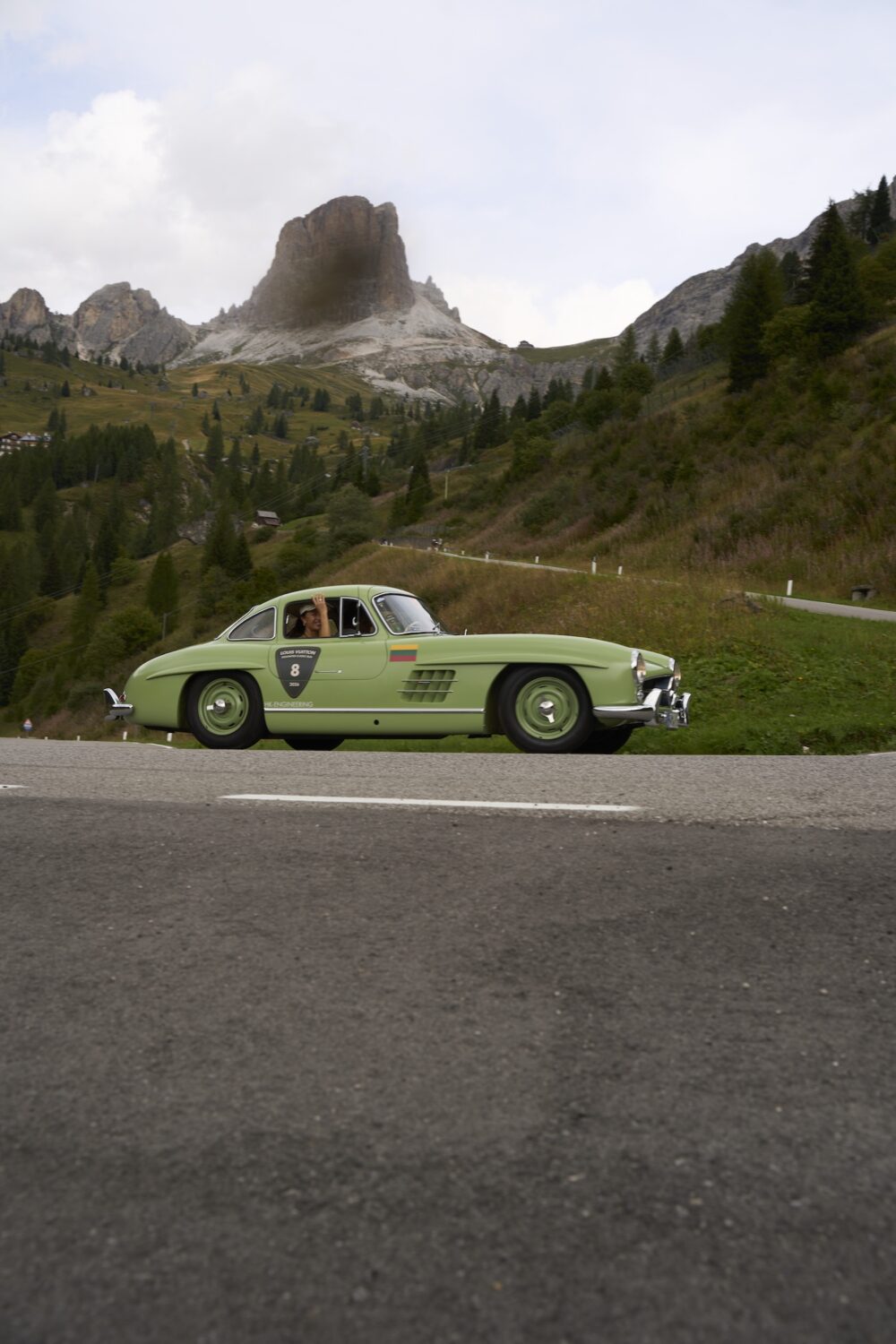
The post-war cars told stories of renewed optimism. A 1954 Mercedes-Benz 300 SL Gullwing, first shown publicly at the London Motor Show and purchased there by racing team owner Rob Walker, had spent almost two decades stored on a Sussex apple farm before its meticulous restoration.
The Ferrari contingent was remarkable. It included the 1955 Ferrari 750 Monza, one of only 32 examples produced; the Ferrari 500 TR Spyder Scaglietti, the first car to carry the Testa Rossa name; and both long- and short-wheelbase versions of the legendary Ferrari 250 GT California Spyder.
A 1956 Ferrari 250 GT Zagato had already participated in the Louis Vuitton Classic Serenissima Run in 2012, while its appearance in Michael Mann’s Ferrari connected its competition history with modern cinema.
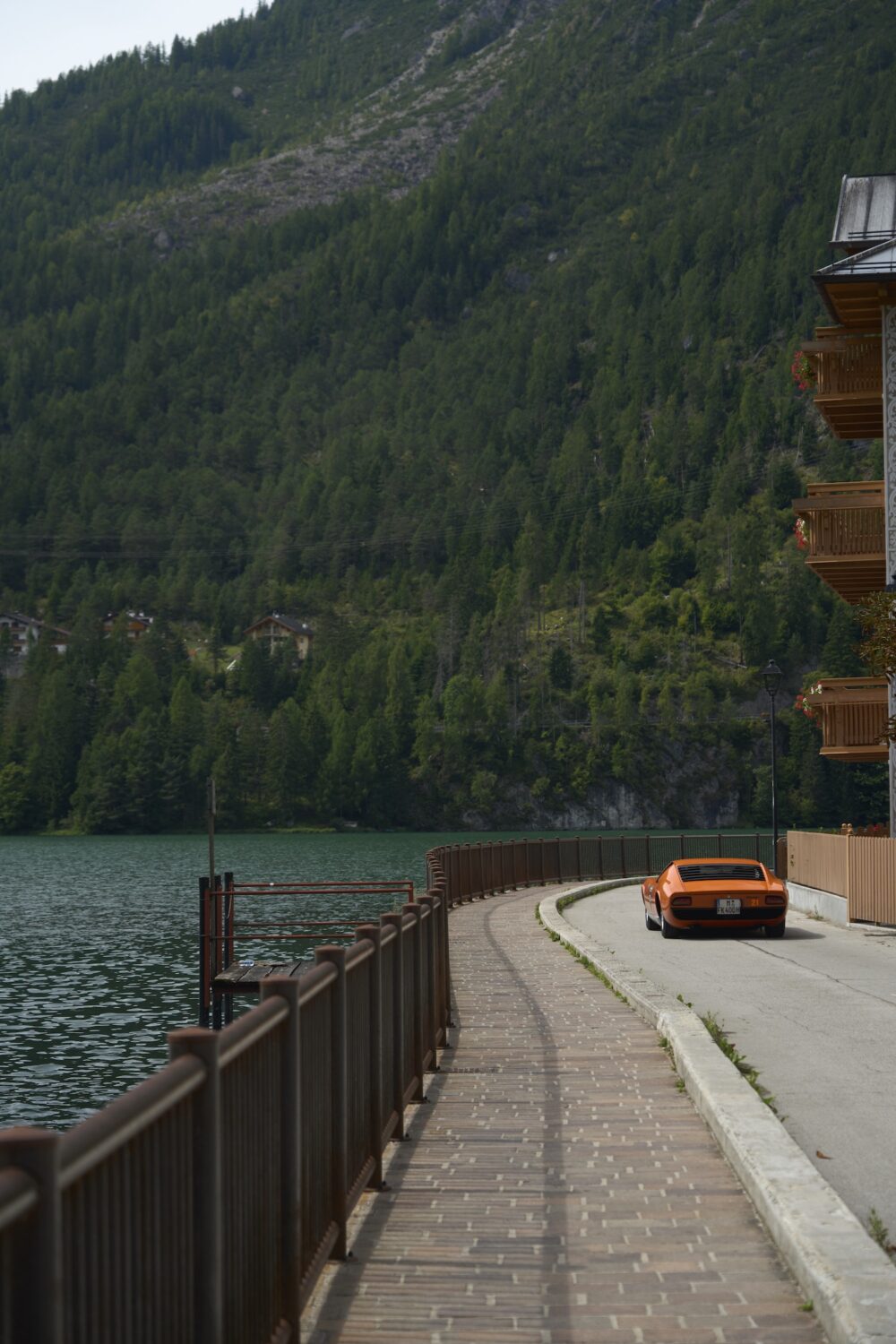
Few cars, however, possess the cinematic mythology of the 1968 Lamborghini Miura P400 included in the Run. Chassis 3586 appeared in the unforgettable opening sequence of The Italian Job, moving through the Italian Alps to the sound of Matt Monro’s “On Days Like These”. Authenticated and restored by Lamborghini Polo Storico, its return to these mountain landscapes carried a wonderful sense of history folding back upon itself.
Precision, Not Speed
Despite the extraordinary performance capabilities gathered on the road, the Louis Vuitton Dolomites Classic Run was never intended to be a conventional race.
This was a regularity competition, where precision mattered more than outright speed. Each car carried a driver and navigator, with crews attempting to complete designated sections at precisely calculated target speeds and times.
Timing could be measured to a hundredth of a second, while hidden checkpoints assessed whether teams had maintained the correct average speed throughout a stage. Arriving too early could be as costly as arriving late. The winner would not necessarily be the fastest crew, but the one that created the most exact harmony between machine, driver, navigator and time.
Photo challenges and bonus games added a more playful element, while the Beauty in Motion competition invited a jury of experts to assess each car as it travelled through the route.
It was an elegant way of allowing cars from different periods to compete together. More importantly, it preserved the character of the journey. These roads were not simply something to conquer; they were there to be experienced.
Into The Dolomites
The fleet’s first cultural stop was Possagno, home to the Museo Gypsotheca Antonio Canova.
Dedicated to Antonio Canova, the great master of neoclassical sculpture, the museum offered another meeting between form and movement. Canova’s ability to make marble appear soft, weightless and almost alive found an unexpected echo in the curves of the automobiles outside.
The connection reached back to Villa Pisani. Marina Sagredo Pisani had been a close confidante and early patron of the sculptor, creating a cultural thread between the place where the cars began their journey and the museum encountered along the road.
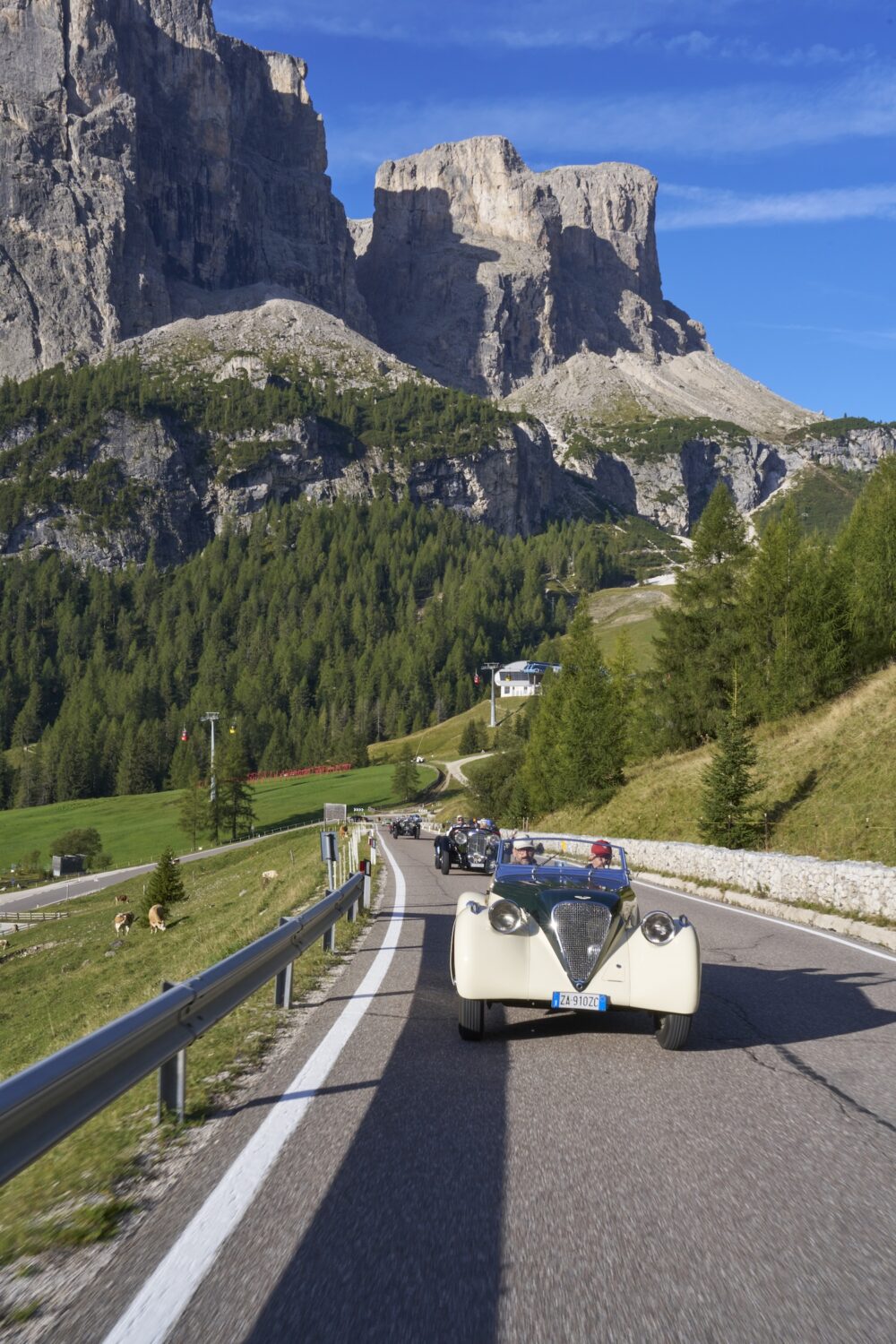
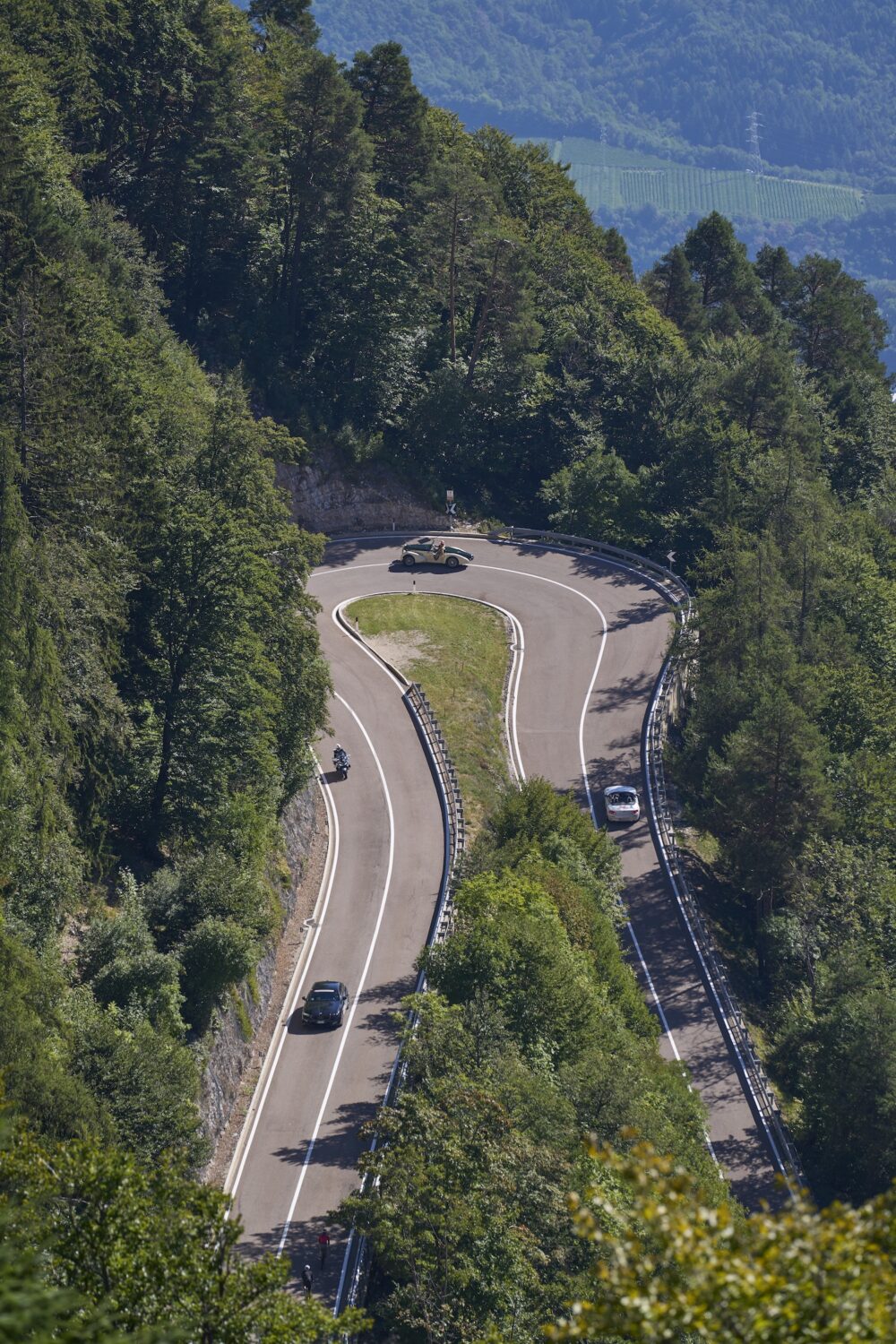
From Possagno, the route climbed towards the Dolomites. The roads narrowed and curled through one of Europe’s most spectacular landscapes, carrying the fleet beneath sheer rock faces, wooded slopes and immense open skies.
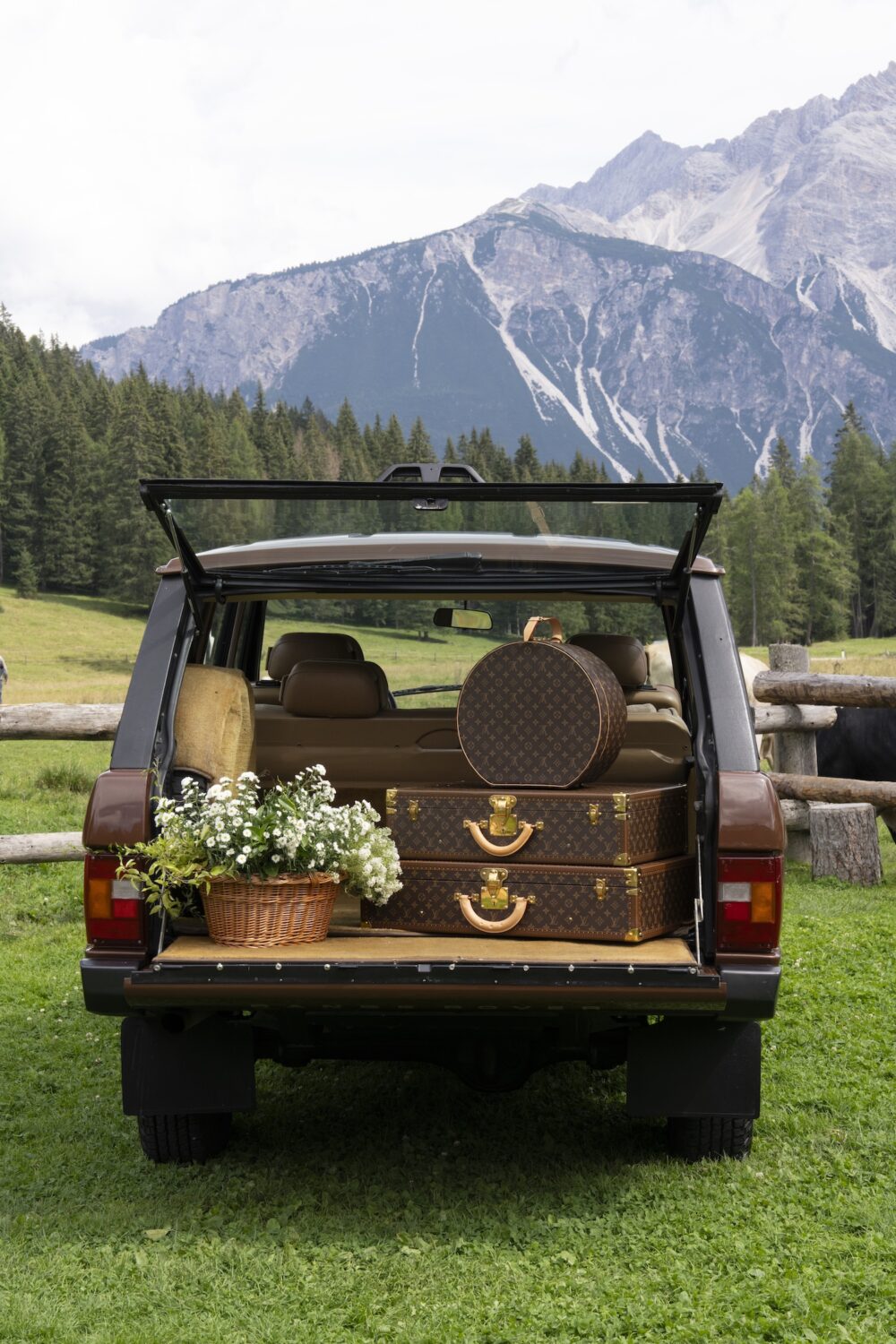
An outdoor picnic à la Louis Vuitton brought the House’s Art of Living into the mountains. Nomadic dining has formed part of Louis Vuitton’s history since 1897, when the practical rituals of travel inspired purpose-built trunks and cases. In the Dolomites, the picnic became a pause between stages—a chance to stop, gather and appreciate the landscape before the road continued.
Then came the evening light.
As the cars moved through the Cortina Valley, the mountains began to change colour in the phenomenon known as Enrosadira. The pale rock faces turned warm pink, then flaming orange and deep, smouldering purple. Engines, chrome and sculpted bodywork were briefly caught beneath the same shifting light.
For all the rarity of the cars and grandeur of the surroundings, this was perhaps the purest expression of the entire journey: exceptional machines moving through an ancient landscape at the fleeting moment when the mountains appeared to blush.
From Mountain Roads To Polished Mahogany
Leaving the Dolomites, the route descended towards the plains of Lombardy and the waters of Lake Iseo.
Here, the journey paused at the historic Riva workshop in Sarnico, where another Italian story of movement and craftsmanship has been unfolding since 1842.
The Riva yard does not simply produce boats. Its vessels are shaped through the careful selection of fine woods, the balancing of proportion and the painstaking pursuit of a flawless finish. More than 20 coats of varnish are applied to the wooden surfaces, following the standard once demanded by Carlo Riva himself, while screws are aligned and painted to match the hull.
Inside the yard, polished mahogany met polished coachwork. The connection between the Riva boats and the vintage cars felt instinctive. Both transform engineering into something emotional. Both rely on countless details that may never be individually noticed but are immediately felt within the finished object.
It was also a reminder that speed, in its most beautiful form, has never been exclusively about performance. It is about line, balance, sound and the sensation of moving through water or across land with apparent effortlessness.
The Road To Monza
The final approach brought the fleet to Villa Reale di Monza, the monumental neoclassical estate that once served as a residence of the House of Savoy and became a favourite summer home of Queen Margherita.
For the Run, the Villa was transformed into an open-air automotive museum. The cars rested within its courtyard, their journey from Venice and through the mountains now visible in the fine dust and traces of the road.
A special display deepened the connection to the Villa’s past. The Palombella, a custom-built 1909 Itala 35/45 HP limousine landaulet, returned to the grounds from Turin’s Museo Nazionale dell’Automobile. A ball gown from Queen Margherita’s personal collection, created 140 years ago, was also displayed in her private boudoir to commemorate the centenary of her death.
Louis Vuitton is supporting the restoration of Villa Reale’s historic clock and the façade of the building’s south-west wing. The House is also contributing to the ongoing restoration of the Sala delle Asse at Milan’s Castello Sforzesco, including the reinstallation and lighting of the museum exhibition, scheduled for completion in 2027.
Commissioned by Ludovico Maria Sforza in 1498, the Sala delle Asse is home to Leonardo da Vinci’s celebrated Monocromo. It provides a fitting setting for the final award ceremony: a room shaped by one of history’s most restless minds, where art, nature, invention and mechanical curiosity have always belonged together.
The Temple Of Speed
The final chapter of the Louis Vuitton Dolomites Classic Run belongs to the Autodromo Nazionale di Monza.
During the opening of the Formula 1 Pirelli Gran Premio d’Italia 2026, the vintage fleet will parade around the circuit known throughout motorsport as the Temple of Speed. It is difficult to imagine a more evocative ending.
Cars created in the 1930s, 1950s and 1960s will enter a circuit synonymous with Formula 1, completing a journey that began among Venice’s palaces and travelled through some of Italy’s most extraordinary landscapes.
The moment also reflects Louis Vuitton’s modern relationship with Formula 1. Following the beginning of LVMH’s ten-year global partnership with the championship in 2025, Louis Vuitton’s craftsmanship has become increasingly present trackside, most visibly through its bespoke Trophy Trunks for every Grand Prix.
Yet the House’s relationship with automobiles reaches much further into the past.
In 1897, Georges Vuitton, the son of Louis Vuitton, created the first Auto Trunk. Its flat-topped shape replaced the impractical rounded luggage of the time and allowed trunks to be stacked upon early motorcars. The Sacs Chauffeurs followed in 1905, designed with a circular form that fitted inside the empty well of a spare wheel. There were roof trunks shaped to the curvature of individual cars, waterproof luggage created for exposed journeys and cases made to hold everything from wardrobes to picnic services.
Louis Vuitton did not simply make luggage for the automobile. The House adapted alongside it, responding to the new freedom that cars introduced and helping to define how an entirely new generation travelled.
More than a century later, the Louis Vuitton Dolomites Classic Run brought those two histories together once again.
It celebrated machines, but also the hands that built them. It passed through remarkable places while helping to preserve them. It placed sculpture beside coachwork, glassmaking beside trunk-making and polished mahogany beside painted metal. It allowed cars designed for speed to move slowly enough for their details—and their stories—to be seen.
From the stillness of a Venetian villa to the changing colours of the Dolomites, from Lake Iseo to the roar of Monza, every stage returned to the same idea: that true travel is never only about arriving.
Sometimes, the road is the masterpiece.