It’s four o’clock again, which means claiming a gazebo for Afternoon Tape Mojito. One of the many structures strung along the hillside, each one facing away from the hotel and into the valley, built up on stilts like a treehouse for adults. You settle into the wall to wall cushioned seating and a waiter brings out an ice cold glass, jungle humidity cut instantly by the breeze moving through the Japanese minimalist cage of the structure. Mint, lime, and tape, fermented sticky rice, giving the drink a sourness you don’t get anywhere else.
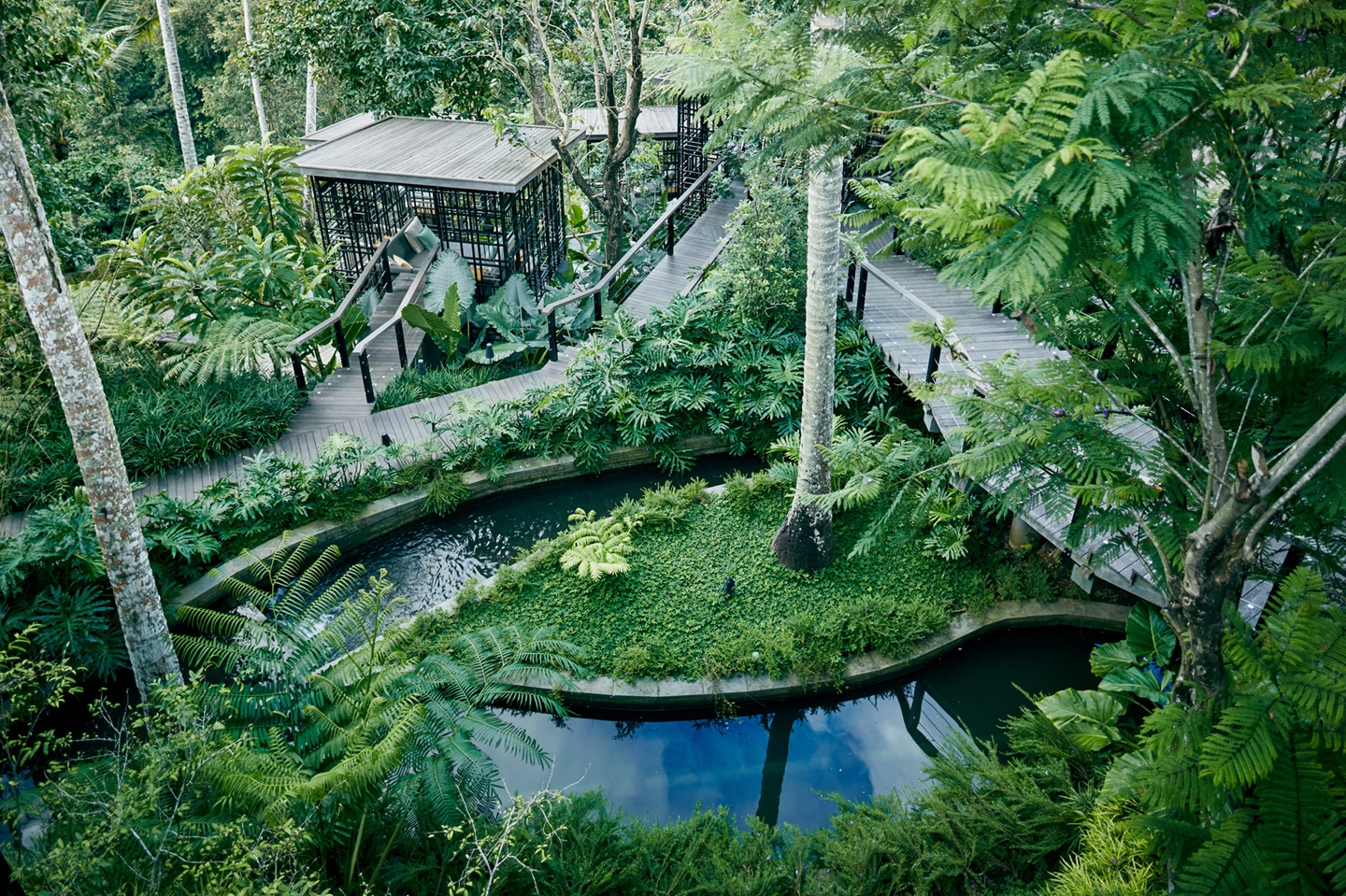
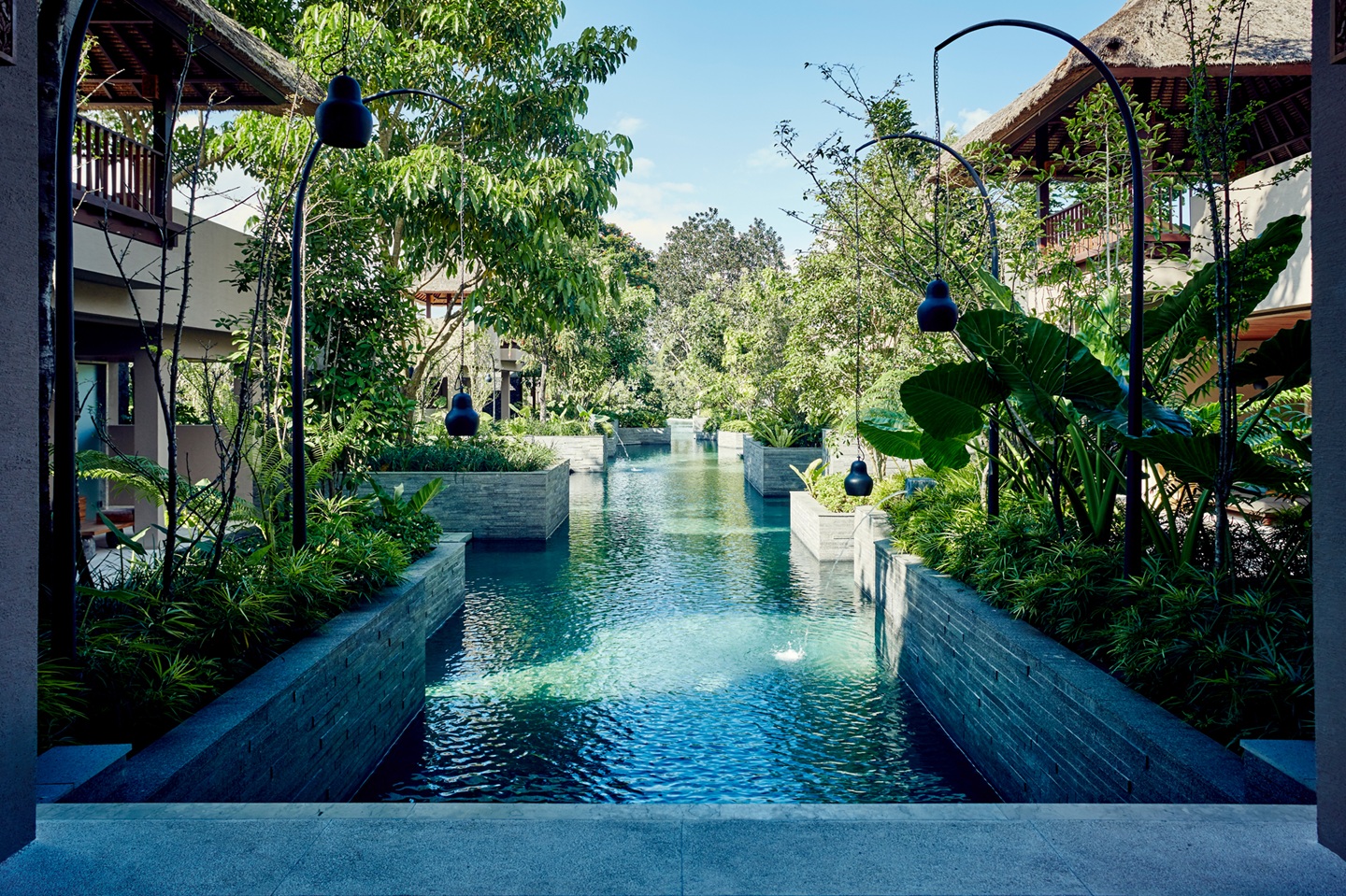
The whole site is built on that same idea: raised, timber-framed, black bar geometric structures set into the hillside like a village of treehouses connected by walkways, Japanese restraint applied to Balinese materials and Balinese land. Nothing gets built over the jungle. It gets built into it. The best suites sit at the front of the property with sweeping views over the valley, walls of floor-to-ceiling glass opening onto full length balconies overlooking the running water and backing onto the shared pool that runs the depth of the hotel, drinks ordered straight to the lounger. Inside, the fusion keeps going: the kind of Japanese toilet that has you googling import prices, a shower room and bath larger than my flat. The whole property runs on this cross-pollination, Japanese precision holding up Balinese soul, and it’s the reason the place works as well as it does.
When you’re not lounging in the suite or nabbing a gazebo for breakfast, lunch or dinner, the hotel runs a set of excursions to keep you busy. The Banjar tour walks you from the hotel into the local village to experience Banjar, the community structure underpinning Balinese homes and villages: which building holds the ancestral shrine, which handles a memorial, which exists purely for the ceremonies that run for weeks after a death. Half the village was preparing for a funeral parade the day we went, entirely uninterested in us.
Breakfast opens with a Morning Jamu, a medicinal health kick start disguised as a shot of turmeric and ginger. The set menu gives two items pulled from Indonesian and Balinese, Western or Japanese sections, plus a hot drink and a cold one. I went for Bubur Ayam, rice porridge topped with shredded chicken and peanuts in a yellow chicken broth, and the Nasi Goreng, fried rice with chicken ham, a corn fritter, tempe and a beef satay skewer. For someone who treats a full English as a challenge, it was more than enough.
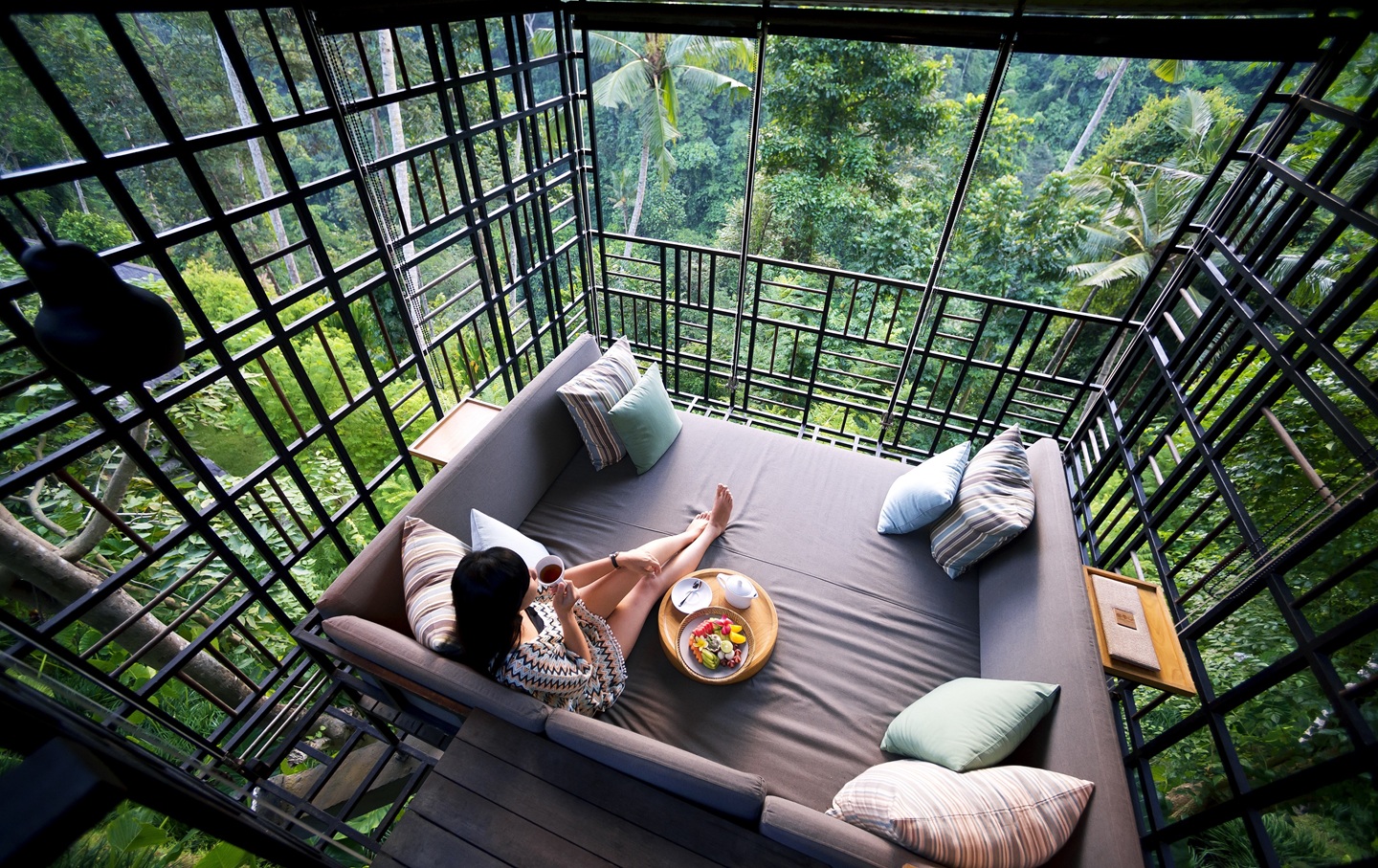
Lunch, the special version, is Rantang Sari, a stacked set of baskets served picnic-style wherever you want. Seasonal fruit sits in a stew of palm sugar and lime. Hand rolls of nigiri and sushi, shrimp and snapper, come intertwined with petals and leaves. Red bean desserts are shaped like intricate flowers, wrapping even more red bean inside them. There’s à la carte otherwise, if the baskets feel like too much commitment.
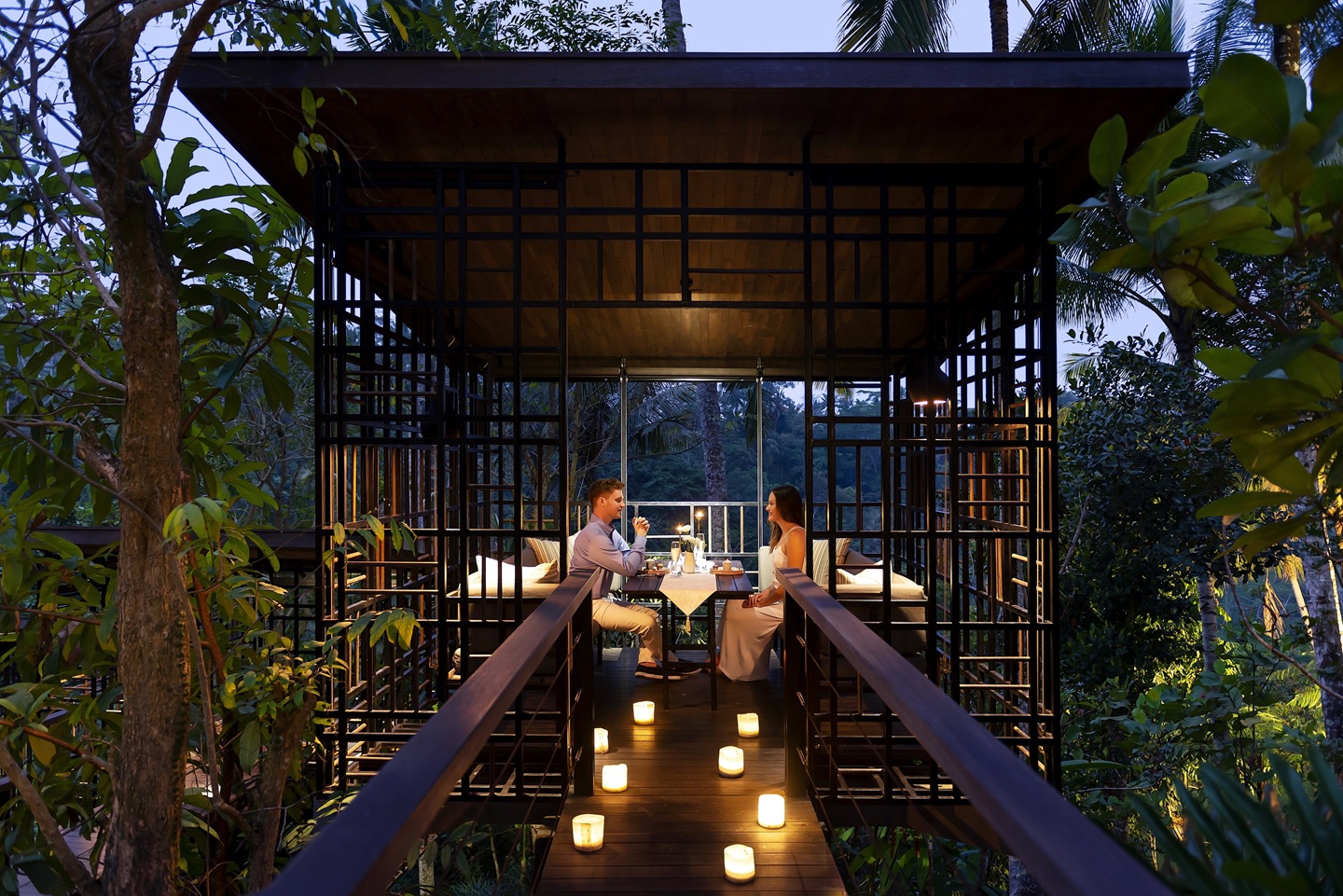
Our first dinner happened in the outdoor bed overlooking the pool, ordered off the room service menu, because leaving that view for a dining room felt like the wrong call. For something more romantic, the Bali Harmony Dinner Course is set in a personal gazebo, the path lit with candles along the decking, and runs eight courses built around harmony with god, nature or people. A tomato gazpacho gets poured over watermelon for purification, followed by a run of small plates shaped after the daily offering ceremony. Harmony with nature takes fish from the ocean and prepares it Japanese-style, barramundi from the river finished with Balinese technique and a smoky reveal when the dish is lifted. Harmony with people gets arranged tableside: sweet, heavily spiced duck straight off a smoking grill, still skewered on a branch, and a curry-like lamb stew built on yellow spice and coconut milk. Dessert, the new moon course, sits on a hardened cacao shell used as the plate itself, a quenelle of chocolate mousse stacked with nibs, chocolate flakes, nuts, sweet banana and whipped cream.
The cooking class was the most unforgettable part. It starts with a visit to the traditional market, the chef taking you early to gather tropical fruit and ingredients for the meal ahead. Back at the hotel it’s the real thing, no “here’s one I made earlier.” Every vegetable we bought got prepped by us, the chef stepping in only when our hands gave out on the pestle and mortar. The one part we weren’t involved in was the chicken, magically whisked away upstairs to be properly cooked once we’d finished marinating it. By the end we’d made an absolute feast: spice paste for seafood, a banana blossom soup, minced fish satay wrapped around bamboo, enough food for six people, made by us, and we really could claim that we did.
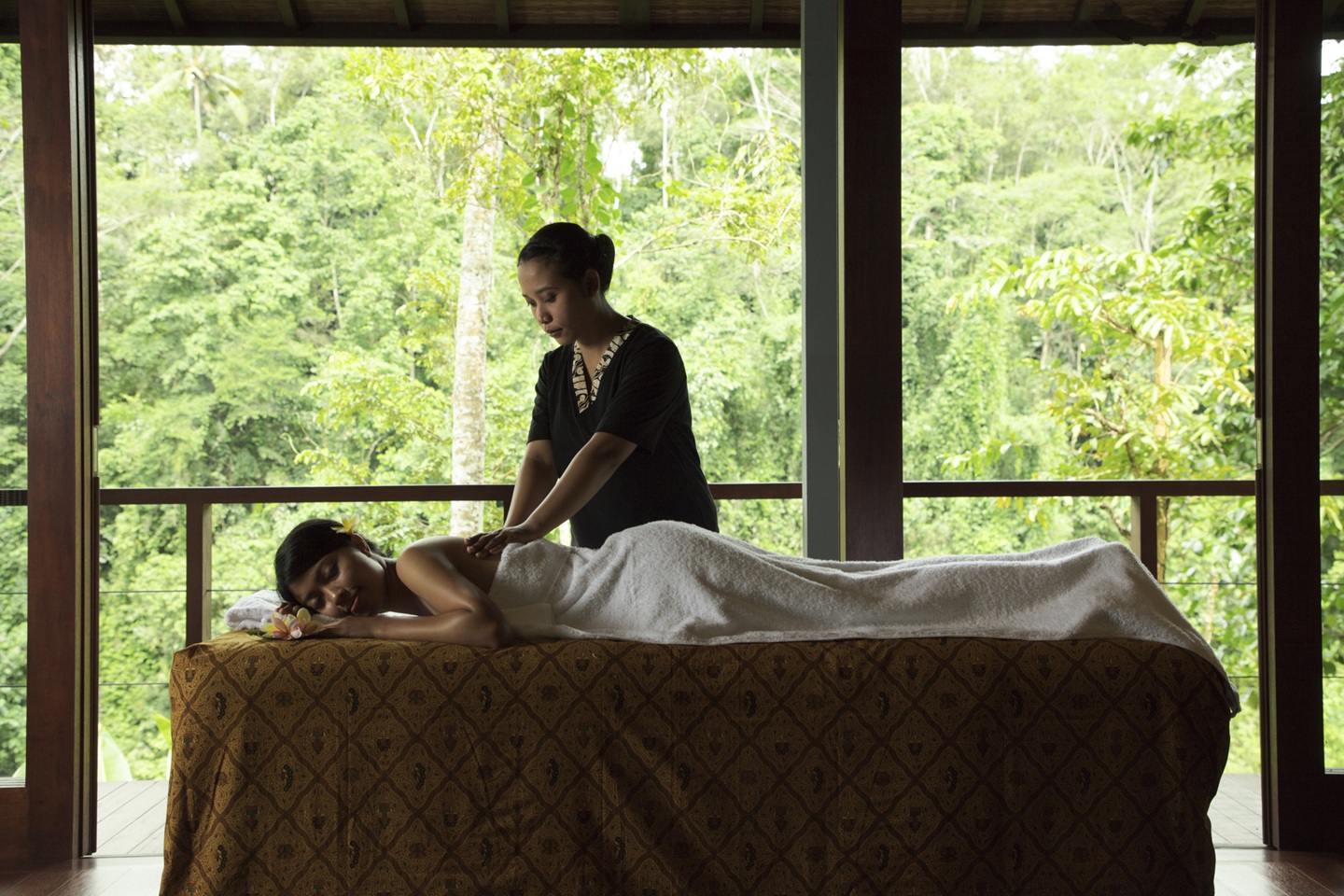
The spa sits down in the valley floor, reached by a small funicular that drops you out of the treehouse structures above and further into the jungle itself, stone and running water replacing timber and glass. The same fusion holds here too: treatments built on Balinese ingredients, coconut oil and local herbs, delivered with Japanese precision and quiet. A full body massage waits at the bottom, tree cover thicker, the valley closing in around you as you drift off.
The team at reception organise whatever comes next, whether that’s the shuttle to Ubud’s monkey temple, local temple visits or walks through the rice fields. The same people working the desk, the cleaning and the kitchen are the ones running the activities too, so by the end of the week there’s a real relationship built from watching you personally ruin a centuries old art form with your own two hands.
Br. Pengembungan, Desa Pejeng Kangin, Kecamatan Tampaksiring, Gianyar, Bali, Indonesia 80552