Ask anyone to name a painting about love and Klimt’s The Kiss comes up within seconds. It deserves the fame, but it is only the start. Europe’s museums are full of romantic paintings that rarely make the lists: wedding portraits with a joke hidden inside, an island of lovers, a love letter that was once cut from its frame. Here are eight famous paintings about love, and where to find them.
Peter Paul Rubens, The Garden of Love (c. 1630–35), Museo del Prado, Madrid
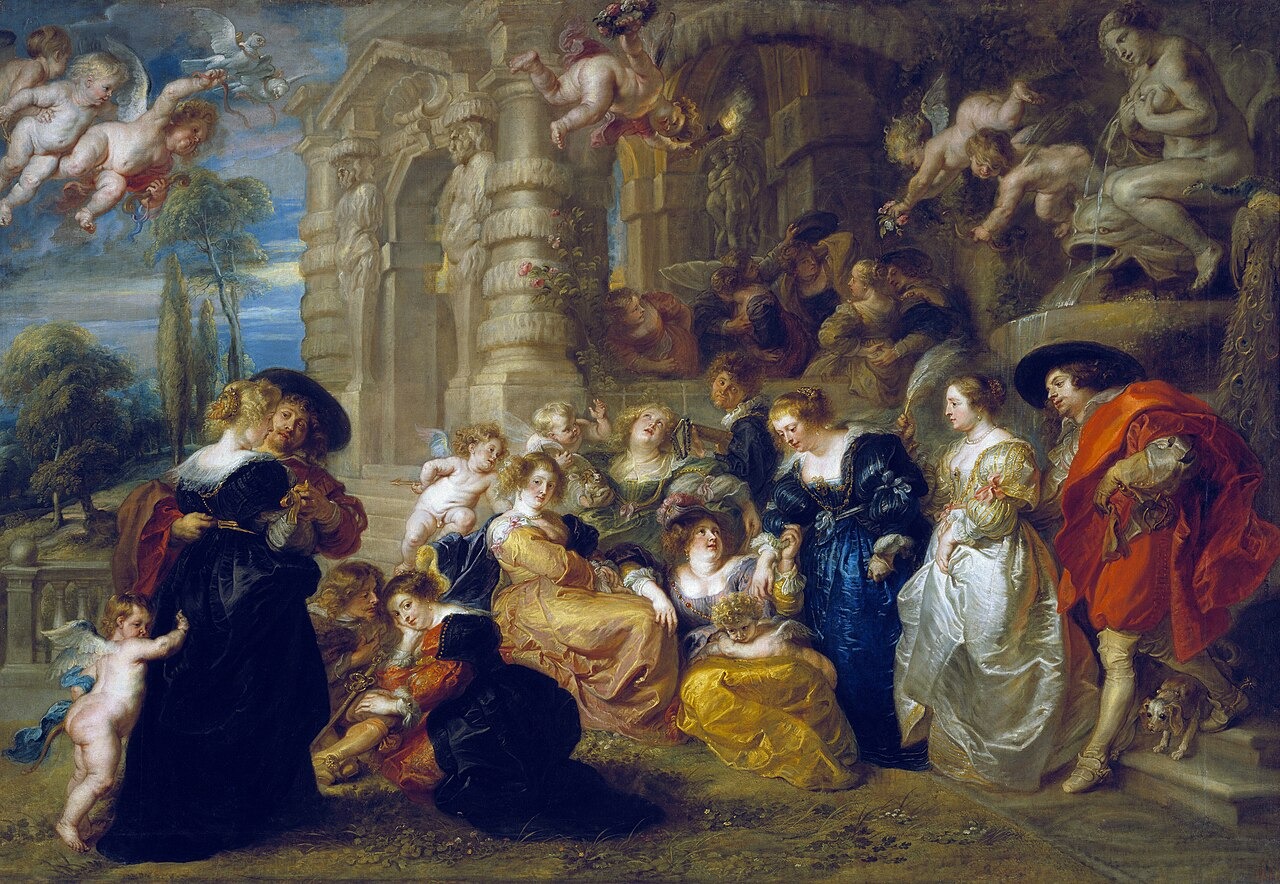
Rubens was 53 when he married Helena Fourment, who was 16. Soon after, he painted this terrace full of flirting couples in silk and lace, with cupids nudging the shy ones together and a fountain statue of Venus watching over them. The woman in blue looks strikingly like Helena, and the picture stayed in Rubens’s studio until his death. By 1666 it hung in the Spanish king’s bedroom in the Royal Palace of Madrid, which is how it came to the Prado.
Bronzino, Portrait of a Young Man as Saint Sebastian (c. 1533), Madrid
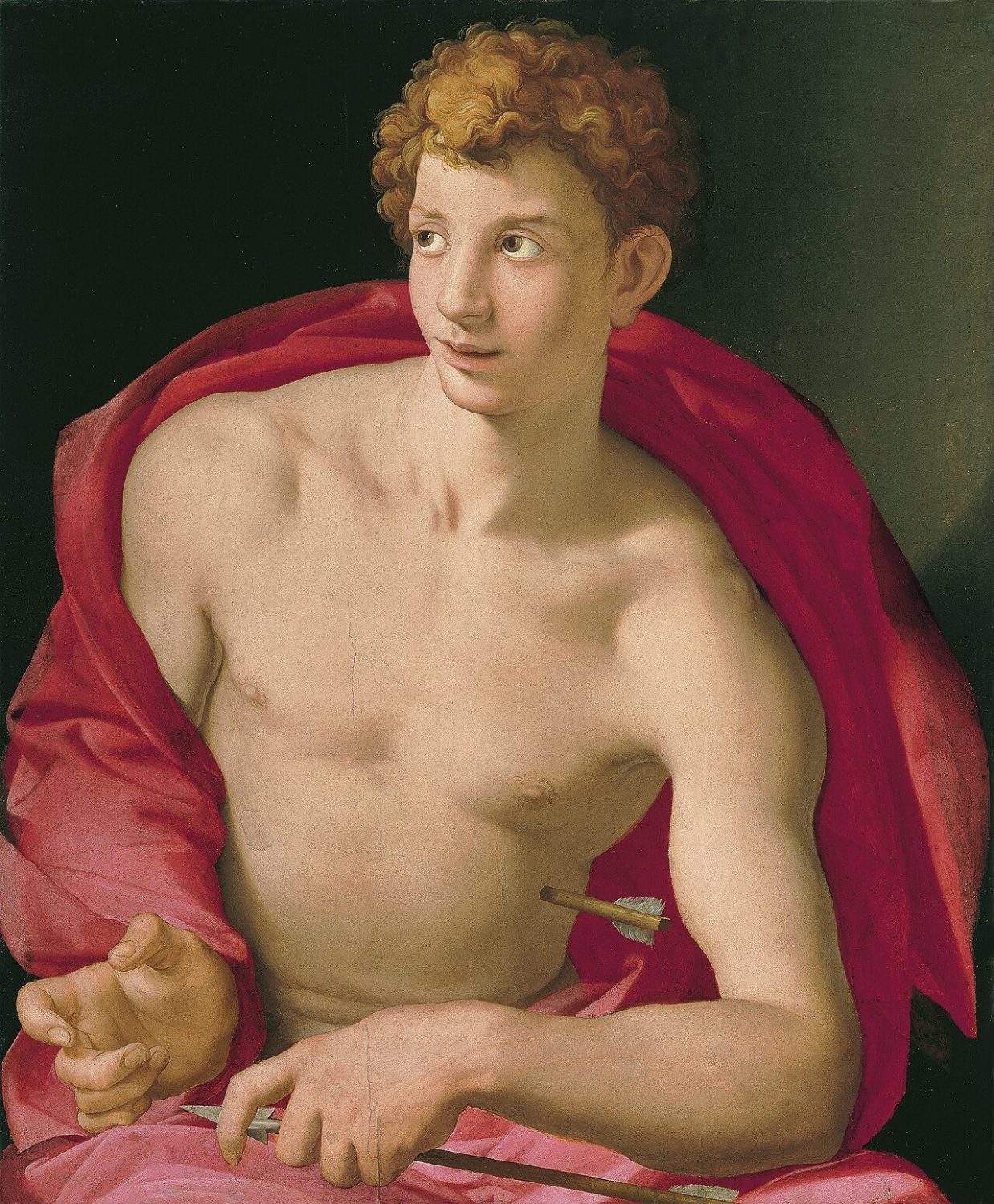
Not every love could be spoken about. Bronzino, later the favourite portraitist of the Medici in Florence, shows a red-haired youth with an arrow in his side, looking straight at us, calm and fully aware of his beauty. Sebastian was a Roman soldier condemned to be shot with arrows for his faith, and the story gave Renaissance painters a respectable excuse to paint the male body. By the nineteenth century the saint had become a quiet symbol of gay desire. The painting belongs to the Thyssen-Bornemisza Museum in Madrid, just across the boulevard from the Prado. In the winter of 2026–27 it spent a few months in The Hague, as part of an exchange with the Mauritshuis.
Lorenzo Lotto, Marsilio Cassotti and His Wife Faustina (1523), Museo del Prado, Madrid
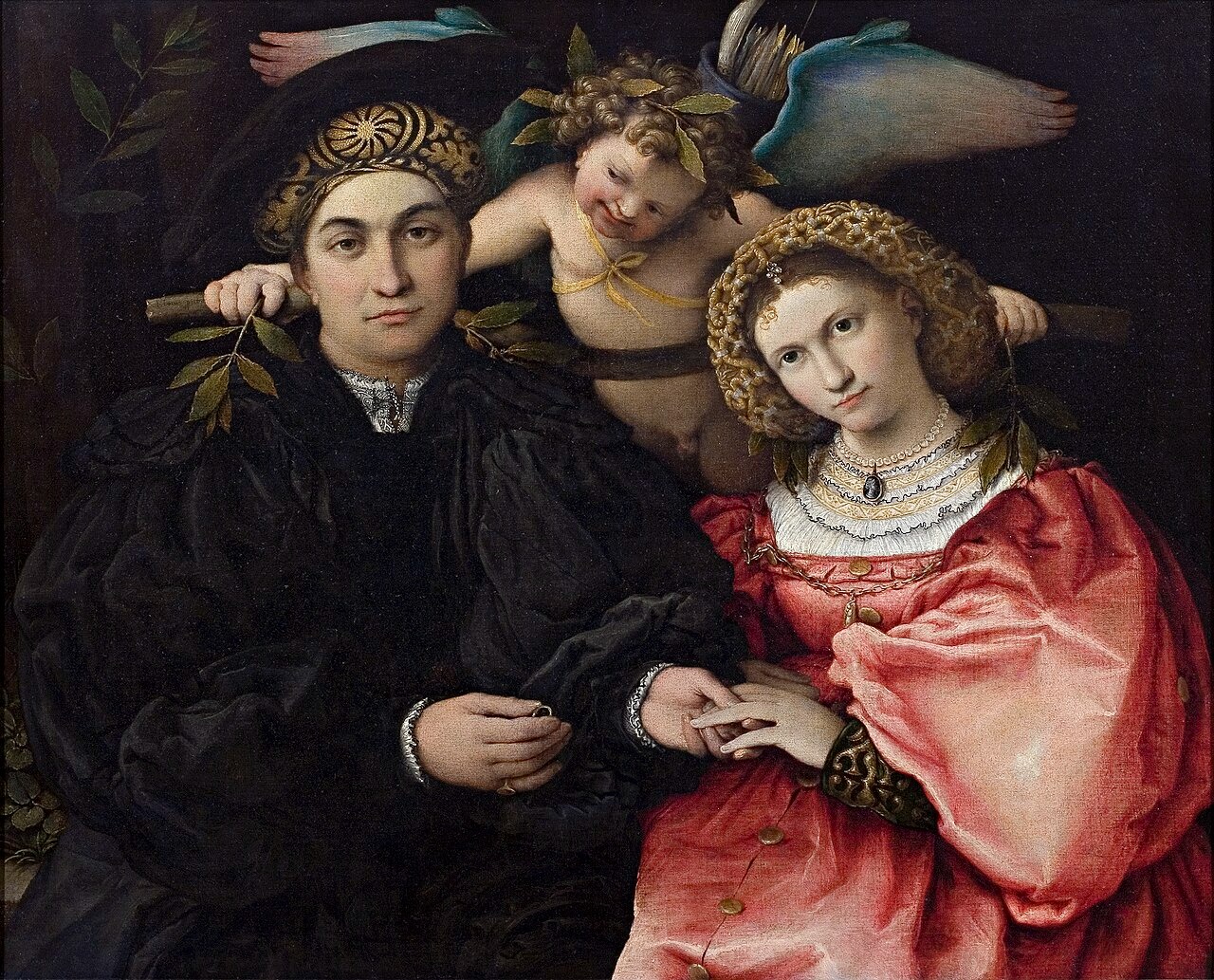
A wedding portrait with a sense of humour, and the first known marriage portrait painted in Italy. The groom’s father, a rich merchant from Bergamo, ordered it for the couple. Marsilio slips a ring onto Faustina’s third finger, where a vein was believed to run straight to the heart, while a grinning Cupid lowers a wooden yoke onto their shoulders. Laurel sprouts from the yoke as a sign of fidelity, but, as the Prado’s own catalogue points out, Cupid’s smile gives the whole scene an ironic edge: marriage is a yoke, however light.
Joaquín Sorolla, Walk on the Beach (1909), Museo Sorolla, Madrid
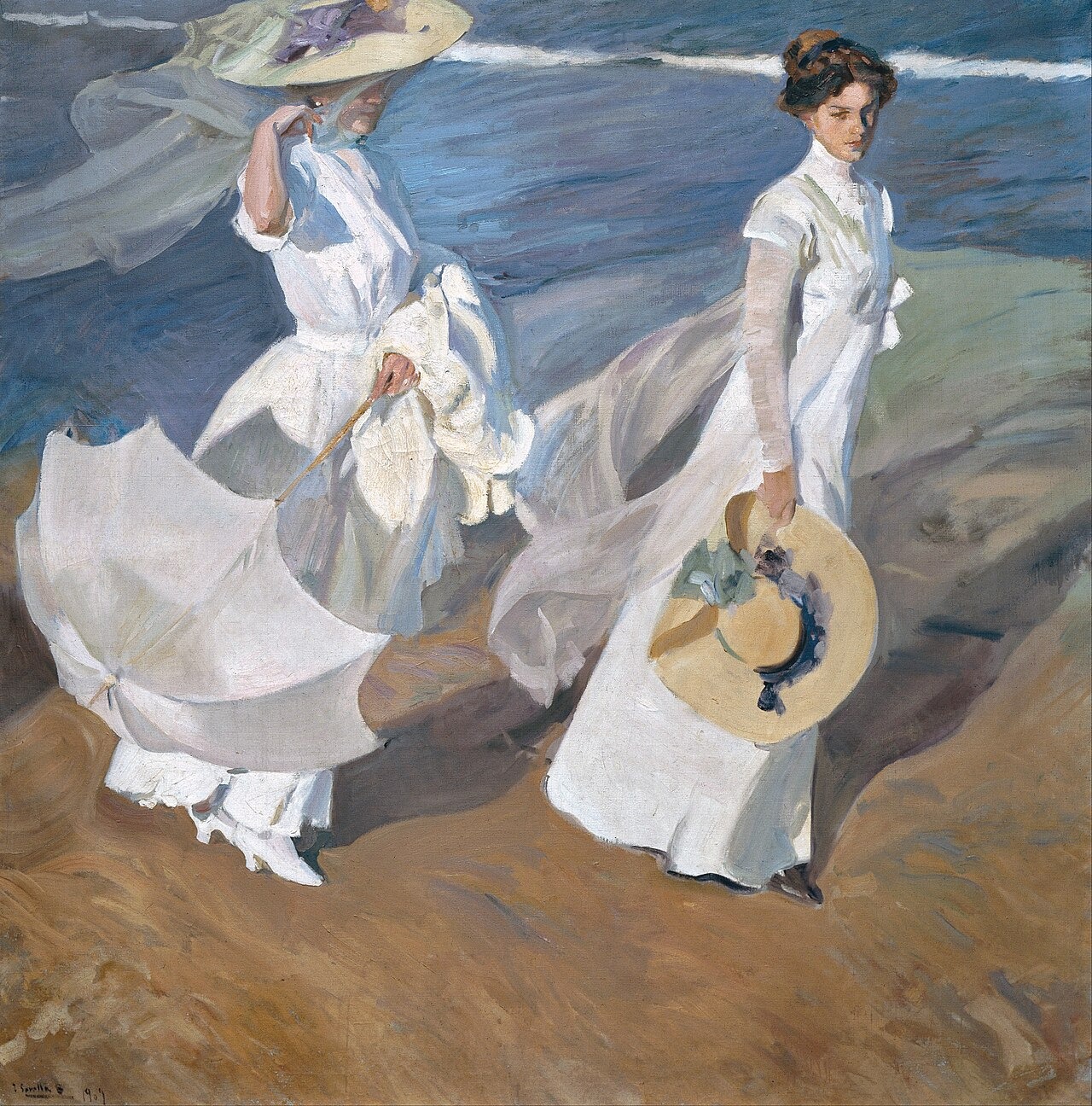
Sorolla, often called the painter of light, painted his wife Clotilde for more than thirty years. Here she walks along the beach at Valencia with their eldest daughter María, white dresses and a parasol caught by the sea wind. He painted it in the summer of 1909, just back from a triumphant exhibition in New York, on a canvas two metres wide, so the figures are almost life-size. The painting belongs to the Museo Sorolla, set in the house the couple built in Madrid.
Sandro Botticelli, Venus and Mars (c. 1485), National Gallery, London
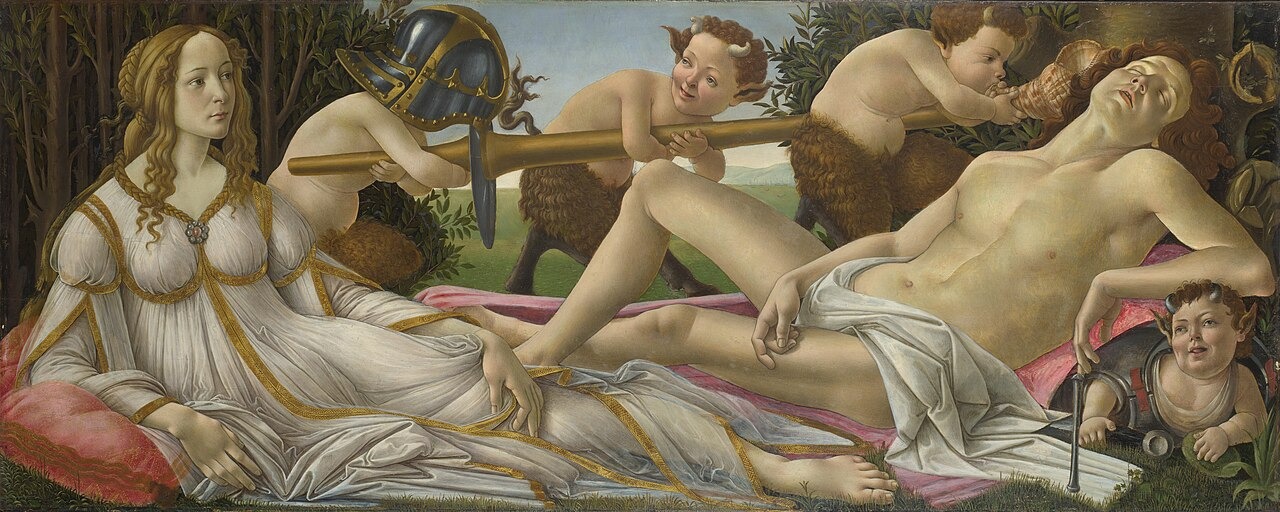
One of the gentlest paintings about lovers, and love wins without a fight. Mars, the god of war, is fast asleep, little satyrs play with his lance and helmet, and Venus, the goddess of love, watches, wide awake. Its long, low shape suggests it once decorated a bedroom, and the myrtle behind Venus, a traditional symbol of marriage, points to a wedding gift. Look for the wasps around the tree by Mars’s head: the National Gallery suggests they may be a pun on the Vespucci family, since vespa is Italian for wasp. Entry is free.
Antoine Watteau, Pilgrimage to Cythera (1717), Louvre, Paris
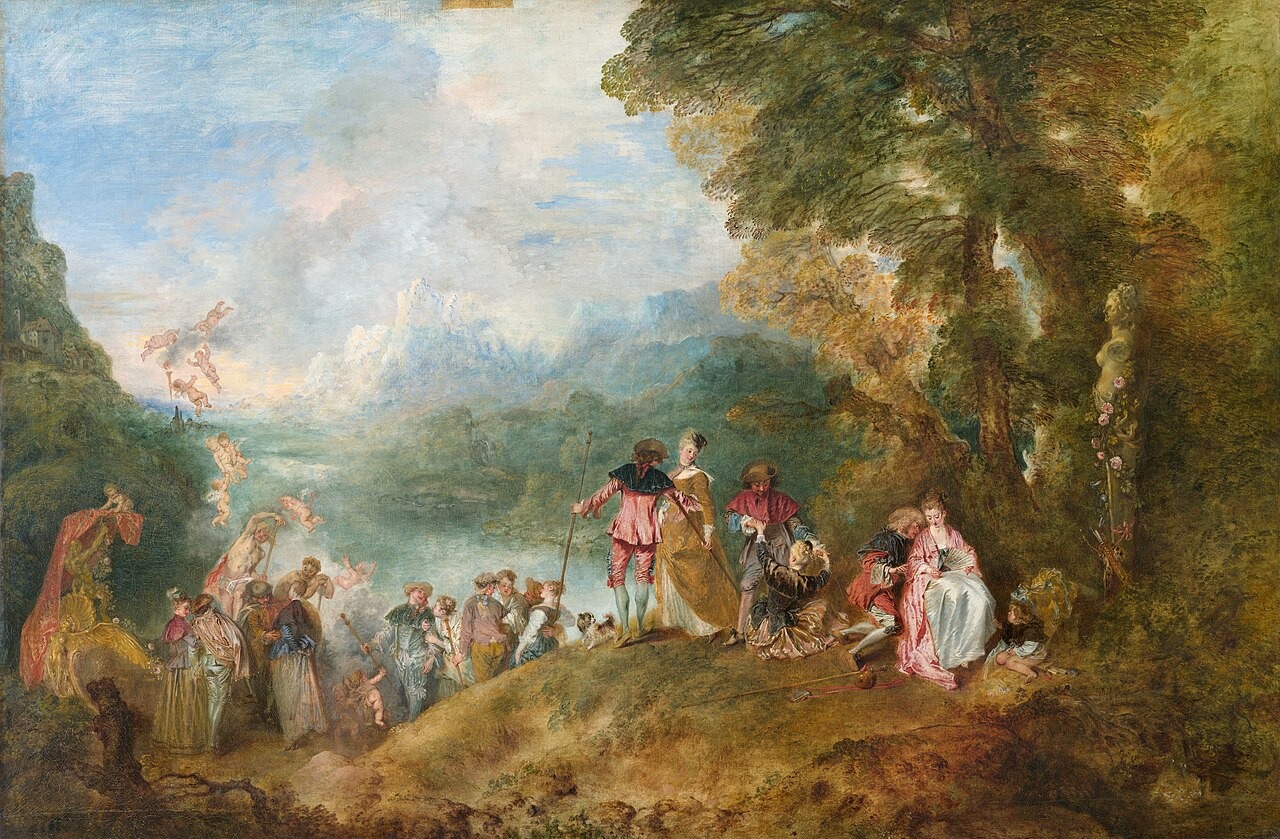
Cythera is the Greek island where Venus was said to have come ashore after her birth from the sea. Watteau fills it with couples in silk, a garlanded statue of the goddess and a golden boat surrounded by flying cupids. Are the lovers arriving or reluctantly leaving? Art historians still argue. Watteau submitted the painting to the French Academy in 1717, and since it fitted none of the existing categories, the Academy created a new one for it: the fête galante. He liked the subject enough to paint a second version, now in Berlin.
Johannes Vermeer, The Love Letter (c. 1669–70), Rijksmuseum, Amsterdam
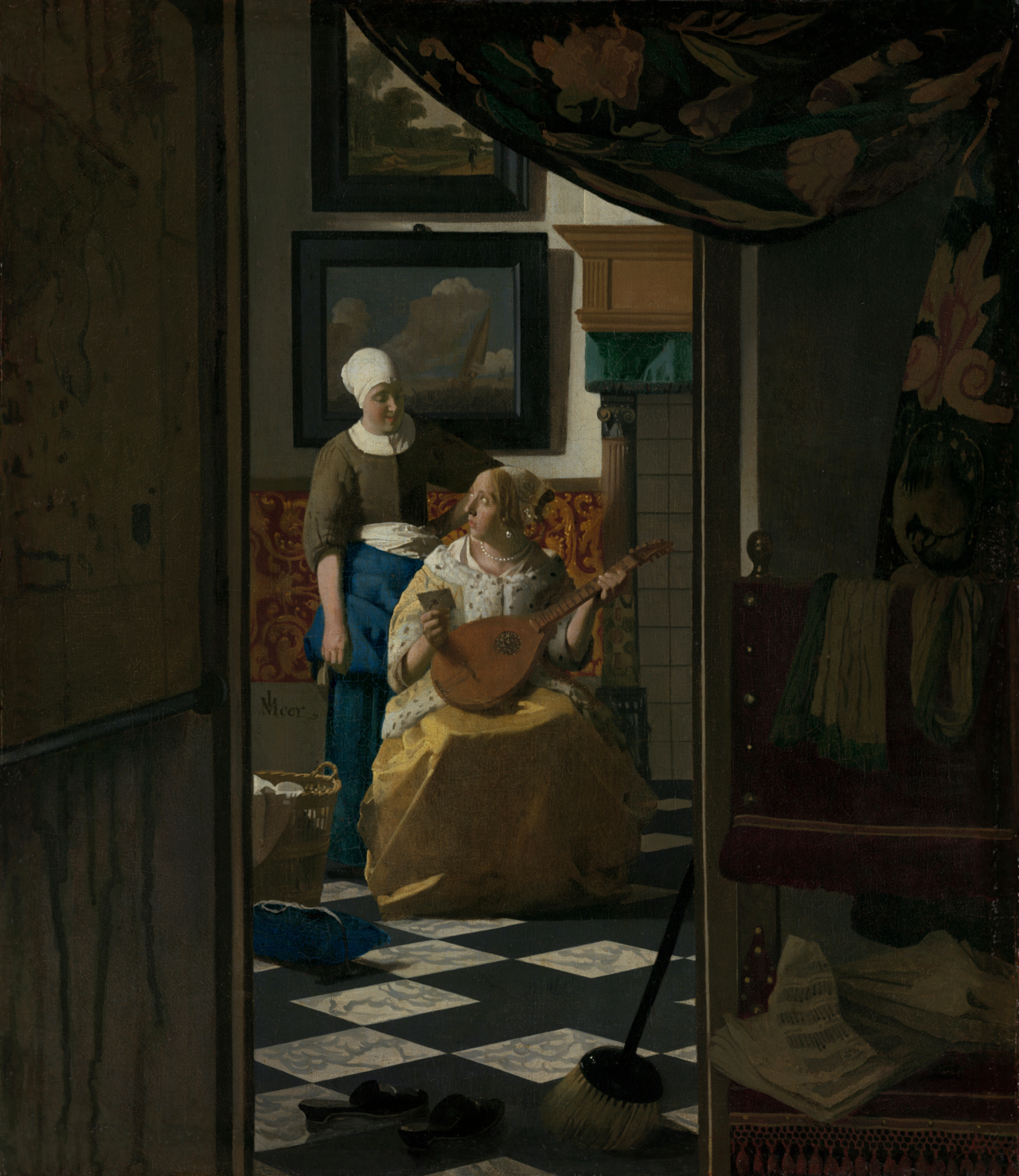
Vermeer left only about 35 paintings, and letters appear in several of them. Here we look through a dark doorway as a maid hands her mistress a letter. The lady holds a cittern, music being a classic Dutch hint at romance, while a broom and a pair of slippers lie abandoned in the foreground. Behind them hangs a seascape, a familiar Dutch image for love. In 1971, while the painting was on loan in Brussels, a 21-year-old thief cut the canvas from its frame, reportedly with a potato peeler, and demanded money for refugees in East Pakistan. It was recovered, damaged, and restored.
P.S. Krøyer, Summer Evening at Skagen (1892), Skagens Museum, Denmark
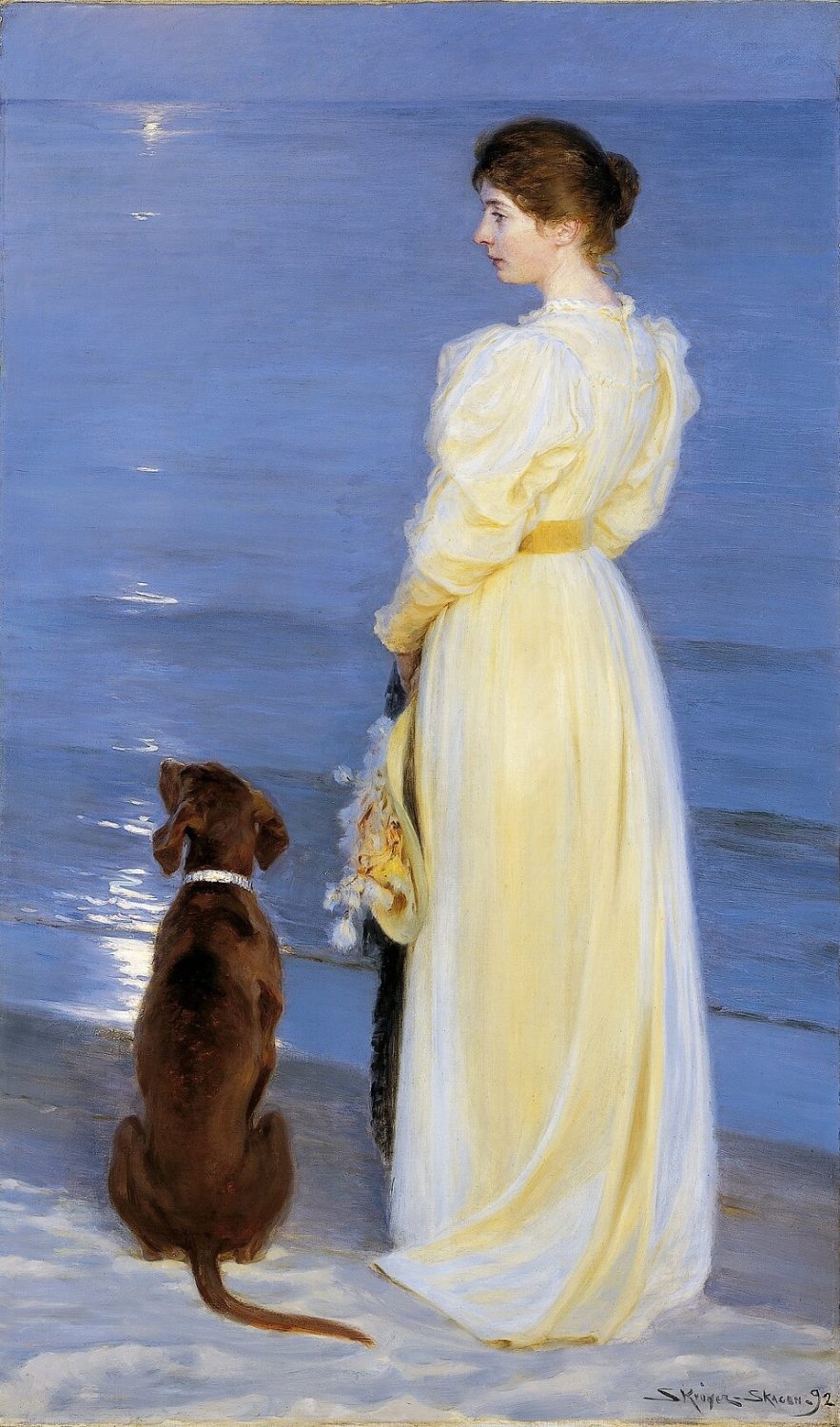
Skagen, at the northern tip of Denmark, drew a whole colony of painters in the late nineteenth century, and Krøyer was its star. Here his wife Marie, a painter herself, stands on the shore in the blue light of a northern summer night, their dog Rap at her side. The canvas is more than two metres tall, so she stands almost at full height. The marriage did not last. By 1905 Marie was expecting a child with the Swedish composer Hugo Alfvén, and the couple soon separated. It is hard to look at this tender picture now without a little sadness.
Where to start
Three of these paintings live on a single Madrid boulevard, the Paseo del Prado, and the Museo Sorolla is a short metro ride north. Few European cities keep this many famous paintings about love so close together, which makes Madrid an easy choice for a romantic art weekend.