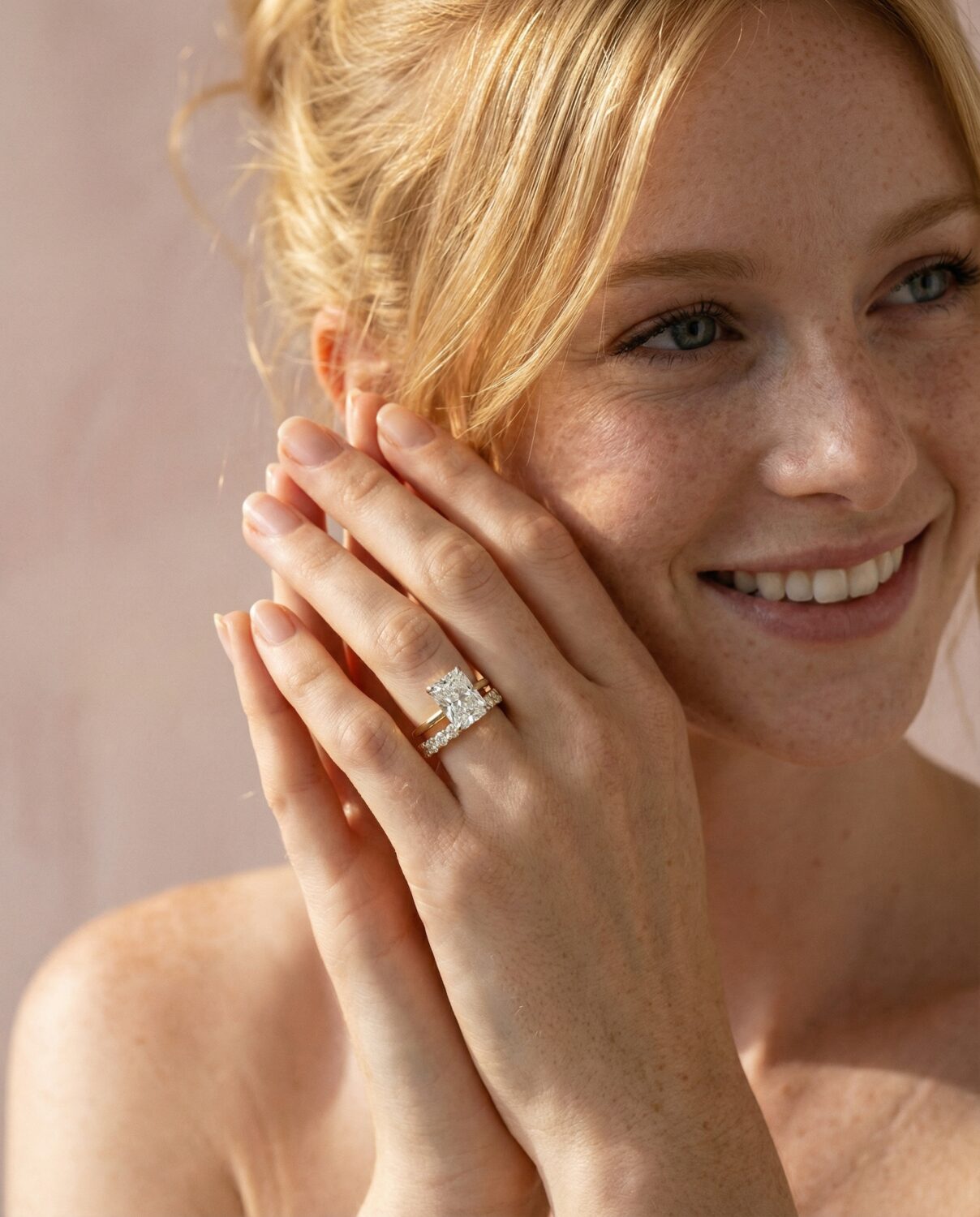
At a table beside a tall window, a diamond ring may look bright and clear. Later, beneath a restaurant’s small ceiling lights, a turn of the hand can produce flashes of colour. It is an appealing part of wearing a diamond: a familiar piece of jewellery can still catch you by surprise.
That change comes from the relationship between the stone’s cut, the light around it and your viewing angle. Understanding a little of what is happening makes it easier to appreciate a ring beyond its most dazzling showroom moment.
What Makes a Diamond Sparkle?
A diamond’s facets are its flat, polished surfaces. Their arrangement, together with the stone’s proportions and finish, makes up its cut and helps determine how it handles light.
The same principles apply to lab-grown diamonds. GIA explains that they share the crystal structure and essentially the same optical properties as natural diamonds. Origin alone therefore does not tell you how much a particular stone will sparkle.
Compare the round brilliant and emerald-cut lab grown diamonds UK shoppers can browse at Lily Arkwright.
A round brilliant’s many small facets create a lively pattern of sparkle, while an emerald cut’s long, open facets produce broader, mirror-like reflections. GIA describes the latter as a “hall of mirrors” effect. A quieter pattern of light is not, on its own, a sign of lower quality.
Three terms describe these effects:
- Brightness: white light reflected back to your eye.
- Fire: flashes of spectral colour.
- Scintillation: the changing flashes and pattern of bright and dark areas as the diamond, viewer or light source moves.
Why Daylight and Evening Lighting Look Different
Soft light spreading through a window and small spotlights in a darker room create different effects. In its research on round brilliant diamonds, GIA found that diffuse lighting suppresses visible fire, while concentrated light sources accentuate it.
That helps explain why a diamond can look bright beside a window yet show more conspicuous coloured flashes under restaurant spotlights.
The distinction is about the lighting itself, rather than the time on the clock. An overcast afternoon and a shaft of direct sunlight offer different conditions, just as a softly lit sitting room differs from a bar with pools of overhead light.
So a quieter appearance in one room is not, by itself, a verdict on the ring. You are seeing a different combination of effects.
Why Movement and Darker Facets Matter
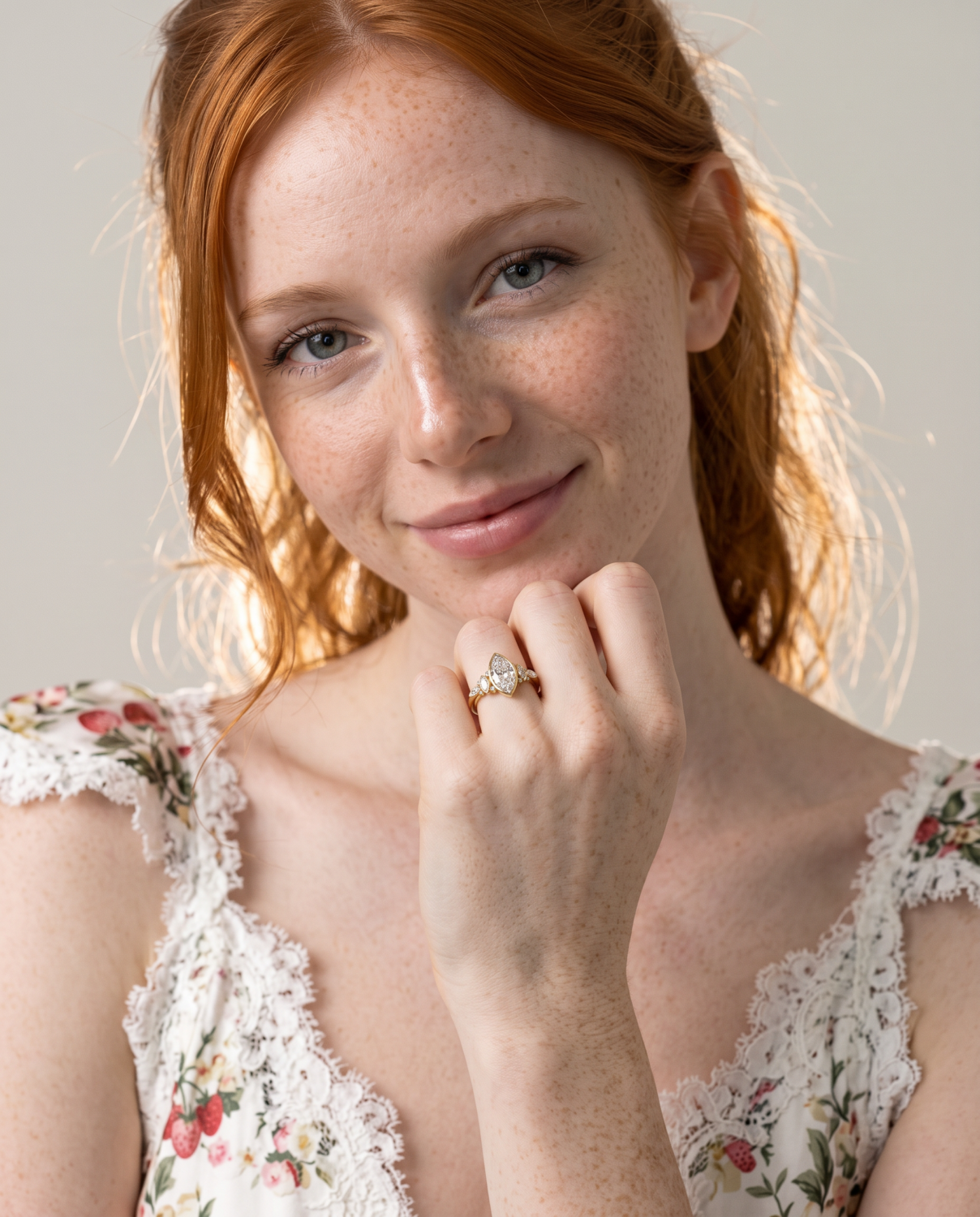
Hold your hand still, then turn it slowly. Areas that looked dark may brighten, while others fall into shade.
The darker areas belong to that pattern too. A passing patch of darkness is not enough to diagnose a badly cut diamond; contrast is part of what you are watching.
The room, your clothes and even your own silhouette form part of the view. GIA’s guide to light and diamond appearance explains how facets reflect their surroundings. A black jacket and a pale blouse can therefore bring different patterns of light and dark into the same ring.
How to Compare Diamond Sparkle in Everyday Light
When trying on a ring, ask to see it in soft daylight as well as beneath the display lights. Give each view a moment. Look with your hand resting naturally, then move it as you would during a conversation.
If you are choosing between two stones, compare them together in each setting. Putting one under a spotlight and the other beside a window tells you as much about the room as the diamonds.
Notice what draws you back: a bright appearance while your hand is still, or flashes that become conspicuous with movement. Knowing which effects you enjoy gives you something more personal to discuss with a jeweller than simply asking for maximum sparkle.
A ring you wear often will accompany quiet mornings, working days and evenings out. Leave room in your choice for all of them. There is real pleasure in glancing down over dinner and noticing something beautiful in a ring you thought you knew by heart.