| An editor’s map of bridal service, runway fashion, modern ceremony dresses and the online white-dress universe. |
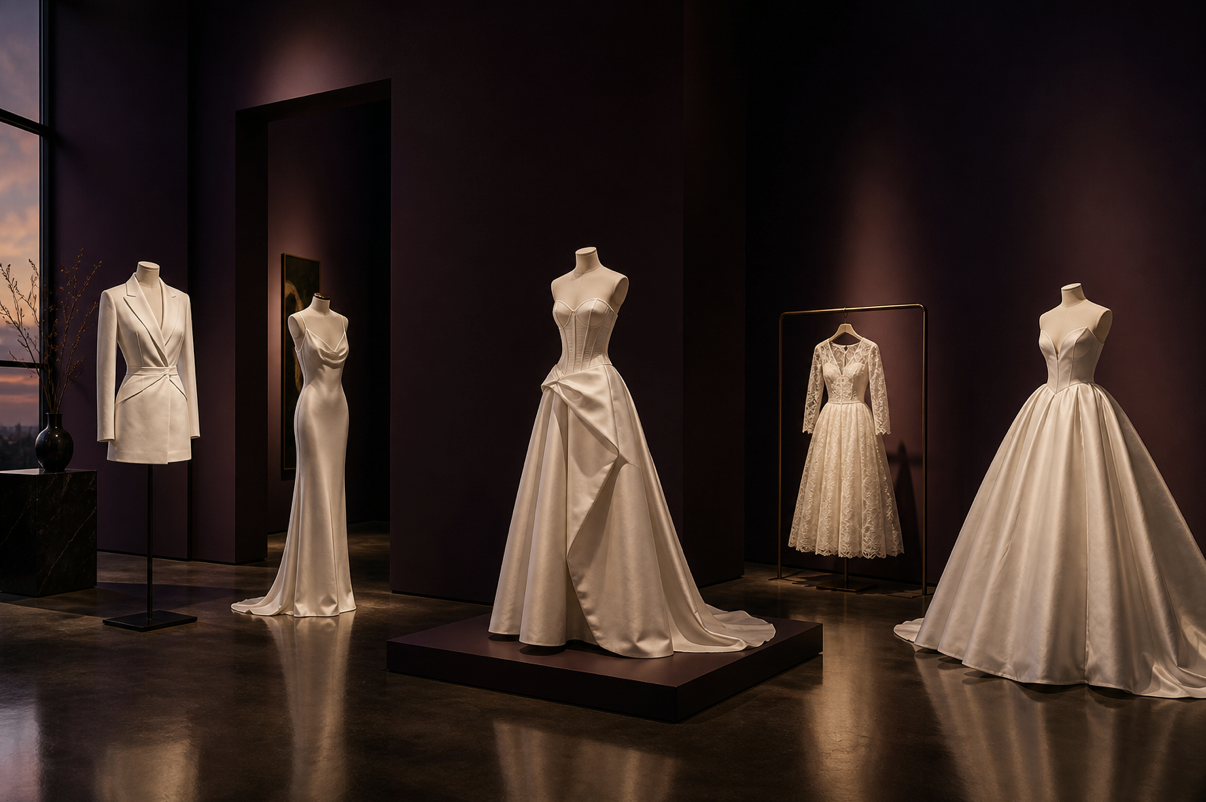
The online bridal rack now stretches from formal gowns to fashion dresses that become bridal through context.
The old boundary between “a wedding gown” and “a white dress worn to a wedding” has become wonderfully porous. A bride can buy a corseted silk gown from a bridal salon, a bias-cut dress from a sustainability-minded fashion label, a runway piece from a luxury e-tailer or a sharp mini from a site better known for party dressing. None of those choices is automatically more modern or more legitimate than another.
What changes is the burden of proof. A formal bridal retailer expects fittings and alterations. A fashion store expects the customer to interpret a product page, understand the designer’s sizing and decide quickly while stock lasts. The online search becomes easier once you know which kind of experience you are buying along with the dress.
David’s Bridal is the useful bridge between those worlds. Beyond it are increasingly fashion-led stores with very different strengths. A marketplace, a luxury multi-brand retailer and an independent bridal studio cannot be judged by one score; the useful question is where each one becomes interesting.
Assortments were reviewed in August 2026. Fashion inventory, delivery estimates and return eligibility change frequently. Always use the current item page and checkout terms as the final source of truth.
1. David’s Bridal: the hybrid reference point
Even brides who expect to buy from a fashion site benefit from one serious appointment. David’s Bridal gives the online search a physical reference point: browse silhouettes and save options at home, then use a complimentary bridal appointment to learn what a square neckline, dropped waist, basque waist or full skirt actually does on the body.
That does not obligate anyone to choose a conventional gown. It creates a vocabulary. A bride who discovers that she likes the stability of boning but not the visual formality of lace can take that knowledge to Reformation, Self-Portrait or a designer marketplace. Someone who assumed she wanted a slip may find that a cleaner A-line is just as minimal and easier to inhabit for twelve hours.
The store network also makes David’s Bridal practical for a bride who wants the search, fitting and alterations to remain connected. Its alterations service can handle bridal work and provides a place to discuss timing before a dress decision becomes irreversible. The catalog’s breadth is not a fashion editor’s tightly controlled rack; its value is the chance to test more than one bridal idea without having to translate everything from pixels.
THE CLEAN-LINE STORES
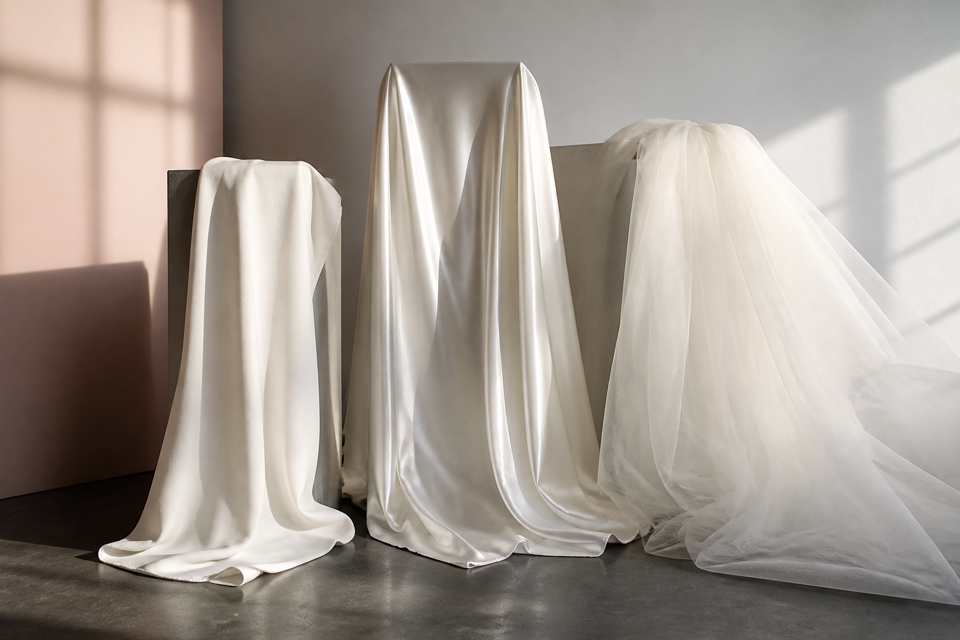
Similar ivory photographs can conceal very different weight, sheen, transparency and movement.
The next group suits brides who look at a traditional gown and wish somebody had removed the appliqué, the visible corsetry or half the skirt. Their dresses are not necessarily simple to fit. A spare design makes seam placement, fabric quality and undergarments more visible, so the product page deserves close reading.
2. Reformation: for the dress that still feels like your wardrobe
Reformation’s dedicated bridal-dress collection is concise enough to understand in one sitting. Silk chiffon, satin, narrow straps, fluid skirts and unfussy necklines make the strongest pieces feel related to the label’s occasion dresses rather than imported from another bridal universe. The result is particularly convincing for a garden ceremony, restaurant wedding, city venue or bride who wants to look recognizably like herself.
The edit also includes minis and two-piece looks, which makes Reformation useful beyond the ceremony. But the long dresses deserve the same fit discipline as any gown. Bias-cut silk can look forgiving while revealing every change in tension; a low back can remove the option of ordinary foundations; a very clean hem leaves nowhere for rough alteration work to hide.
Order with the wedding shoes already chosen, check whether the item is from the standard or petite range, and judge opacity in more than one light. Reformation is compelling when ease is the aesthetic. It is less persuasive if the bride wants substantial internal support, a dramatic train or a specialist guiding each fitting.
3. KYHA: minimalism with an architectural pulse
KYHA is what happens when minimal bridal stops being quiet. The Australian label describes its ready-to-wear and made-to-size lines through sleek minimalism and boundary-pushing construction; the point of view is visible in corsetry, strong dropped waists, sculptural drape and separates that photograph like runway fashion.
This is a designer destination rather than an endless comparison site. That makes the shopping experience more focused, but it raises the stakes of understanding the exact product category. Ready-to-wear, made-to-size and made-to-order are not interchangeable labels. Ask which measurements determine the order, whether the design can be tried at a stockist or boutique, what changes are possible and which terms apply after production begins.
KYHA is for the bride whose references include editorial tailoring and red-carpet shape, not only bridal trends. The most successful choice will usually come after trying something with comparable structure, even if the exact gown is ordered online.
THE LUXURY MULTI-BRAND ROOMS
Luxury e-tailers are the online equivalent of walking into a department where every rail has been edited by a different buyer. They offer access to designers that may not have a bridal boutique nearby, but they also mix true bridal gowns with white runway dresses. That is exciting—as long as the bride notices which is which.
4. NET-A-PORTER: the broadest designer conversation
NET-A-PORTER’s current bridal-dress department ranges from Danielle Frankel and Vivienne Westwood gowns to embellished Clio Peppiatt minis, liquid columns and unconventional pieces by ready-to-wear designers. It is one of the best places to discover that “designer bridal” is not a single look.
Use the site to build visual contrasts. Compare a corseted Westwood silhouette with a softly draped Nili Lotan gown, or a ceremony-length dress with a sharply embellished mini. Then slow down. Luxury inventory is often shallow by size, and a runway dress may not include bridal-specific support, hem allowance or a bustle plan. Confirm the returns classification, country-specific duties and whether the garment has been altered or is marked final sale before treating the order as a home fitting room.
NET-A-PORTER is most useful to a bride who already understands fashion sizing and wants access to several high-end design languages at once. It can overwhelm someone still asking whether she prefers fitted or full-skirted.
5. Mytheresa: compare the houses behind the dresses
Mytheresa’s designer bridal category reads like a roll call of fashion houses: Danielle Frankel, Vivienne Westwood, Victoria Beckham, McQueen, Safiyaa, Róhe, Taller Marmo and others. The category is large, but its real strength is designer filtering. A bride can see several pieces by one house together and understand the recurring shoulder line, corset shape or approach to drape.
That is a better way to shop luxury than chasing a viral product image. If two gowns by the same designer share a waist treatment that does not suit you, the issue may be the house block rather than the individual dress. Conversely, a designer that repeatedly gets the shoulder and torso right can become a productive search filter across seasons.
Many pieces sit firmly in luxury pricing, and some appear in limited size runs. Build in time for international delivery, returns and a bridal tailor who is comfortable with delicate or high-value fabrics. Mytheresa belongs on the list for its depth of designers, not because an expensive label removes the need for fit evidence.
6. Moda Operandi: the discovery store
Moda Operandi’s For the Bride edit is the more exploratory luxury stop. Alongside established labels, it surfaces emerging designers, exclusives and pieces available for preorder. This is where a bride may find an embroidered mini, raffia gown or dramatic organza dress that never appears in a conventional bridal search.
The thrill is access; the discipline is availability. A page can mix merchandise that is ready now with preorder inventory. A wedding date is not the moment to be vague about which applies. Read the estimated delivery attached to the size, not only the collection page, and leave room for a delay and alterations. “Exclusive” describes distribution, not fit or return flexibility.
Moda is best approached with a strong visual thesis: sculptural, artful, romantic, sharply tailored. Without one, the discovery engine can turn into endless novelty. With one, it is a route to a dress that feels collected rather than selected from a standard bridal lineup.
THE CEREMONY-TO-PARTY SPECIALISTS
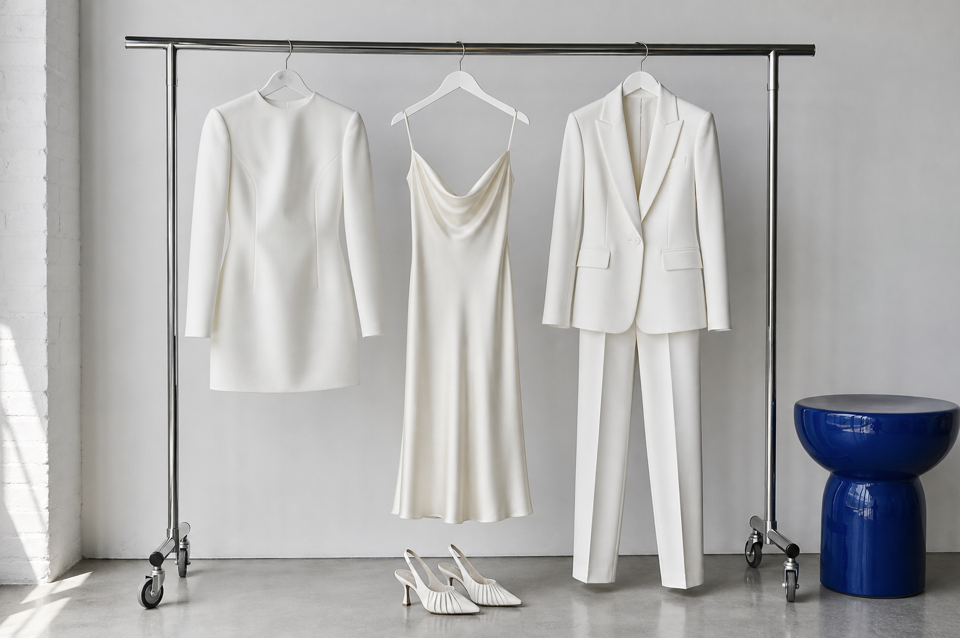
A ceremony look can be bridal through proportion and styling without imitating a salon gown.
These stores are strongest when a bride sees the wedding as several fashion moments: courthouse and dinner, ceremony and reception, or a destination weekend that needs more than one white look. Their best pieces can carry the ceremony, but the assortment also makes it easy to overshop. Choose the job of each look before browsing the next one.
7. Self-Portrait: polished detail without a cathedral train
Self-Portrait’s wedding collection trades in immediately legible details: guipure and fine lace, bouclé, pearls, sequins, fitted waists, crisp taffeta and sharply finished midis. It is particularly persuasive for city ceremonies, civil weddings, rehearsal dinners and brides who want a dress with visual workmanship but not the footprint of a formal gown.
The collection moves between minis, midis and maxis without treating length as a hierarchy of seriousness. A tailored bouclé midi can look more intentional at city hall than a generic floor-length dress; a lace maxi can work for the ceremony and still feel like fashion after the veil is removed.
Pay attention to hardware, embellishment and sleeve mobility. A beautifully fitted shoulder or jewel button can become uncomfortable after hours of hugging and sitting. Because many styles are structured and close to the body, compare garment measurements where available and leave tailoring time. The appeal is polish, not effortlessness.
8. Revolve: the fast-moving multi-brand white room
Revolve’s bridal-gown edit gathers dozens of fashion labels at prices that generally sit below luxury runway bridal. The mood is body-conscious, party-aware and camera-ready: strapless columns, lace gowns, cutouts, draped maxis and reception-friendly pieces appear together.
This is a useful site for a bride who knows the difference between a gown for vows and a gown for photographs. Some pieces are designed as bridal; others are white special-event dresses carried into the category. Inspect lining, closure, train, back view and customer photographs, then imagine the dress during the least glamorous part of the day: sitting through dinner, climbing stairs, using the restroom and dancing in heat.
Revolve’s speed and breadth make experimentation possible, but fast inventory can encourage a panic purchase. Do not let a “low stock” message replace the measurement check. The right use is a controlled shortlist of visibly different silhouettes, not six variations on the same social-media trend.
9. MESHKI: the modern event wardrobe
MESHKI’s bridal collection is organized across the wedding weekend: ceremony dresses, second looks, engagement, shower, bachelorette and honeymoon pieces. That taxonomy makes it easier to see a bridal wardrobe as a sequence rather than one endlessly repeated white mini.
The strongest ceremony candidates are streamlined maxis and structured silhouettes; the minis and separates can take over after dinner. MESHKI is especially relevant when the bride wants a fashion-forward look at a moderate ready-to-wear price and does not need the dress to imitate a traditional salon gown.
Construction still decides whether a piece can carry a ceremony. Check how the bust is supported, whether the fabric is doubled, where a slit ends when seated and what underwear remains possible. A product that works as a bachelorette dress may not withstand an outdoor aisle or formal photographs simply because it appears under “bridal.” Let the venue and duration promote the piece to wedding-dress status.
10. Shopbop: the white-dress search engine
Shopbop’s white bridal-dress department is less about traditional gowns and more about the full fashion vocabulary of white: poplin, crochet, silk, lace, leather, minis, midis and maxis from a wide spread of contemporary labels. The filters make it useful for a bride who has a specific material or length in mind.
This is where the phrase “wedding dress” can become pleasantly literal: the dress worn to the wedding, without a bridal markup or styling script. A crisp cotton maxi may be right for a coastal lunch; a sculpted Cult Gaia style can hold a city venue; a STAUD mini can be a ceremony look with deliberate shoes and a veil.
The category also contains pieces that are white but not engineered for all-day occasion wear. Look for lining, opacity, closures and care instructions. Shopbop is a productive edit for independent dressers and a poor substitute for bridal structure when substantial bust support or complex tailoring is required.
THE EVENINGWEAR HOUSES
Eveningwear designers often understand movement, embellishment and formal photographs better than a generic ready-to-wear label. They can be especially strong for mature brides, second weddings, religious ceremonies and anyone who wants sleeves or coverage without looking conservative by default.
11. Tadashi Shoji: lace, drape and occasion-tested construction
Tadashi Shoji’s wedding-dress collection includes floor-length gowns, tea-length dresses, jumpsuits and pieces with embroidered tulle, lace, illusion elements and draped sleeves. The assortment is not chasing a single bridal trend; it draws on the house’s longer eveningwear vocabulary.
That makes Tadashi Shoji particularly worth checking when sleeve treatment, soft coverage or movement matters. A draped cape sleeve can create presence without a heavy train. A tea-length embroidered dress can feel ceremonial while remaining practical for a restaurant or garden. The collection also gives alternatives to strapless corsetry without defaulting to a plain long-sleeve sheath.
Some pieces cycle through sale or limited availability, so confirm the specific item’s status and return terms. Embellished tulle and lace require a tailor who can preserve motifs and edge finishes. This is a place to shop construction and proportion, not merely a discount.
12. Mac Duggal: when the wedding dress is really an evening gown
Mac Duggal’s wedding shop spans bridal, wedding-guest and family occasionwear. Within the bridal edit, the interesting pieces borrow unapologetically from evening dressing: capes, pleating, embellishment, long sleeves, high necks and fluid floor-length silhouettes.
The label is useful for a bride who wants formality without a traditional salon narrative. It can also solve a coverage brief more elegantly than adding a separate jacket or bolero after the fact. Because many gowns rely on surface detail and soft drape rather than a rigid inner bodice, the correct undergarment plan needs to be tested early.
Inventory and promotions change, and a marked-down gown may carry different conditions from a full-price piece. Look closely at final-sale language and give an embellished dress time for professional hemming. Mac Duggal closes the edit because it demonstrates the central point: bridal relevance can come from how a dress performs at a ceremony, not from whether the designer calls it a wedding gown first.
HOW TO READ A FASHION PRODUCT PAGE LIKE A BRIDAL APPOINTMENT
Begin with the back. Front images are designed to attract; the back reveals closure, support, bra compatibility and how much tailoring will be visible. Then find the model’s height and size, but do not use her body as the measuring tool. Compare the brand’s measurements with a dress you own and with fresh body measurements taken by someone else.
Fabric composition needs interpretation. Silk may drape beautifully but show water and tension; polyester can travel well but vary greatly in hand and breathability. Viscose can move fluidly yet crease. Lace can be soft or abrasive. “Stretch” does not identify where the garment stretches or whether the lining moves with it. Reviews and product video can answer some of these questions; customer service should answer the rest.
Finally, read the commercial facts as part of the design. A preorder dress, final-sale gown or piece with only one size left is a different creative proposition from a returnable style in stock. The most original dress on the page is not the best online purchase if there is no credible route from delivery to a finished fit.
THE EDIT, CONDENSED
For a first fitting and the option to keep service connected, begin with David’s Bridal. For relaxed fashion minimalism, Reformation is the clearer language; for architectural bridal, KYHA. NET-A-PORTER and Mytheresa offer the strongest luxury-designer comparisons, while Moda Operandi is the discovery route. Self-Portrait handles polished civil and ceremony dressing; Revolve and MESHKI understand the ceremony-to-party shift. Shopbop is the broad contemporary white-dress search, Tadashi Shoji brings eveningwear construction, and Mac Duggal offers formal alternatives to salon bridal.
There is no requirement that the final choice resemble the result for the query “wedding gown.” It does need to fit the event, survive the day and arrive under terms the buyer understands. Fashion can expand the answer. Evidence is what makes the expanded answer safe to buy online.