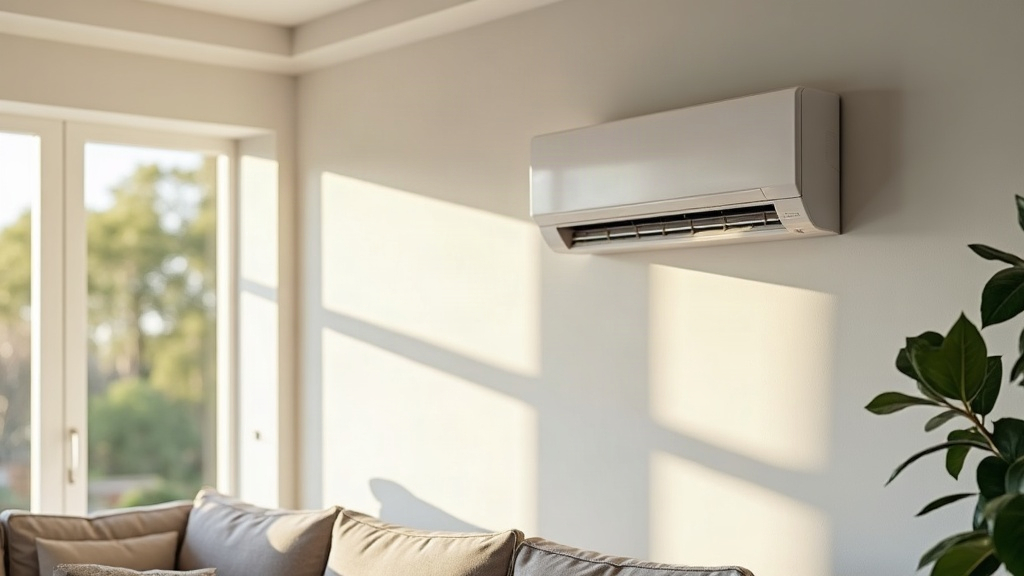
Most families who decide on refrigerated cooling for the whole house end up choosing between two very different paths: one ducted reverse cycle system hidden in the roof, or several split systems mounted room by room. Both can keep a Perth home comfortable through a 40-degree week. They differ in cost, in how the house looks and sounds, in how you control them, and in how they behave when the power bill arrives.
This is a practical guide to that decision, written for people who would rather get it right once than rip it out in five years.
What each option actually is
Ducted reverse cycle is a single large indoor unit in the roof space connected to one outdoor compressor, with insulated ducts running to a vent in each room. It heats and cools the whole house and, on a modern system, splits the home into zones you switch on and off independently.
Multiple split systems are individual wall-mounted heads, each with its own outdoor unit (or several heads sharing one outdoor unit in a multi-head setup). Each room is its own little climate with its own remote.
Where ducted wins
- Nothing on the walls. For a new build or a full renovation, ducted is the invisible option: a small vent in the ceiling and a single controller. Real estate agents notice it too.
- One system, whole house, one controller. Zoning lets you cool the living areas by day and the bedrooms at night without running the whole home.
- Even comfort. Well-designed ducting gives every room, including the back bedrooms that splits often miss, the same air.
- Heating included. As reverse cycle, it replaces gas heating in winter as efficiently as it cools in summer.
Ducted’s weaknesses are equally clear: it costs more upfront, it needs roof space and a proper design, and if it is poorly zoned you can end up paying to cool rooms nobody is in.
Where several splits win
- Lower upfront cost, especially room by room. You can start with the living area and main bedroom and add rooms as budget allows.
- Independent control. Each room runs only when someone wants it, which suits households where people keep different hours.
- Retrofit-friendly. No roof cavity needed, minimal disruption, and a good option for older homes or where ducting is impractical.
- Redundancy. If one unit fails, the rest of the house still works.
The trade-offs: outdoor units multiply along the side of the house, indoor heads are visible in every room, and cooling four or five rooms with separate units can cost more to run than one properly zoned ducted system.
The running cost question, honestly
Neither option is automatically cheaper to run. A ducted system cooling the whole house all day will cost more than one split cooling one room. A ducted system zoned to the two rooms in use will often beat four splits running at once. The honest answer is that running cost follows behaviour and design more than the technology: correct sizing, high energy-star equipment, sensible zoning and an insulated roof space matter more than which box you chose.
Sizing is where most installs go wrong
The most common complaint about either system is not the brand, it is capacity. Undersized systems run flat out on the hottest days and never get there. Oversized ones switch on and off constantly, never dehumidify properly and wear out faster. Sizing a whole-home system properly means measuring the rooms, ceiling heights, glass area and orientation (Perth’s west-facing rooms cop the afternoon sun), insulation and how the house is used. A proper site assessment is not a sales step, it is the engineering.
Questions that usually decide it
1. Are you building or renovating (ducted becomes much easier) or retrofitting a finished home (splits are simpler)?
2. Do you want the whole house conditioned most of the time, or a few rooms at specific times?
3. Does the roof cavity have room for a ducted unit and duct runs?
4. How much do visible indoor heads and multiple outdoor units bother you?
5. What is the budget now, and could it be staged?
Answer those five and the choice is usually obvious. Many Perth homes also land on a hybrid: a ducted system for the main living areas and bedrooms, plus a single split in a home office or granny flat.
Getting the install right
Whichever way you go, the quality of the design and installation decides whether the system delights or disappoints. A professional air conditioning installation in Perth starts with the assessment, matches the equipment to the home rather than the other way around, and is carried out by licensed refrigeration and electrical trades. If ducted is the answer, the duct design and zoning plan are the heart of a good ducted air conditioning installation, and it is worth asking any installer to walk you through both before you sign.
Book before the heat
Installers across Perth fill up the moment the first run of hot days arrives, and ducted jobs in particular need lead time for design and supply. Deciding in spring means a considered choice, your pick of dates and a cool house before summer rather than a fortnight into it.
*Joondalup Heating & Cooling designs and installs ducted reverse cycle, split system and evaporative cooling across Perth’s northern suburbs and metro area.*