There was a time when a luxury brand’s reach ended at the product. A car stayed in the garage. A watch stayed on the wrist. A necklace stayed in its velvet box.
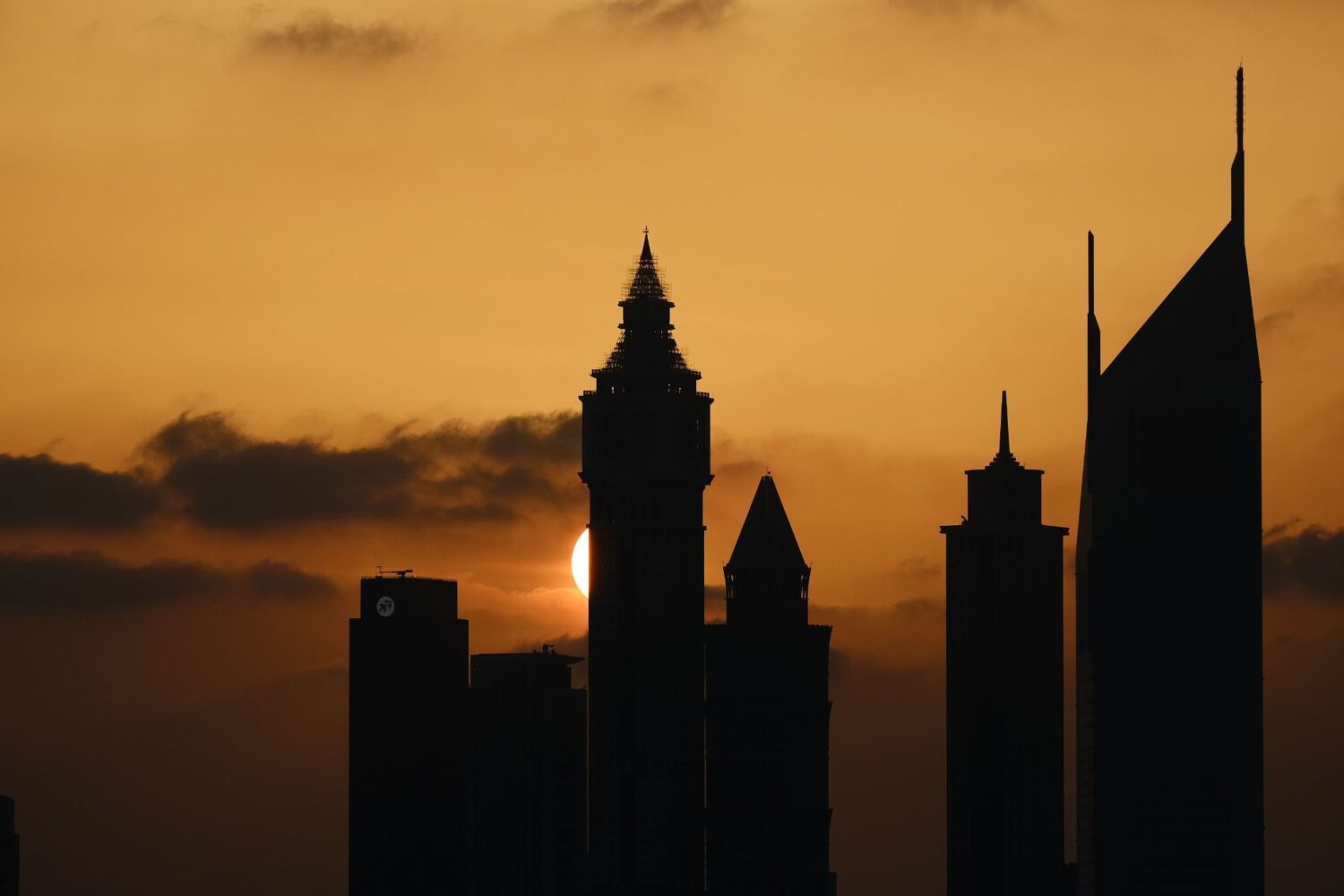
That boundary has quietly dissolved. Today, some of the world’s most recognizable houses of speed and sparkle are lending their names, and their design languages, to residential towers. Nowhere is this happening more visibly than in Dubai.
The question is not simply whether it works commercially. It is what these buildings say about how luxury now wants to be lived in, rather than merely owned.
A Skyline That Already Speaks in Superlatives
Dubai has never been shy about scale. Its skyline is a catalog of records, anchored by the Burj Khalifa, which sits at the top of Britannica’s list of the world’s tallest buildings, a ranking arbitrated by the Council on Tall Buildings and Urban Habitat.
In a city where height is already abundant, height alone stopped being a differentiator some years ago. The next frontier was identity. If every tower is tall, what makes one unforgettable?
The answer, increasingly, is authorship. A building associated with a name that already means something to buyers arrives with a story before the first resident moves in.
It helps that Dubai has always understood the theater of luxury. The city’s historic Gold Souk, promoted by its own tourism authority as one of its signature experiences, has long made precious metal and gemstones part of the public spectacle. A tower that borrows the vocabulary of fine jewelry is, in a sense, a very Dubai idea.
What a Dubai Property Search Reveals About Branded Towers
The shift becomes clear the moment you look beyond headlines and into what is actually being built.
Binghatti, one of the city’s most prolific developers, lists its current luxury Dubai projects across Business Bay, the Burj Khalifa district, Jumeirah Village Circle and Jaddaf Waterfront, and running a Dubai property search through its portfolio shows how central brand partnerships have become to the developer’s identity.
Among those collaborations are Bugatti Residences in Business Bay, a tower created with the Jacob & Co jewelry house, and residences developed with Mercedes-Benz. Each partner brings a very different design sensibility, and each project is positioned less as an apartment building than as an extension of the brand itself.
It is a striking cross-section. A hypercar marque, a high jeweler and a luxury car maker, all expressing themselves through concrete, glass and interiors.
What unites them is the belief that the emotional pull of a brand can be translated into architecture.
How a Car Becomes a Building
The translation is rarely literal, and the most successful examples avoid obvious gimmicks.
Automotive design is about proportion, surface and motion. Facades can echo that with sculpted lines, dynamic curves and details that feel engineered rather than decorated. Interiors can borrow materials associated with the brand, from specific finishes to lighting cues, without turning a living room into a showroom.
Jewelry design works differently. It is about light, facet and precision. A jewelry-inspired tower tends to play with reflection and geometry, catching the desert sun the way a cut stone catches light.
In both cases, the brand’s contribution is less a logo than a grammar. The best branded buildings feel as if the house’s designers had been asked to imagine their product at architectural scale.
What Buyers Are Really Paying For
It would be easy to dismiss branded residences as expensive badges. That misses the point.
For many buyers, the appeal is recognition. A name they already trust carries implicit promises about quality, finish and exclusivity. In a crowded market, that shorthand is valuable.
There is also the matter of belonging. Owning a residence associated with a house you admire places you inside that brand’s world in a more lasting way than any single purchase could.
And for some buyers, there is a practical dimension. Dubai links significant property ownership to long-term residency. According to the Land Department, investors holding property worth AED 2 million or more may apply for a ten-year renewable residence permit, with the ability to sponsor family members.
That does not make every branded apartment a residency play. It does explain why high-end towers attract an international audience that might otherwise treat Dubai as a holiday destination rather than a place to live.
The Case for Caution
Not everyone is convinced, and the skepticism is worth taking seriously.
A brand name does not guarantee good architecture. Licensing arrangements vary, and the depth of a luxury house’s involvement can range from genuine design collaboration to little more than a name on the entrance. Discerning buyers look past the logo to the substance: the architect, the build quality, the floor plans and the developer’s track record.
There is also the question of permanence. Fashion moves fast. Buildings are expected to last decades. A design language that feels electric today must still look considered in twenty years.
Regulation adds another layer. Residency benefits come with conditions, and residency guidance from the Dubai authority specifies that property value must be certified by the Land Department, and that shared ownership requires each individual share to meet the threshold. Glamour does not replace paperwork.
The strongest branded residences acknowledge all of this. They treat the brand as a starting point for design, not a substitute for it.
Why This Moment Belongs to Dubai
Branded residences exist in London, Miami and New York too. Dubai has simply embraced them with unusual confidence.
Part of that is space and speed. Few cities can conceive, approve and complete a landmark tower as quickly. Part of it is audience. Dubai sells to the world, and global brands speak a global language.
And part of it is temperament. This is a city that has always treated architecture as spectacle, from record-breaking towers to artificial islands. Letting a car marque or a jewelry house shape a skyline fits that instinct perfectly.
The result is a new kind of luxury landscape, where the line between object and environment has blurred. You no longer just drive the car or wear the watch. You can wake up inside its design philosophy.
The New Address as Statement
The most interesting thing about this trend is not the towers themselves. It is what they reveal about how luxury has evolved.
For decades, luxury was about possession. Now it is increasingly about immersion, about living inside a world rather than owning a piece of it.
Dubai, with its appetite for the extraordinary, has become the natural stage for that shift. Whether these towers age into genuine icons or remain curiosities of a particular moment, they have already changed the conversation about what a luxury brand can be.
Once, a name was stitched into a label. Now, it can be written across the sky.