
McLaren Mastercard Formula 1 Team joins forces with Central Saint Martins to challenge 46 emerging designers to reinterpret 60 years of racing history, transforming legendary drivers, liveries and engineering into 12 original runway looks.
There are few environments where design is pushed as relentlessly as Formula 1. Every surface has a purpose, every gram is questioned and every fraction of a second matters. Yet beneath the engineering, data and mathematics is something profoundly creative: the belief that what already exists can always be reconsidered, refined and made extraordinary. Fashion is driven by much the same instinct.
Now those two worlds collide in Designed to Race, a new collaboration between McLaren Mastercard Formula 1 Team and Central Saint Martins, University of the Arts London, placing six decades of racing history in the hands of 46 emerging designers and asking them to imagine it anew.
Students from Central Saint Martins’ MA Fashion course have worked in 12 groups to create original concept looks inspired by defining moments across McLaren’s history, from the audacious colours and silhouettes of the 1970s to the unmistakable Papaya of the modern team.
It is not simply a retrospective rendered in fabric. It is an invitation to a new generation of creative talent to take one of motorsport’s most recognisable visual identities, dismantle it and ask where it might go next.
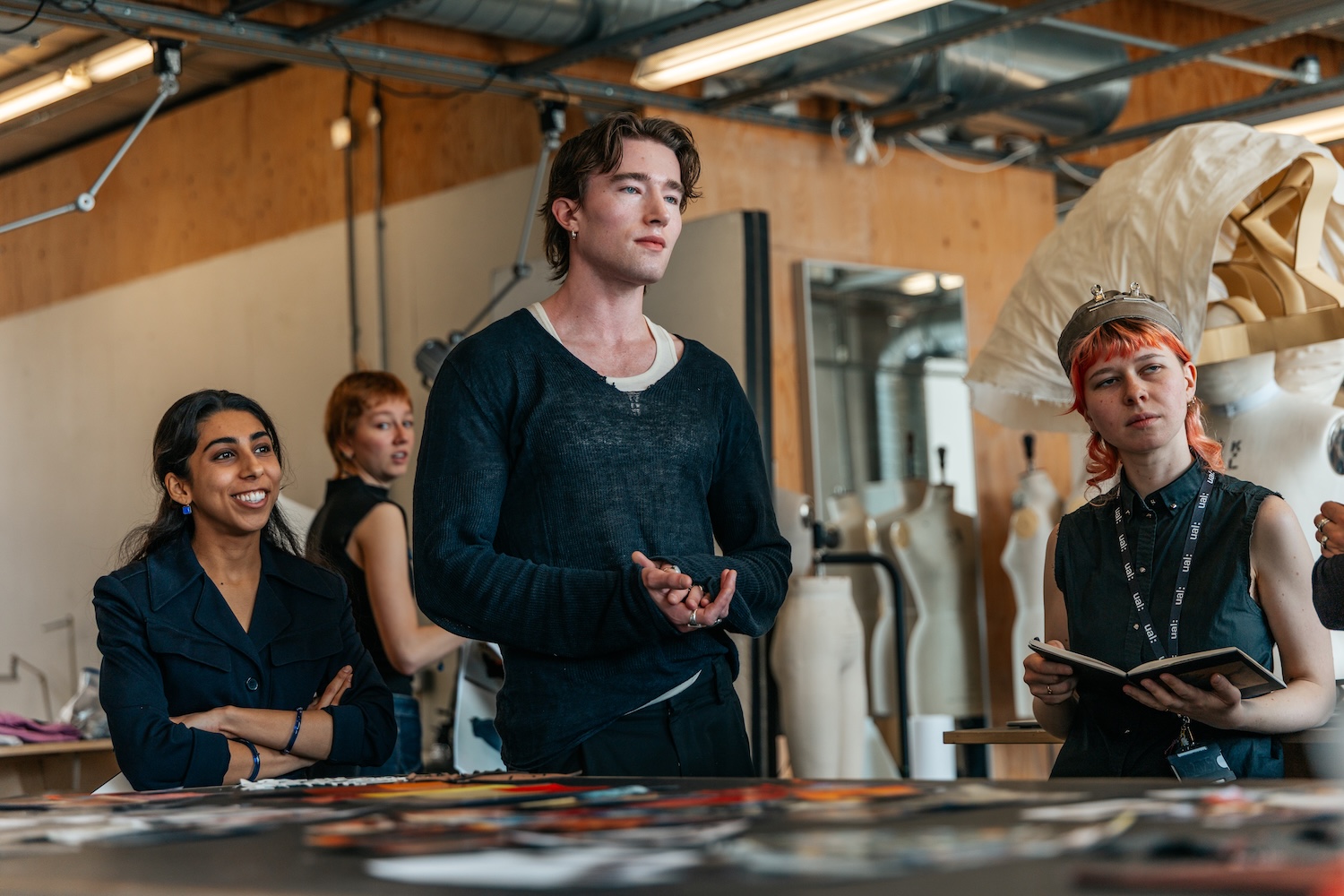
Since entering its first Formula 1 race in 1966, McLaren has become one of motorsport’s defining names, amassing 23 Formula 1 World Championships and more than 200 Grand Prix victories. That history also provides an extraordinary visual archive.
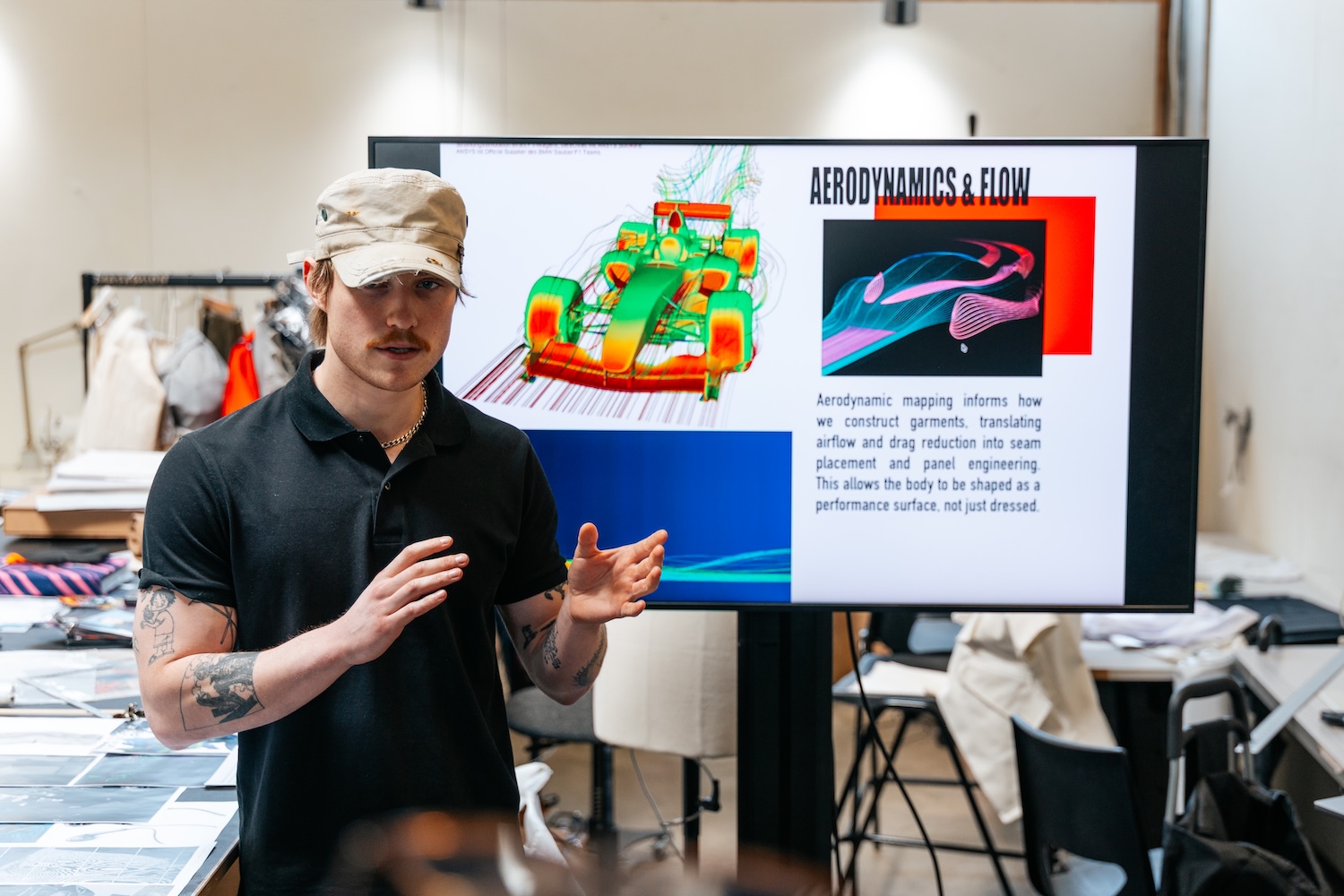
Some of the Central Saint Martins students looked to the personalities who helped shape it: James Hunt’s famously nonchalant approach to racing style, or the brilliant yellow helmet that became inseparable from Ayrton Senna. Others turned to McLaren’s championship-winning cars, historic liveries and the aerodynamic principles that allow a Formula 1 machine to carve through air at extraordinary speed.
Engineering details become silhouettes. Racing colours become textiles. Technical construction is translated into tailoring. Materials, textures and forms once created for performance on the circuit find themselves reinterpreted on the human body.
McLaren partner Dell Technologies has supported the process as technology partner, providing XPS laptops for the students to research, develop and evolve their concepts from first idea to finished design.
What emerges is far more interesting than motorsport-inspired clothing. It is an exercise in creative transformation: 60 years of engineering, personalities and visual culture becoming raw material for something entirely new.
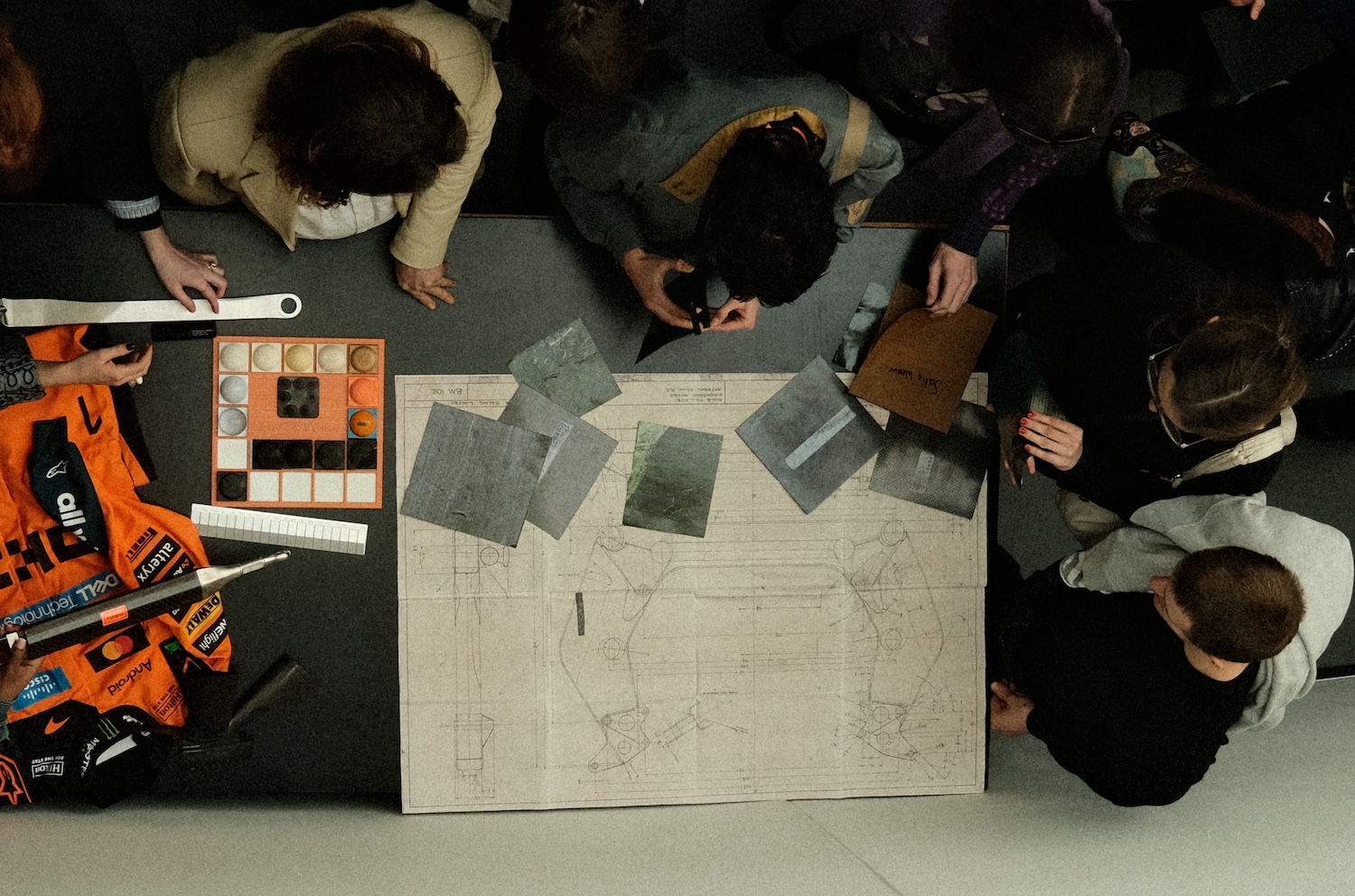
The connection between Formula 1 and fashion runs deeper than aesthetics. Both disciplines begin with imagination, but neither can survive on imagination alone. Ideas have to become physical. Materials have to perform. Proportions must be considered, tested and refined. The smallest detail can alter the finished result completely.
A seam can change the way a garment moves. A millimetre can change the performance of a racing car.
“Formula 1 is influencing culture in ways we’ve never seen before today’s fans engage with the sport through fashion, music, design and social media as much as they do through what happens on the racetrack. Today 1 in 3 fans actively consider fashion and style as important in the way they want to express their fandom,” says Louise McEwen, Chief Marketing Officer at McLaren Racing.
That evolution has helped turn Formula 1 into something far larger than a sporting championship. Its drivers have become global cultural figures, its liveries instant visual signatures and its paddocks increasingly intertwined with fashion, music and contemporary design.
For McLaren, Designed to Race allows that relationship to be explored through the people who may shape those worlds next.

“Designed to Race explores that cultural influence through the eyes of the next generation of creative talent, who resolutely mirror our high-performance culture and commitment to detail. Working with Central Saint Martins has brought to life the connections between fashion and racing, allowing us to see our history reinterpreted in fresh and unexpected ways.”
There is something particularly powerful in that approach. Heritage does not have to remain fixed to retain its value. Placed in the right hands, it can become a catalyst.
Central Saint Martins has long been associated with designers who challenge convention rather than simply inherit it. The college’s influence on global fashion has come from creating an environment in which emerging talent is expected to question established ideas, experiment freely and develop an unmistakable point of view. This collaboration takes that philosophy beyond the classroom.
“At Central Saint Martins, we believe the most valuable learning happens when students are challenged to apply their creativity in real-world contexts,” says Fabio Piras, Course Leader for MA Fashion at Central Saint Martins.
“This collaboration gave our students the opportunity to work with one of the most powerful brands in global sport; and one that has led the way in working with partners to design wearable, inclusive collections, which has connected fans with the team over a number of years.”
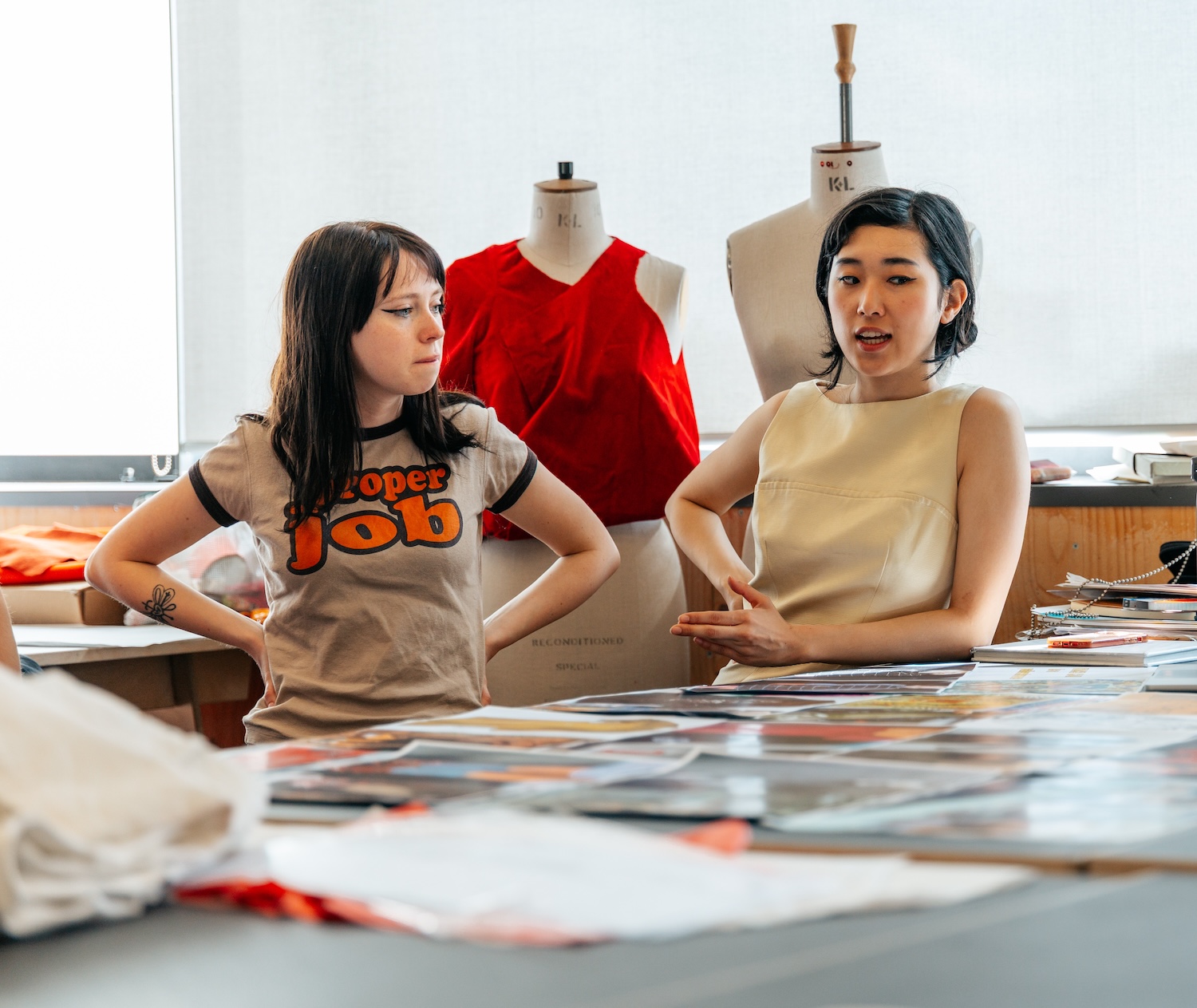
For an emerging designer, opportunities such as this can be transformative. Talent needs more than encouragement. It needs access to extraordinary references, ambitious briefs, new technology and, crucially, a platform large enough for original thinking to be seen.
“Beyond the design challenge itself, the collaboration has provided a platform for our MA students to develop their creative practice, collaborate across disciplines and present their work to a wider audience,” Piras continues. “We’re proud to see our students engaging with new ideas, pushing creative boundaries, and demonstrating the role design can play in connecting different worlds.”
That may prove to be one of the project’s most important achievements. The finished garments matter, but so does the confidence created by asking young designers to work at this scale — and trusting them to respond with ideas no one else could have produced.
Ahead of London Fashion Week, the project will culminate at the McLaren Technology Centre, where the students’ work will be presented alongside selected pieces from McLaren’s own history.
For one evening, a building synonymous with engineering, speed and competition will become a runway. The setting could hardly be more appropriate. Past and future will occupy the same space: historic McLaren references alongside designs created by young people encountering that legacy from an entirely different perspective.
For one evening, six decades of McLaren history will meet the imagination of 46 emerging designers, as the Technology Centre is transformed into a runway for 12 original looks shaped by speed, heritage and the future. And perhaps that is what makes Designed to Race feel more significant than a conventional fashion collaboration.
The most exciting element is not simply what the students have discovered in McLaren’s past, but what this opportunity may unlock in their own futures.
Among those 46 designers may be names whose work will one day shape fashion far beyond this project. For now, they are being given the chance to experiment, to be ambitious and to show what happens when established institutions make genuine room for new ideas.
Visionary design has never advanced by asking the next generation to reproduce what came before. It moves forward when they are given the history, the tools and the stage, and trusted to take it somewhere nobody expected.