Wealthy hotel owners displaying art across their properties is hardly an unusual phenomenon. The Hilton Cavalieri in Rome may have been one of Conrad Hilton’s defining monumental modernist statements, but it hasn’t stopped the current owners draping their huge 18th-century tapestries all over it, while the more recently launched Fife Arms in the Scottish Highlands is effectively a showcase for its gallery-owning family’s stable of in-house artists. Even so, what Neapolitan businessman Alfredo Romeo has delivered with his very comprehensive contemporary art collection at the Romeo Napoli, sited right on the Naples waterfront, is quite unique, and as far as the Naples hospitality scene goes – somewhat “out there”.
Romeo is an avid collector of mostly, though not exclusively, modern, invariably Italian, often Neapolitan art. He’s also, in recent years, emerged as a hotel collector, with Romeo Napoli, which debuted in 2008, joined by Romeo Roma in 2024, and the eagerly anticipated Romeo Massa Lubrense scheduled to open on the Sorrento coast in 2027. All of these art-infused hotels are, unsurprisingly, now labelled the Romeo Collection.
Though something else has also been collected along the way in the form of several of the most prestigious names in modern architecture. The Rome property is attributed to the renowned Anglo-Iraqi starchitect Zaha Hadid, while Massa Lubrense is entrusted to Kengo Kuma, one of the most acclaimed architects practising in the world today, with the architect chosen for Romeo Napoli, Pritzker prize-winning Kenzo Tange, celebrated as one of the 20th Century’s most notable architectural influences.
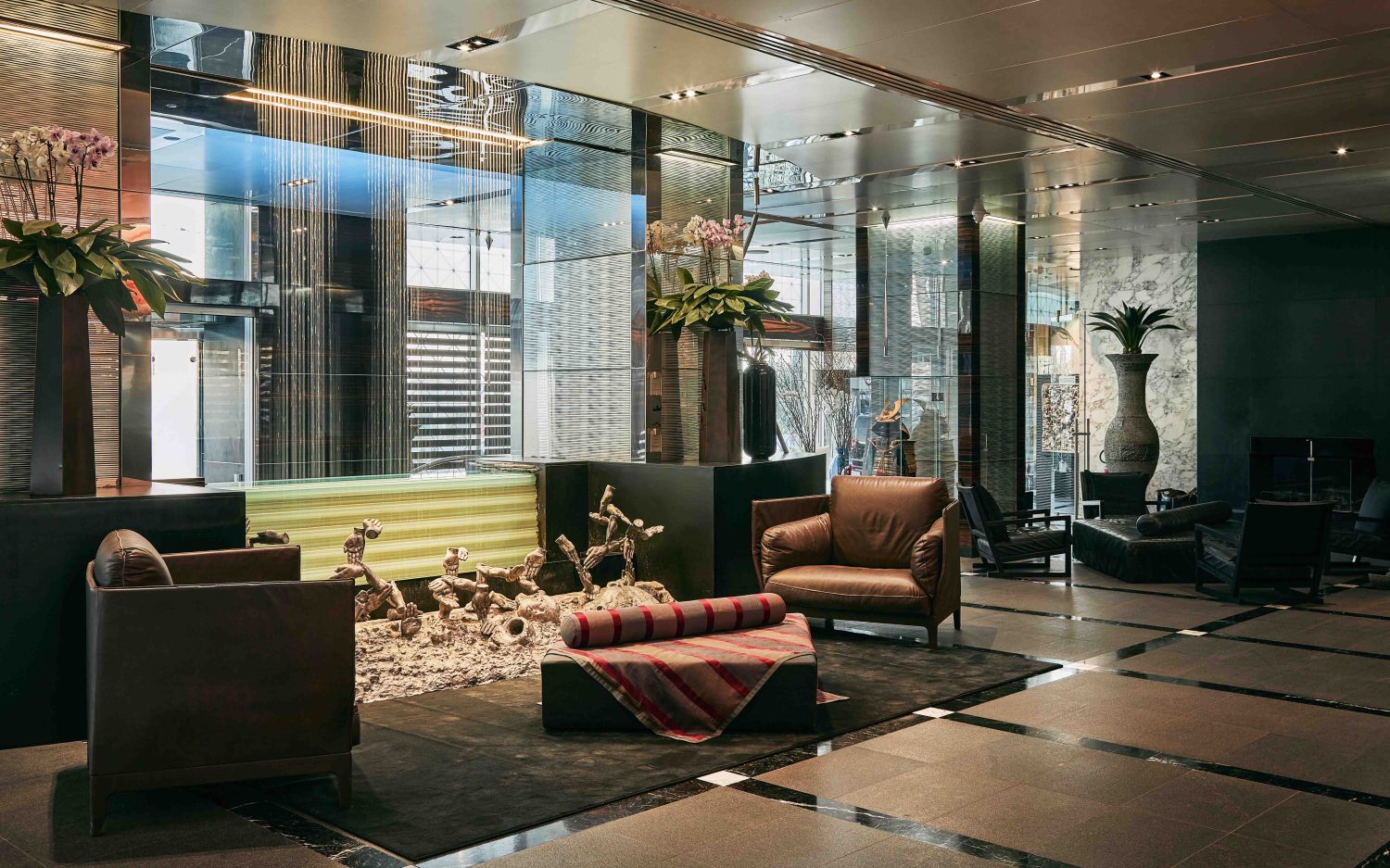
Enveloped in a wavy double-skin outer covering of steel and glass channeling its maritime associations, the building housing the hotel, like Naples itself, doesn’t shy away from letting you know what it’s all about. Incoming guests are met from right across the threshold by the first of a multitude of artworks: a cascading water feature and a die-cast aluminium sculpture of human hands by Neapolitan artist Christian Leperino.
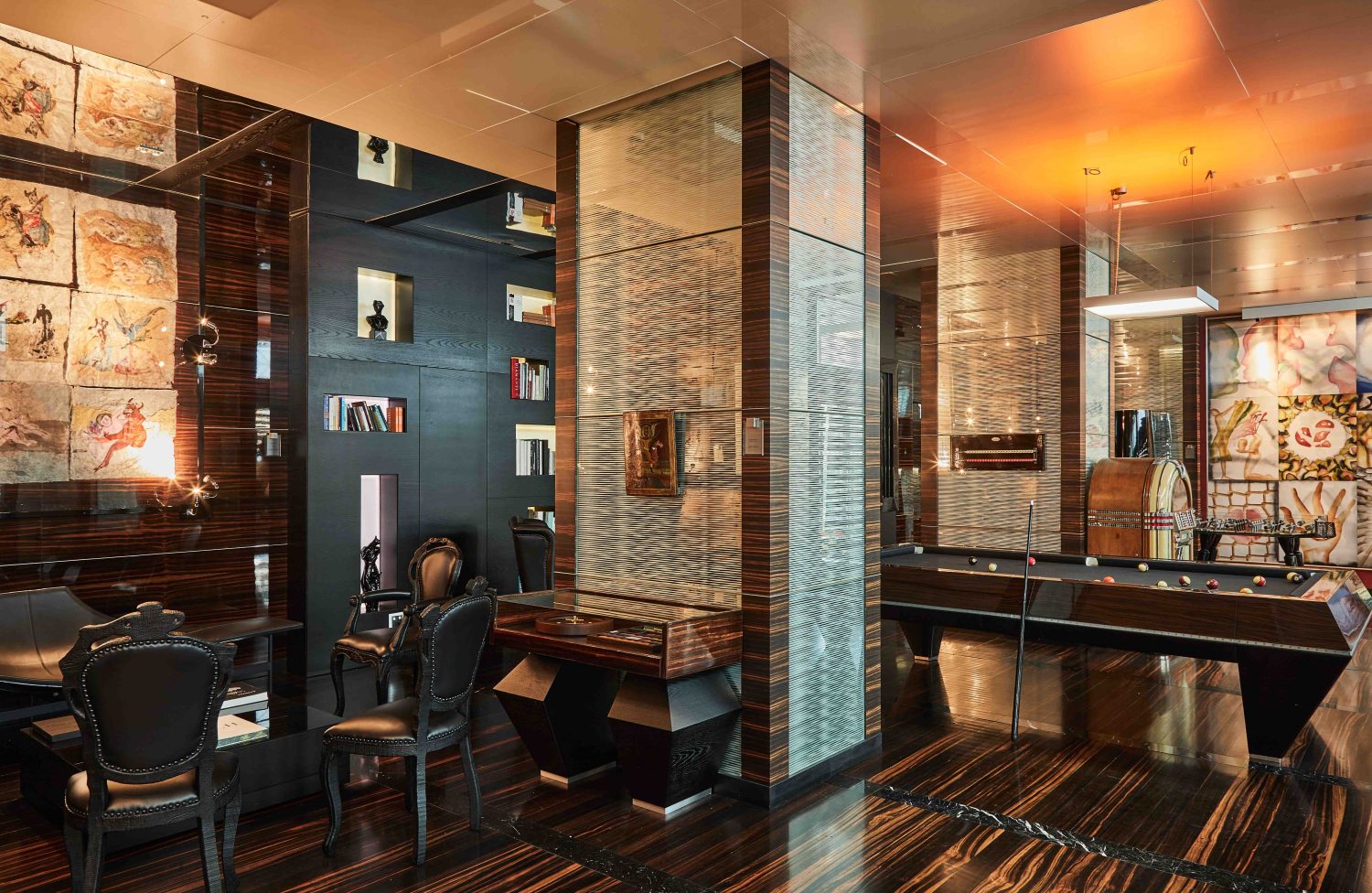
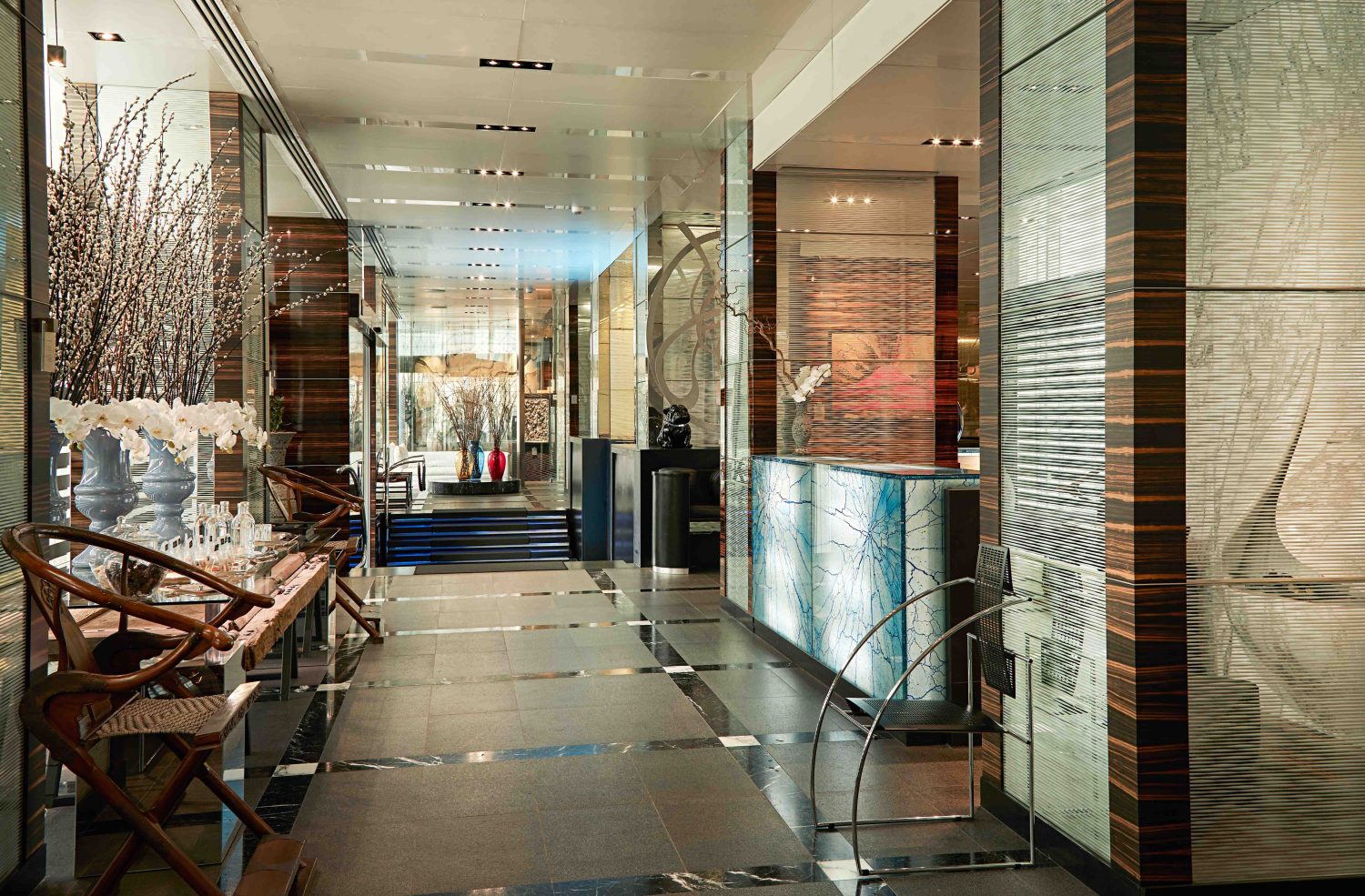
Check-in is conducted under the gaze of a vivid Andy Warhol print of an erupting Vesuvius with a vintage Wurlitzer jukebox visible in the ‘games room’ behind, while a couple of sets of 17th-century Edo period armor look on like a silent samurai security detail. A bright red painted baby grand piano nestles up to a marble pillar, one of the few remnants of the original 16th-century palazzo to survive the WWII bombing, while designer chairs hang on the walls like paintings. Art of all genres and styles, including works from Mark Chagall and Warhol contemporary Mark Kostabi, is absolutely everywhere. The reception desk of the Holiday Inn, this is not.
While the lobby level unfolds in this engagingly eclectic manner in all directions, housing perhaps the greatest concentration of artworks in the building, art nevertheless accesses all areas. You might find yourself sitting on a collectable mid-century sofa while waiting for the lift or confronting Christian Leperino’s striking array of sculptured heads as you enter the restaurant for breakfast. Art is omnipresent.
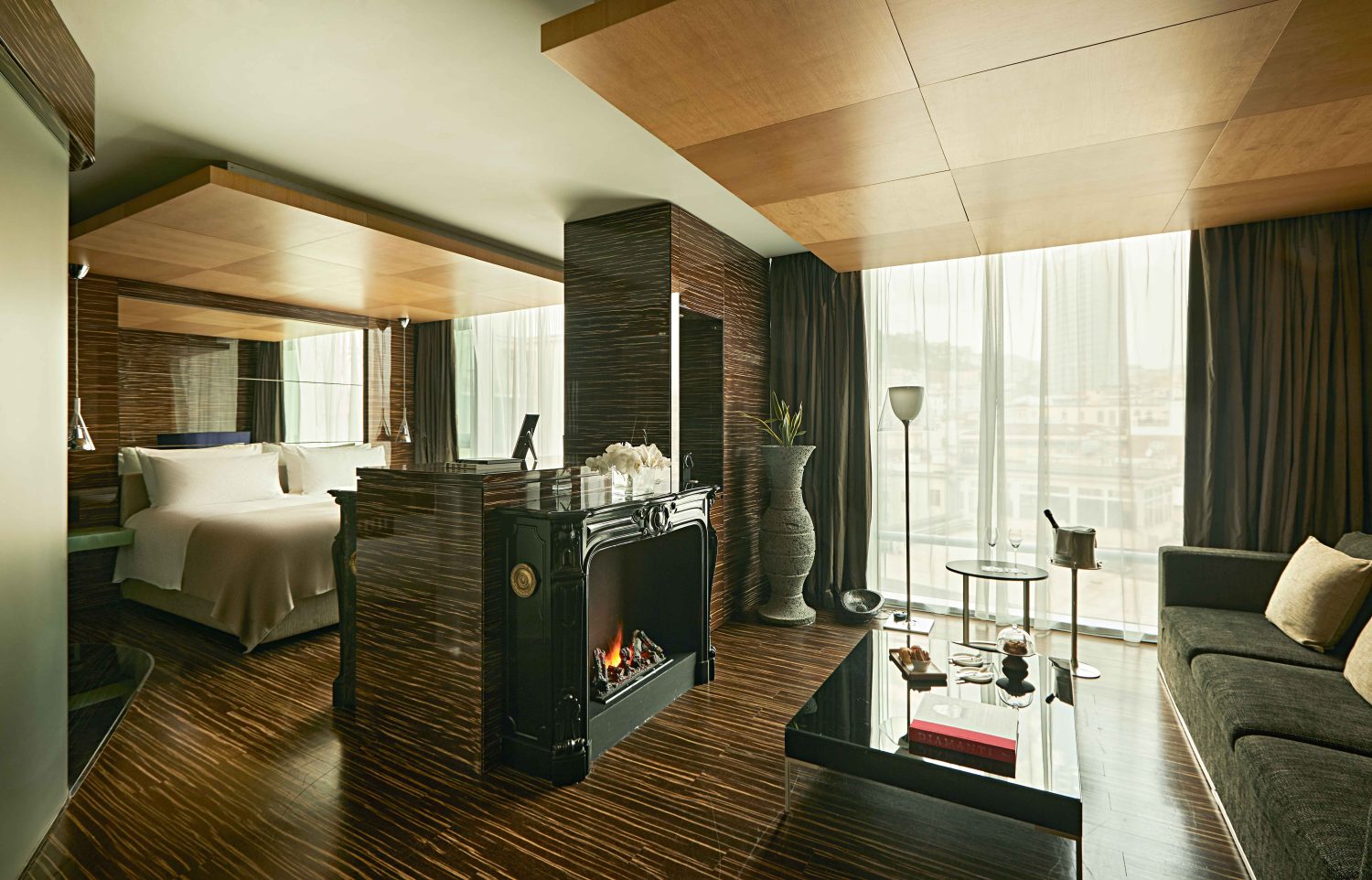
There are 77 rooms and suites ranging from 13 sq.m. superior rooms to the 165 sq. m. penthouse, all categorized by a sleek, unrestrainedly contemporary, colorful style template utilising sumptuous materials such as Nero Marquina marble and Vesuvian lava stone. A pronounced preponderance of a deep brown, beautifully veined, Makassar hardwood, often heavily lacquered, conveys a glitzy veneer to the overall design aesthetic inside the rooms. While some rooms on the lower floors can find themselves looking out onto the remnants of Naples’ formerly gritty dockside, the upper floors command unimpeded and utterly mesmerising film location vistas out across the sun-strafed Bay of Naples towards Sorrento, Vesuvius, and in the distance, Capri.
The 8 floors of accommodation are bookended by a restaurant and terrace bar at the top of the building and a wellness centre underneath it. Although wellness centre is a little disingenuous, as what unfolds across the basement area is an exclusive, secluded sanctuary dedicated to pre-eminent pampering under the auspices of Sisley Spa, the highly acclaimed, Paris-based luxury skincare brand. Still under the original founding D’Ornano family’s ownership, the brand’s use of bright colours and an affinity for embellishing its spaces with artworks would seem to make it a natural bedfellow for the Romeo Collection.
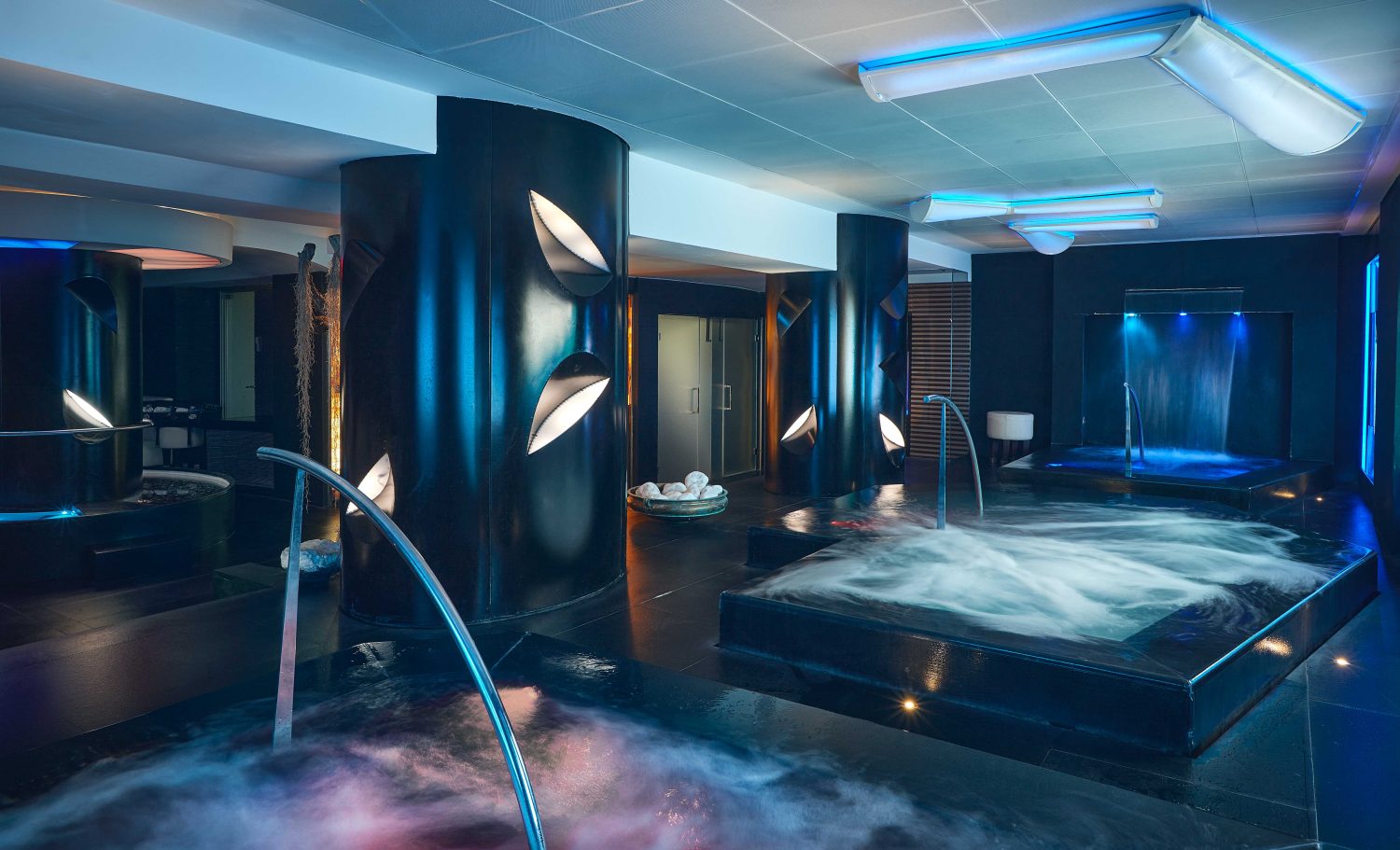
Extending over 1000 sq m. and incorporating saunas, hammams, several pools of varying temperatures, a Himalayan salt room, snow cascade, Phyto-aromatic pods, and expansive relaxation areas, Sisley’s comprehensive offering of sophisticated treatments makes this underground refuge of relaxation the perfect pit stop after a day spent interfacing with the glorious never-ending cacophonous chaos that is Napoli.
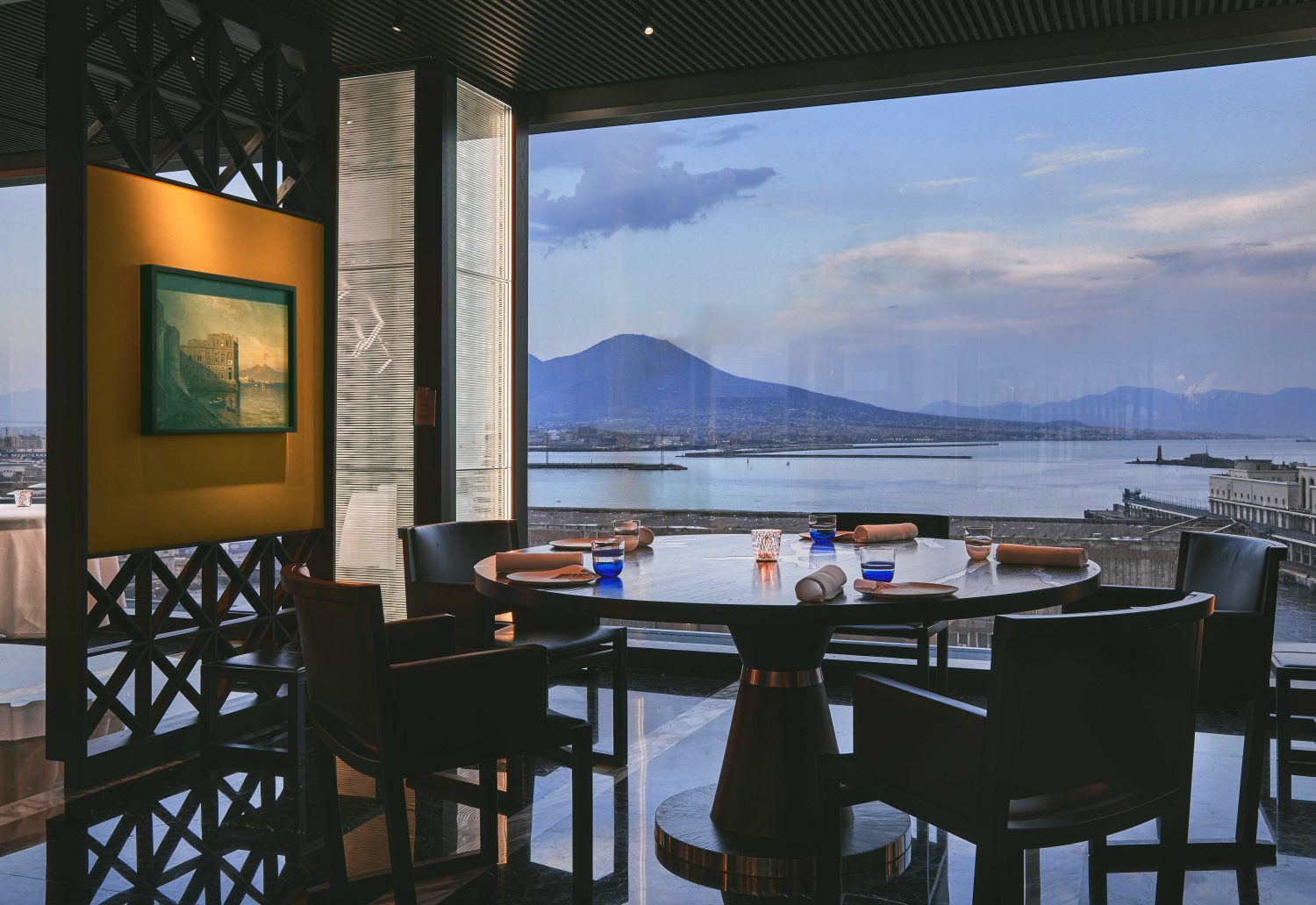
Up on the 9th floor of a building that had previously served as the corporate headquarters of the Lauro Shipping Company is the Romeo’s restaurant, absorbing both those spectacular Bay of Naples views as well as across the cityscape to the rear. Located in what was originally the personal office of CEO Achille Lauro, the restaurant had formerly been “Il Comandante”, as the enigmatic Signor Lauro was known to all and sundry. In 2024, however, Alain Ducasse, the world’s most Michelin-starred chef, inaugurated his first Italian restaurant in the space, which, given its historical Comandante connotations and Kenzo Tange’s nautical vision, is like being ushered into an ultra-chic dining space on some vast superyacht.
French by birth but Monegasque by adoption, Ducasse is well-versed in, and highly respectful of, Italian cuisine. His 3-starred mother-ship restaurant, Le Louis XV in Monte Carlo, already has one of its feet firmly planted in Italy, and the gastronomic pre-eminence at Il Ristorante Alain Ducasse reflects this culinary expertise with both French and Italian cuisines.
The executive chef, Alessandro Lucassino, originally from Tuscany, has worked his way up through several of Ducasse’s Parisian operations, notably the Hotel Plaza Athénée, which under Ducasse held 3 Michelin stars. The Plaza is also where Ducasse had his well-publicised epiphany, pivoting away from a traditional meat and dairy-based cuisine into what he labelled naturalité, prioritising fish, vegetables, and grains, with produce sourced as locally as possible. Lucassino is, therefore, ideally positioned to blend Ducasse’s interpretation of contemporary French cooking with an Italian orientation, whilst drawing on the exceptional premium produce from around Naples and its Bay: think Amalfi lemons, Piennolo tomatoes from Vesuvius, Provolone del Monaco cheese from Sorrento, the isle of Ischia’s purple prawns, and the famed local red mullet.
In addition to a la carte, there are tasting menus of seven or five courses, with my immersion into the latter leaving no doubt whatsoever as to why the restaurant received its first Michelin star in 2025. Under the solicitous oversight of sommelier Fabio Goglia, whose trips to the glass-walled wine cellar located down in the lobby as if one of its artworks, to seek out what proved to be truly exceptional wine pairings, dinner, with lights twinkling through the floor-to-ceiling windows, unfolds into a magical, gastronomic extravaganza.
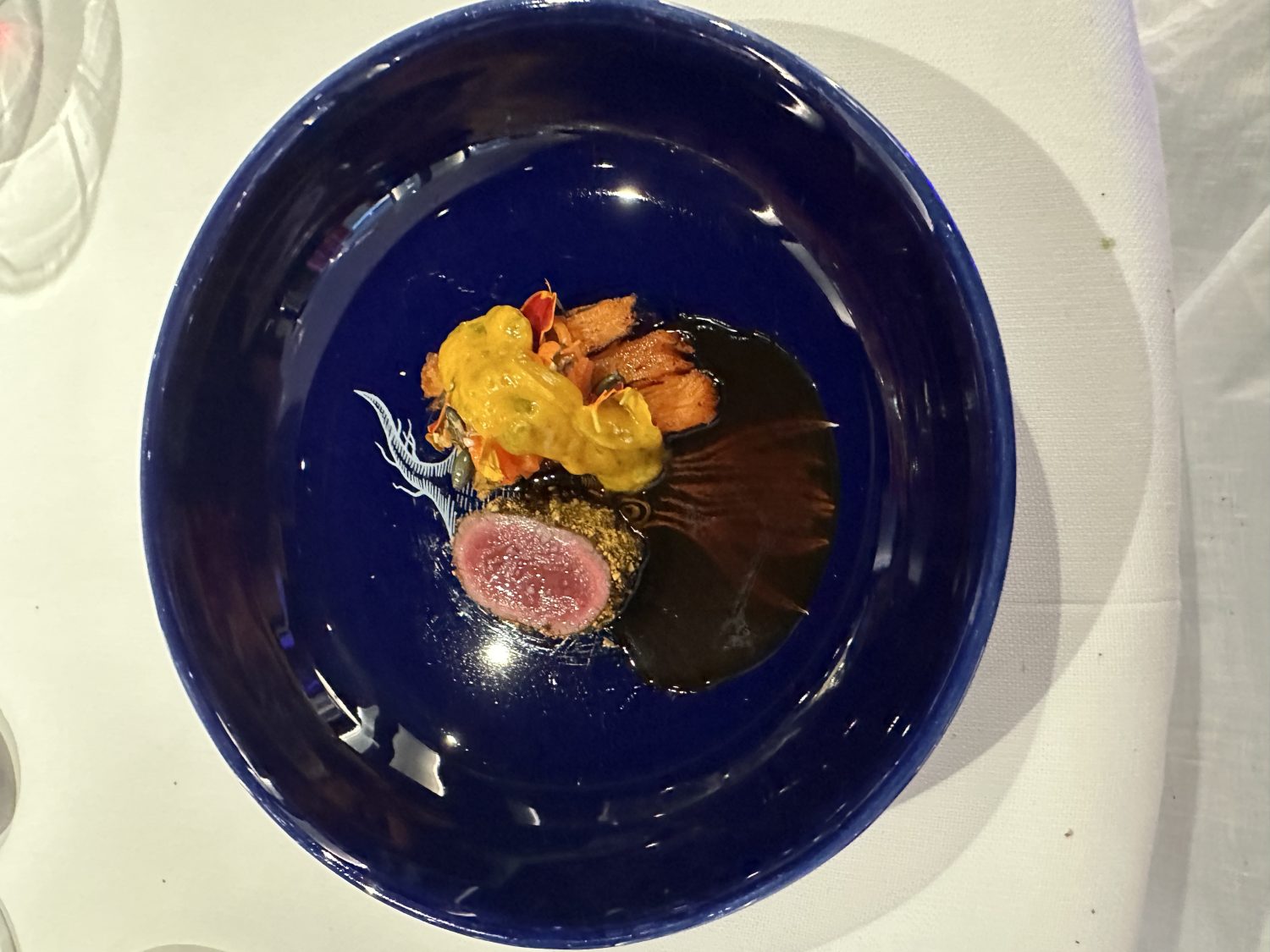
Casarecce pasta in a scarpariello (shoemakers) cherry tomato and pecorino sauce, with its origins in Naples’ nearby Spanish Quarter, where shoemakers might have been paid with ingredients by cash-strapped customers, was a delicious diversion into the city’s culinary backstory. Red mullet fillets interspersed with carrot kimchi and shellfish, along with venison accompanied by red Kuri squash arranged into its deep blue ceramic dish like yet another artwork, confirmed the impressive skillset that underpins Lucassino’s outstanding Franco-Italian haute cuisine. A deeply indulgent and indisputably delicious chocolate mousse guaranteed to get the chocaholic pulse quickening was made using chocolate from the Ducasse Manufacture in Paris.
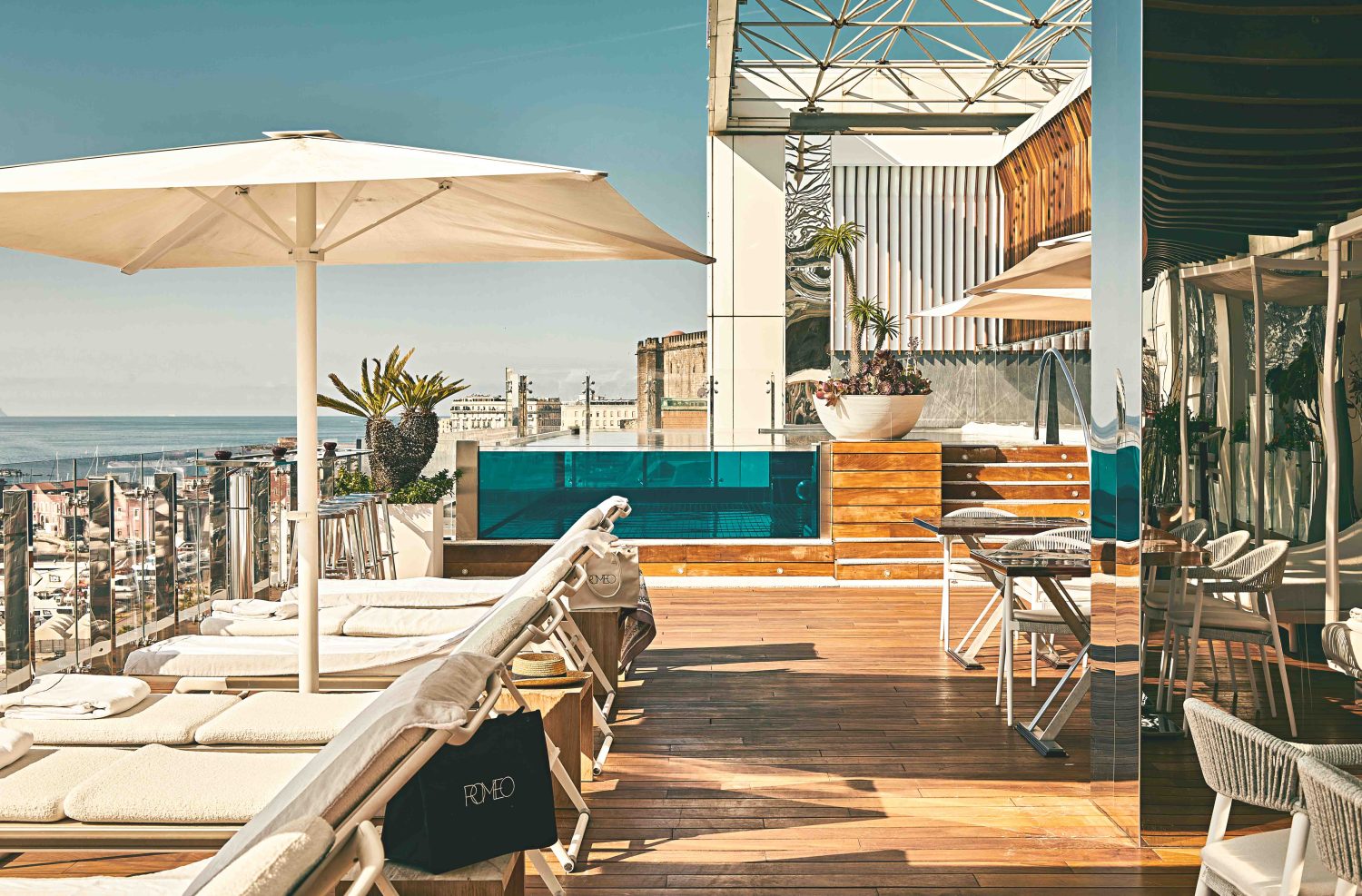
The tenth floor, also accessible by an outdoor stairway from the restaurant, is home to La Terrazza Krug, an opulent laid-back terrace bar benefitting from even more spectacular vistas, where the cherry colour associated with the eponymous champagne house dominates the design aesthetic. With a new infinity pool, sun loungers, cocktails, tapas, and enough Krug champagne to float a boat, this is among the most stylish spots in the city for would-be lotus eaters to while away the afternoon while the distant soundtrack of the city plays out in the busy port below.
When the Romeo Napoli first launched with its unapologetically artistic assault on the senses, more like a gallery with a hotel attached than the other way around, Naples was in a different place. Fast forward 18 years, and this most beguiling of cities, with its in-your-face charm and notoriously nuanced relationship with the concept of law and order, and one senses new stirrings in the evolution of the city’s identity. It feels like it wants to have a bit of a moment, with art, culture, and its unique culinary heritage edging forward. Alfredo Romeo’s concept of “conscious luxury” as exemplified by his quirky art-stuffed harborside hotel looks, all of a sudden, to have been something of a trailblazer.
@romeonapolihotel | booking.com
Via Cristoforo Colombo, 45, 80133 Napoli NA, Italy