From the Home of Rolls-Royce at Goodwood to the Cornish coast by private aircraft, dinner by two-Michelin-starred chef Tom Sellers and a night overlooking the Atlantic at Carbis Bay, Rolls-Royce Spectre Series II becomes the golden thread through an extraordinary 24 hours.
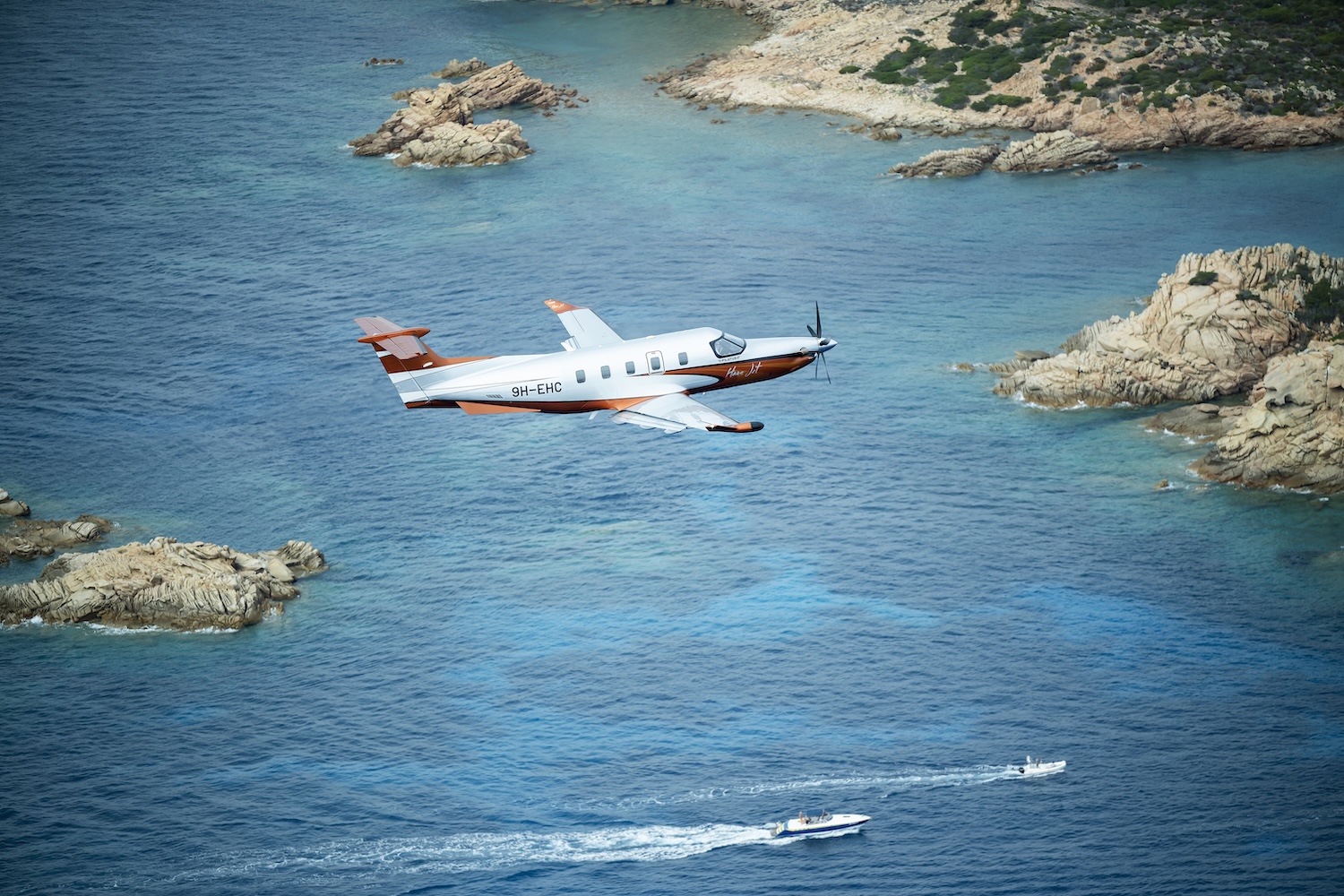
The wing appears first: a long white blade cutting cleanly across the summer sky. Then the burnished propeller, the orange-and-white fuselage and, finally, the full silhouette of the Hans Jet Pilatus PC-12 waiting on the tarmac ahead.
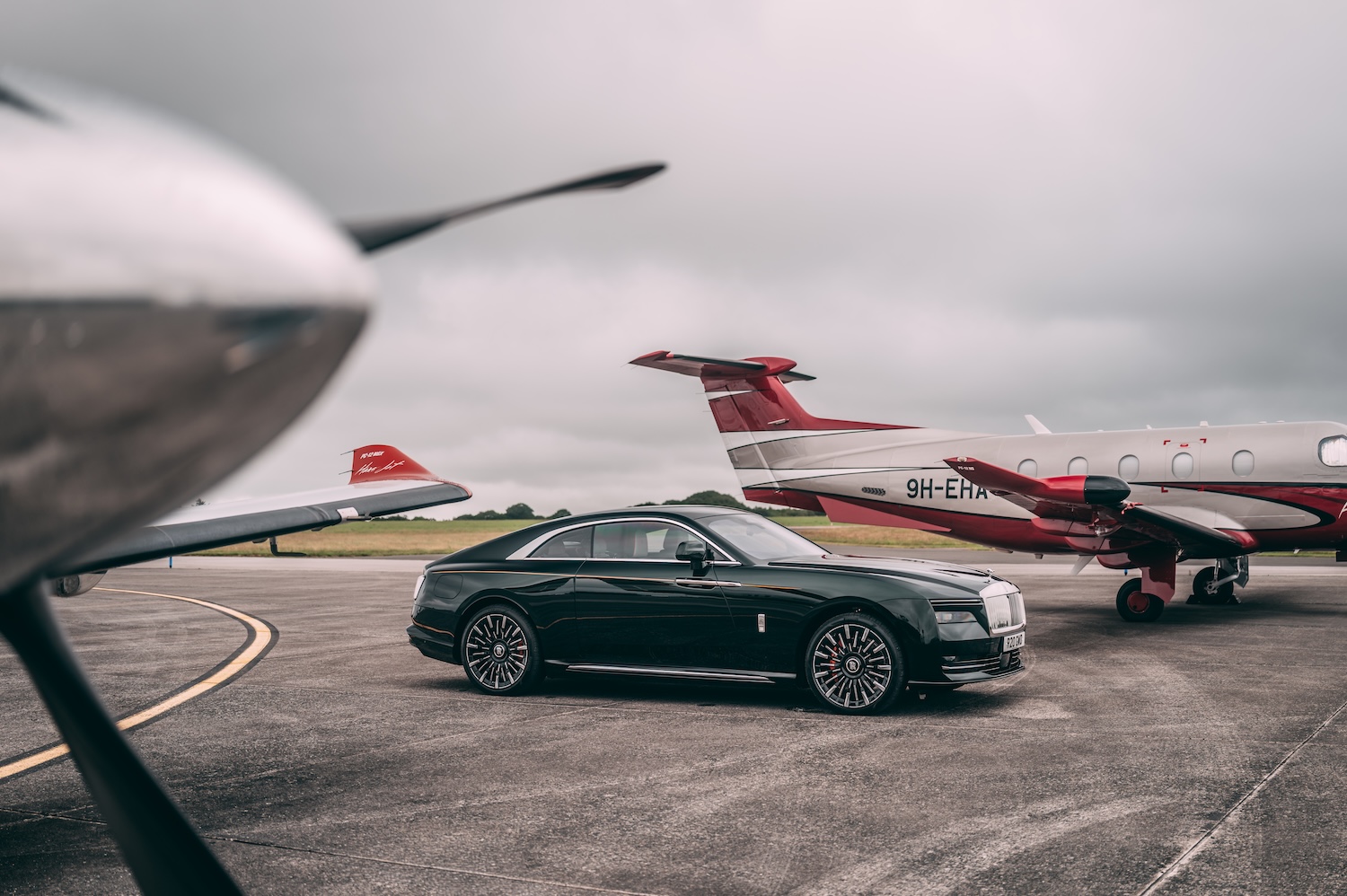
Between us lies only a stretch of sun-bleached asphalt, but from inside Rolls-Royce Spectre Series II, even the approach becomes an occasion. The world outside seems to have had its volume lowered. At the end of that immense bonnet, the Spirit of Ecstasy guides us towards the aircraft as we glide forward in near silence, polished surfaces inside the cabin catching fragments of morning light.
This is far from my first Rodeo, Spectre and I, go back a long way. In the glorious summer of 2023, I was fortunate enough to be among the first in the world to drive it, sweeping over San Francisco’s Golden Gate Bridge to the sun-drenched vineyards of Napa Valley, California in an unforgettable Morganite pink Spectre. Even then, it felt like a pivotal Rolls-Royce: unapologetically electric yet unmistakably of the marque, moving in phenomenal silence, scale and effortless power.
The world agreed. Spectre became both a critical and commercial phenomenon, retaining its position as Rolls-Royce’s second best-selling model globally in 2025. More tellingly, clients began using it not as an occasional showpiece but as a genuine driver’s Rolls-Royce, a driveable piece of art, certainly, but also part of their daily lives.
Which makes Spectre Series II a fascinating proposition. How do you improve on what has been such an adored car?

The answer, as I am about to discover over the next 24 hours, is very Rolls-Royce indeed: not by disturbing what made Spectre extraordinary, but by obsessing over the details.
The car comes to rest on the runway of a private airport, right beside the Hans Jet Pilatus PC-12, so quietly you could almost hear a pin drop. The chauffeur opens the door and my luggage disappears from the boot into thin air. Within moments, England’s jade-green fields are falling away beneath us.
We climb through a thick blanket of grey cloud and suddenly emerge into another world entirely: brilliant seemingly endless blue above, and a continent of white below. The clouds rise in great sculptural formations like snow-covered mountains. Sunlight floods the cabin and a chilled flute of Champagne is placed in my hand. For a little while, there is nothing to do but watch the light catch the glass and an entire landscape of cloud drift beneath the wing.
In the Clouds with Hans Jet
The Pilatus PC-12 earns its reputation as aviation’s “Swiss Army Knife” through its versatility. Swiss-built and configured for just six to eight passengers. The PC-12 cruises at around 270 knots with a range of approximately 1,800 nautical miles. It offers the comfort and privacy of a private aircraft while accessing more than 3,000 European airfields, including short, grass and gravel strips beyond the reach of many comparable jets.
That capability subtly changes the meaning of private aviation. Travel from London to Paris, Cannes, Ibiza or Milan but the advantage is not simply flying privately; it is arriving closer to where you actually want to be, stripping away the dead hours usually hidden at either end of a journey. Time becomes the real luxury.
Inside the Hans Jet cabin, pale quilted leather seats face one another across an intimate space that feels closer to a private salon. The propeller gathers speed beyond the window until its blades dissolve into a translucent circle. The hum of conversation and the pop of a Champagne cork fills the air.

Spectre Series II: The Evolution of a Modern Rolls-Royce
Beginning this journey at Goodwood feels fitting because almost everything experienced inside Spectre Series II was conceived here. Beyond the gates, the South Downs gently rise and fall around the Home of Rolls-Royce; inside, it is a hive of engineering, design and craftsmanship devoted to making extraordinary complexity feel almost imperceptible.
Spectre was never intended to feel like an electric car wearing a Rolls-Royce badge. The equation was reversed. Rolls-Royce first defined the experience it wanted, silence, immense reserves of power, absolute composure, and electrification proved almost uncannily suited to delivering it.
Series II sharpens that idea. Re-engineered battery-cell technology increases potential range by up to 18% to 390 miles WLTP and reduces charging times by as much as 14%. The drivetrain now delivers 442kW and 1,015Nm of torque, while Black Badge Spectre Series II can summon 500kW through Infinity Mode and up to 1,100Nm in Spirited Mode.
These are serious numbers, yet behind the wheel their effect is almost paradoxical. There is no crescendo, no sensation of machinery gathering itself in anticipation. Press the accelerator and the landscape simply begins moving faster beyond the glass. Immense power arrives instantly but so seamlessly that it feels less like the car is being thrust forward than the horizon is being quietly drawn towards you.
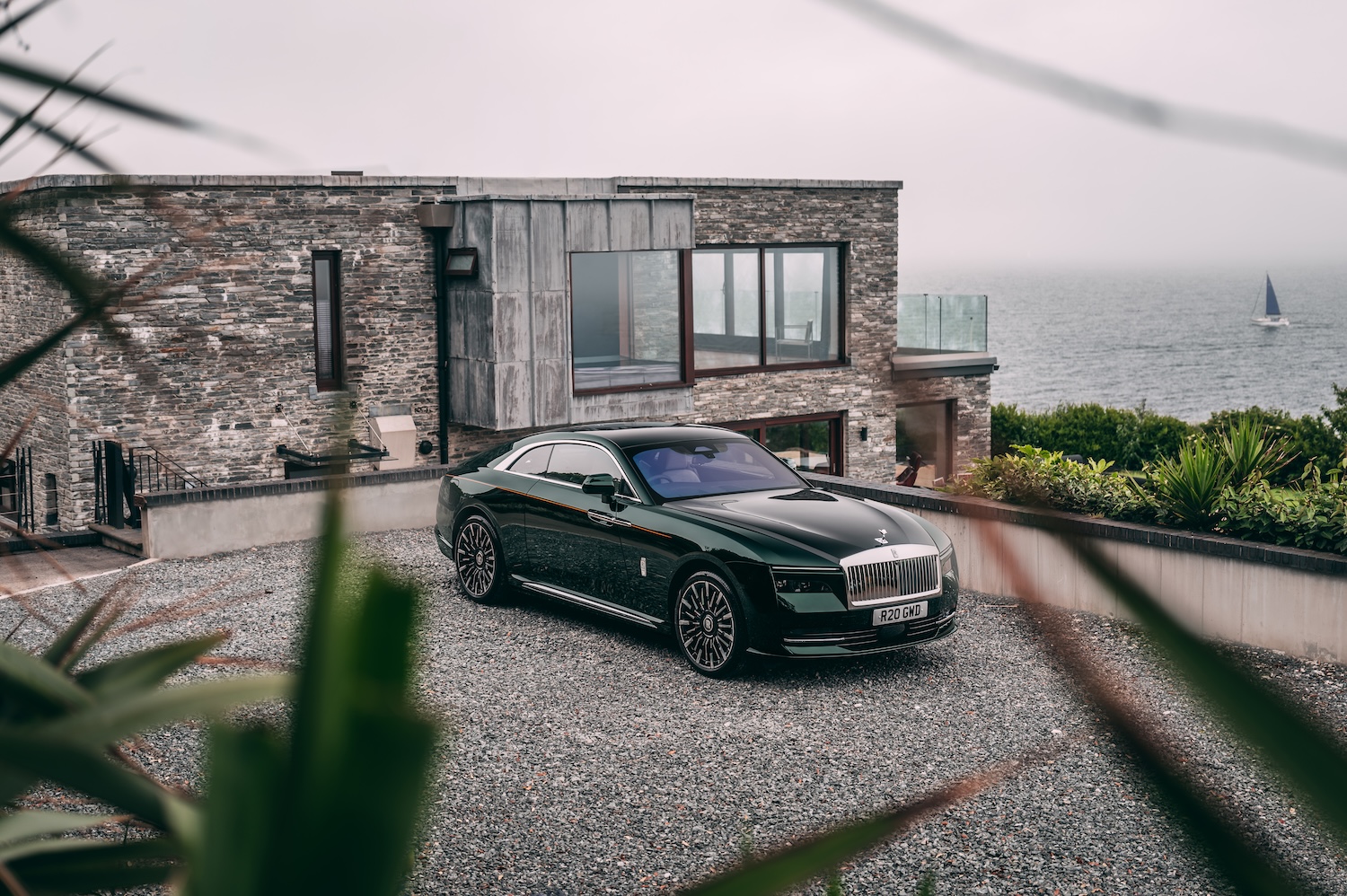
The same restraint defines Spectre’s appearance. Its proportions are architectural: that immense bonnet, sweeping fastback profile, split headlamp signature and great uninterrupted surfaces allowing light to shape the car.
Director of Design Domagoj Dukec considers that purity fundamental to Spectre’s appeal.
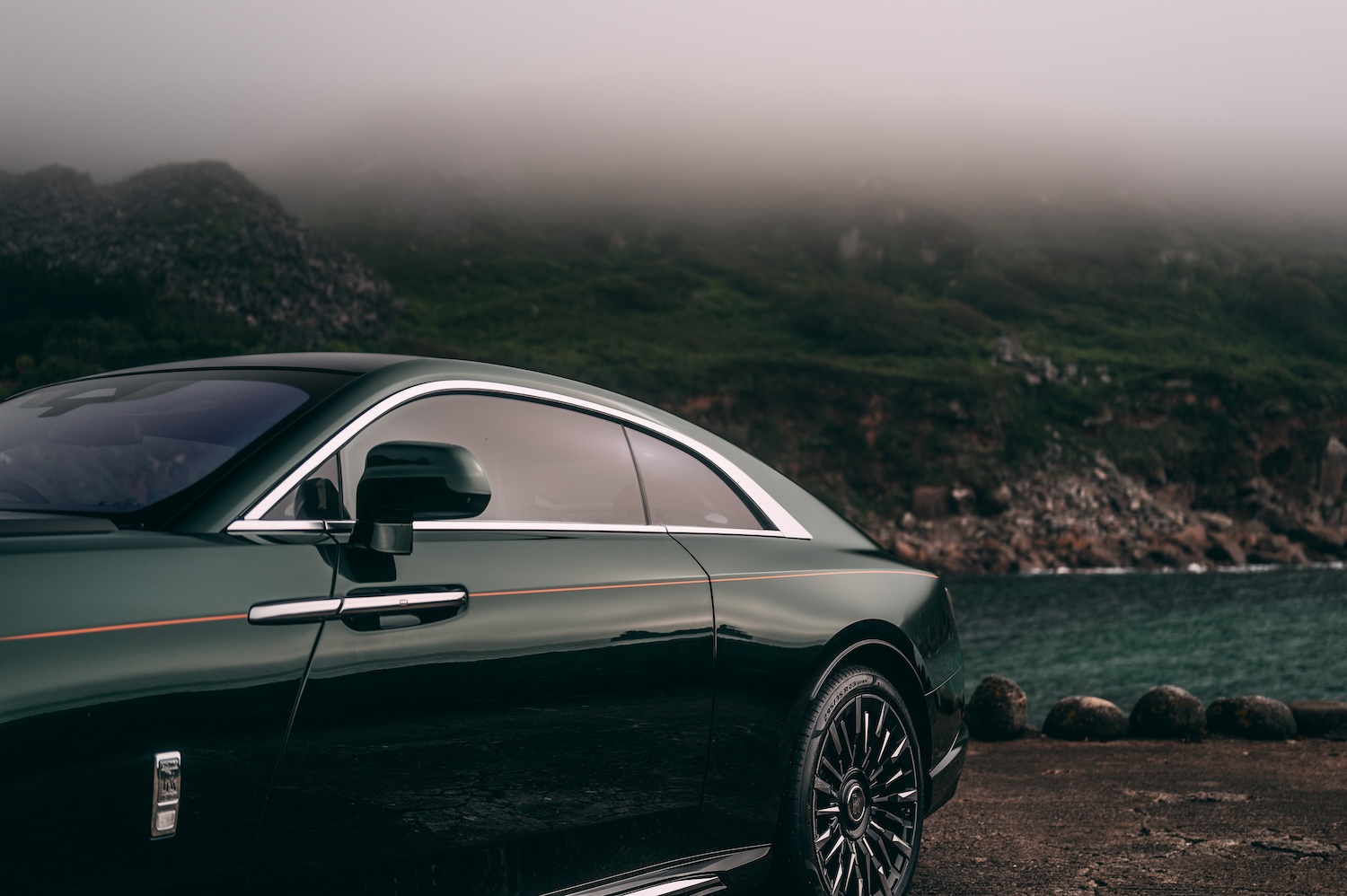
“Spectre has consistently been recognised as one of the most elegant automotive forms of the modern era,” he says. “Clients frequently cite its design as one of the defining reasons for their commission, and it will undoubtedly take its place in future collections of remarkable motor cars.”
Crucially, Rolls-Royce has resisted the temptation to interfere with that silhouette for Series II. Instead, much of the evolution reveals itself only when you move closer.
“In expanding the palette of materials and crafts introduced for Spectre Series II, we respond directly to our clients’ desire to approach Spectre with even more creative ambition, as they explore its possibilities as a canvas on which to tell their story.”
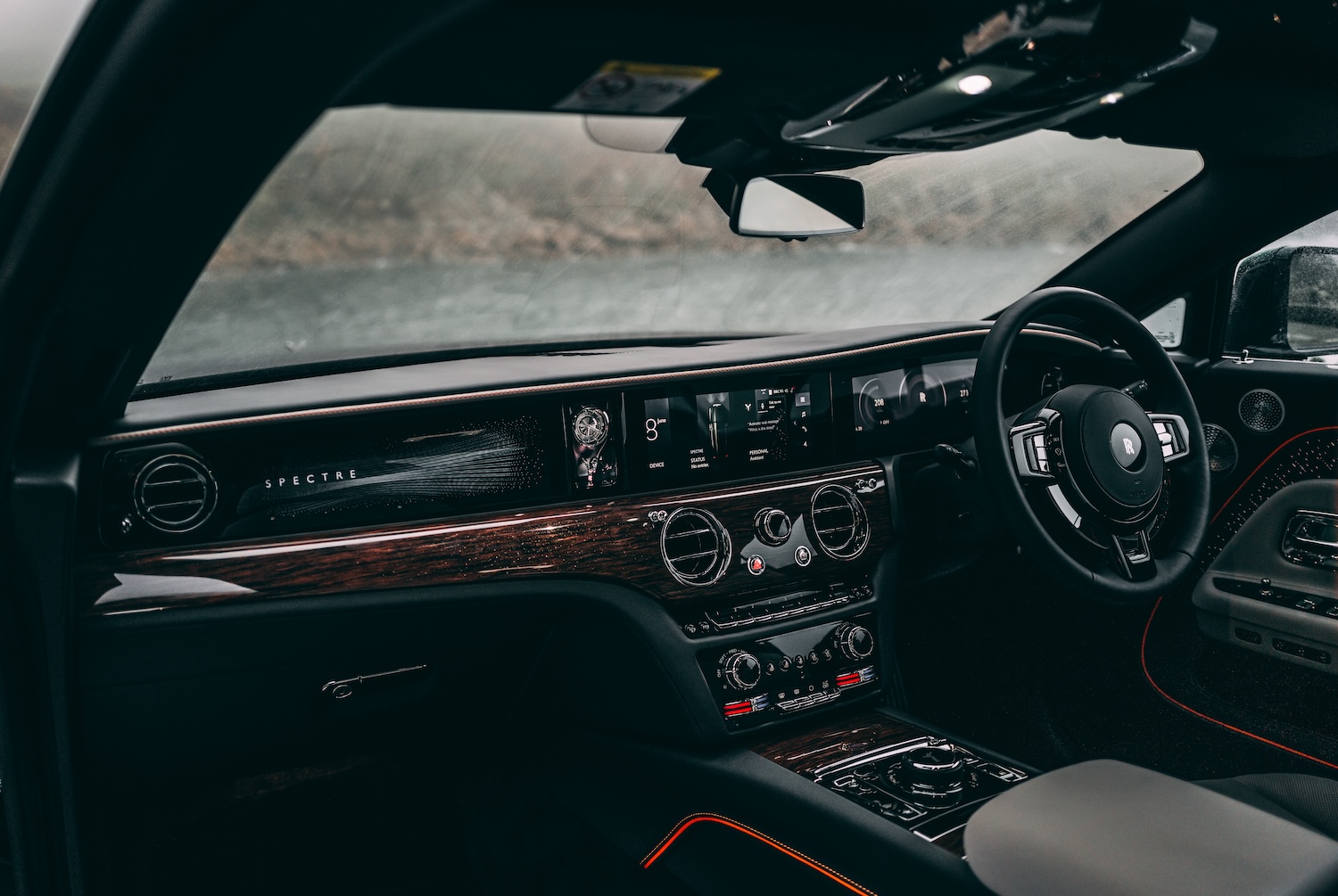
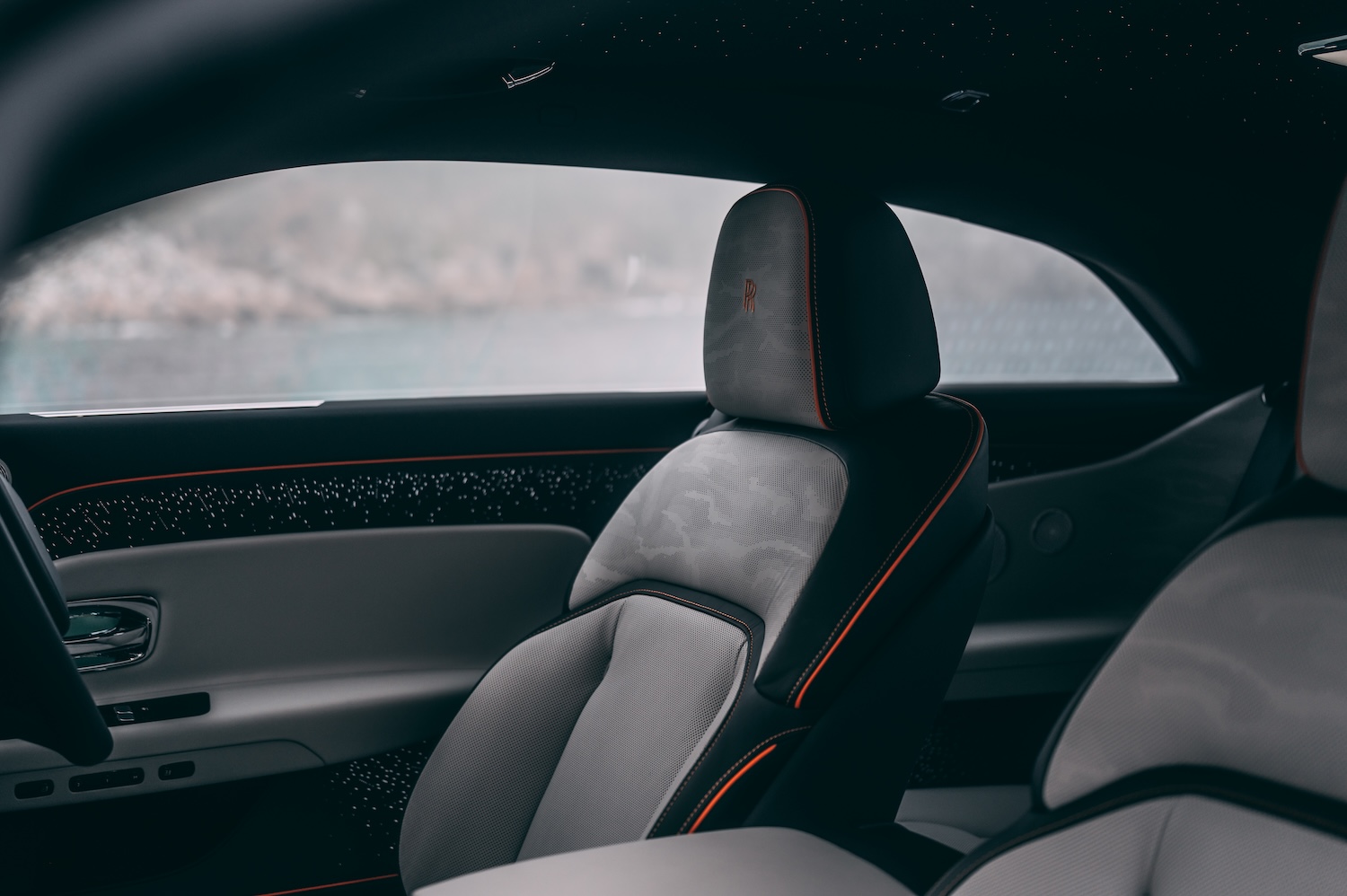
That canvas is now extraordinarily detailed. New 23-inch forged alloy wheels are cut with diamond-like facets, each requiring up to six hours of hand-finishing. Inside, Duality Twill, a bamboo-derived textile inspired by the gardens neighbouring Sir Henry Royce’s former winter home on the Côte d’Azur, can contain 2.6 million stitches and 10 miles of thread.
Placed Perforation transforms leather through 78,138 individually precision-cut apertures, creating an artwork inspired by moonlight casting shifting shadows through cloud. Across the fascia, 8,108 points of illumination form flowing waves inspired by the mist settling over the South Downs outside Goodwood.
Then, almost jewel-like within the dashboard, sits the new clock, its pared-back design influenced by precision aviation instruments, an unexpectedly perfect detail on a journey that will take us directly from Spectre to the waiting Pilatus and into the sky.
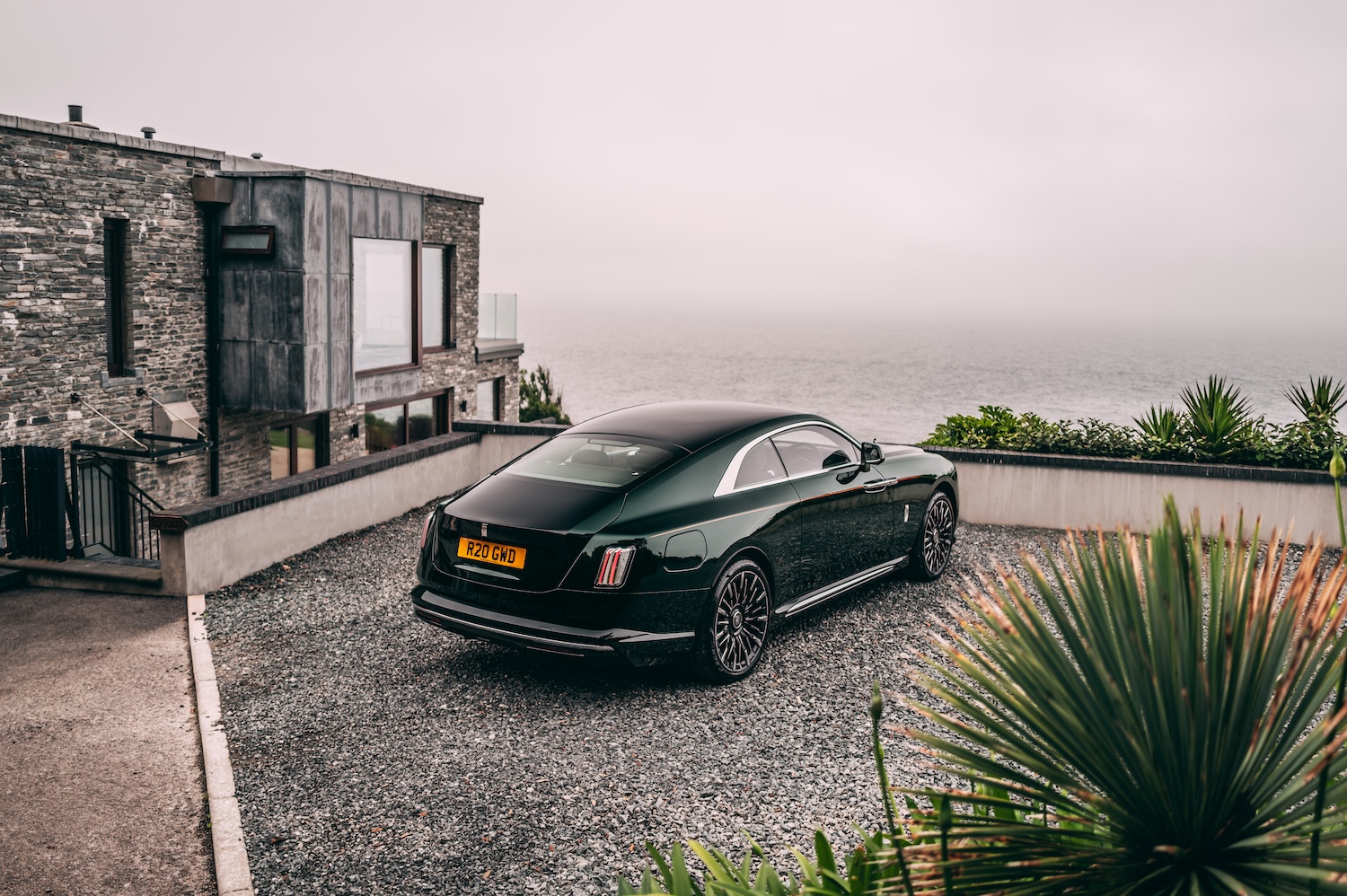
Millions of stitches. Tens of thousands of perforations. Thousands of points of light. Hours of hand-finishing.
Despite the millions of stitches, tens of thousands of perforations and hours of hand-finishing touches, the extraordinary effort is effortlessness; complexity concealed in the service of serenity, such is the unrivalled magic of Rolls-Royce.
It brings to mind the words of Sir Henry Royce, invoked by Chris Brownridge when introducing Series II: “Small things make perfection, but perfection is no small thing.”
Carbis Bay: At the Water’s Edge
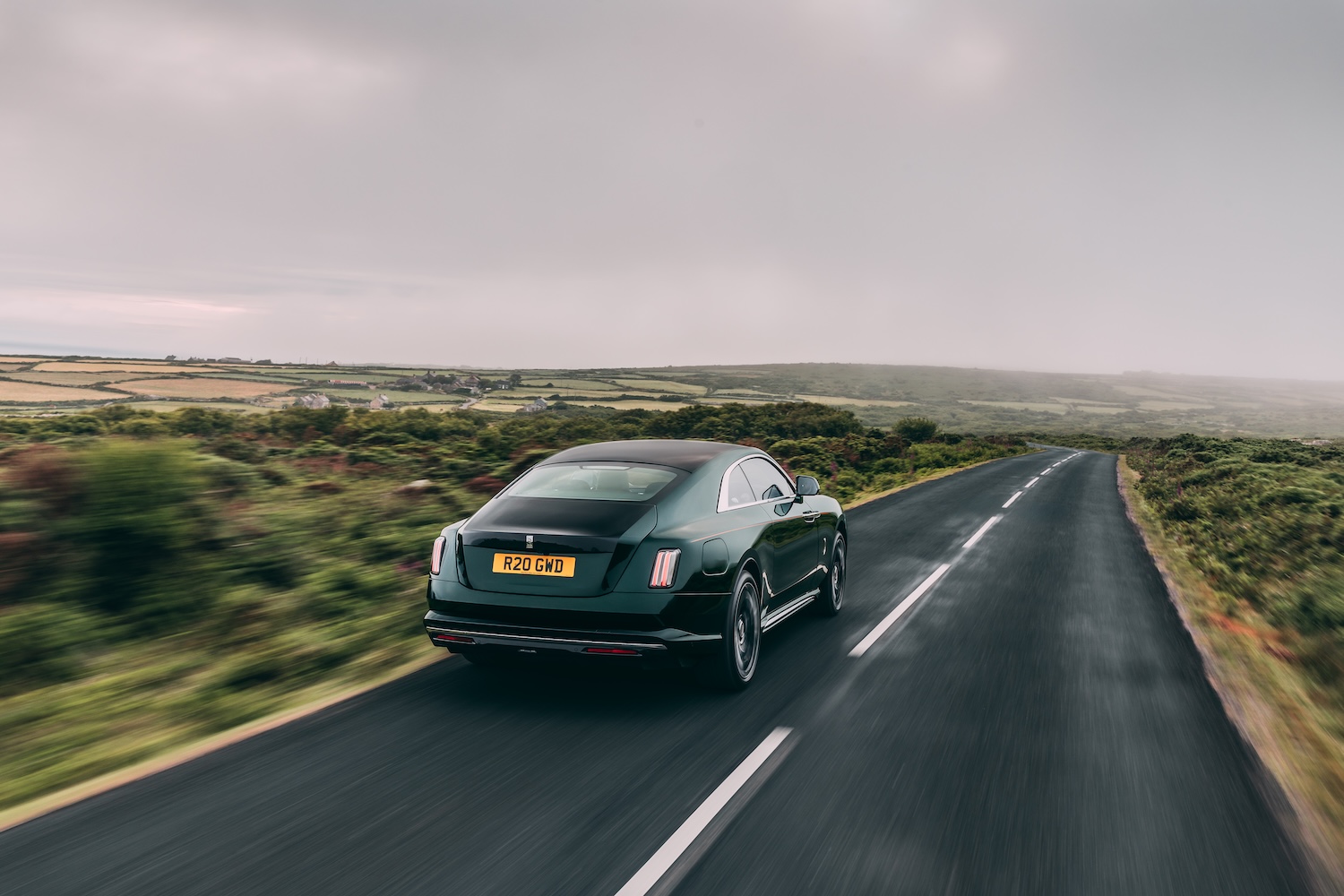
After landing in a private airport near St. Ives in Cornwall, awaited on the tarmac by Spectre II we take a short and smooth drive to Carbis Bay. As we get closer the roads narrow, the air turns saltier and flashes of mystic blue appear between hedgerows until, suddenly, amongst the houses, the landscape opens and the Atlantic fills the horizon. Spectre II snakes like a hot knife through butter, through the narrow roads towards the estate in near silence as white sand, turquoise water and the steep green sweep of the Cornish coastline come into view.
The estate tumbles towards an almost implausibly beautiful sweep of pale sand and dusty blue water, the white-walled Main House presiding over the bay above it. Designed by celebrated Cornish architect Silvanus Trevail and built in 1894, the original hotel retains its grand seaside character with gilt mirrors and chandeliers meeting more contemporary interiors, while terraces and subtropical gardens descend towards the beach below. Today, the estate has grown around it: restaurants, beach houses, suites, an award-winning spa and heated outdoor pool, all oriented towards that extraordinary view across St Ives Bay.
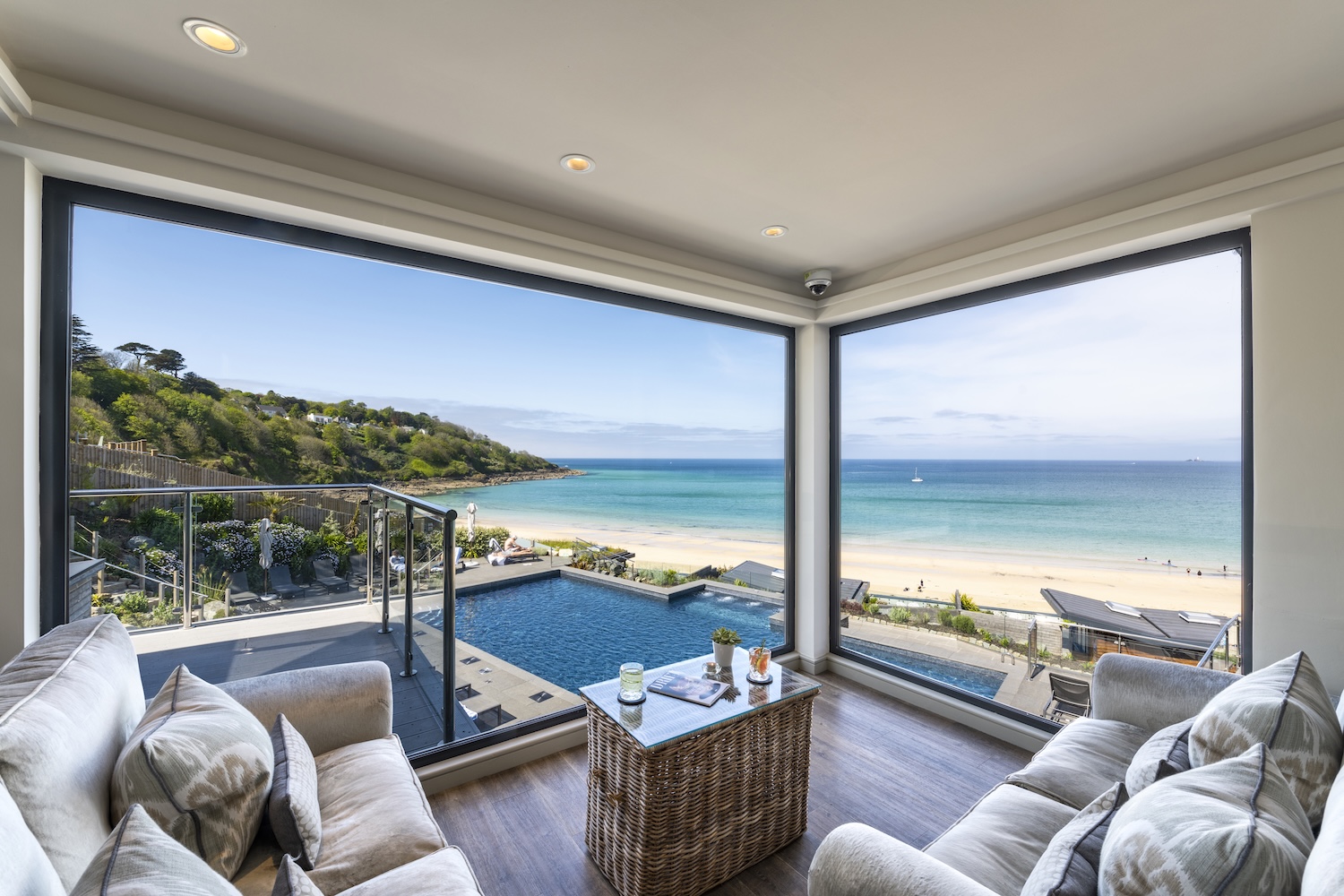
Then, right at the water’s edge, are the lodges. Our home is the contemporary UK G7 Lodge, part of the collection of beach residences used by world leaders during the 2021 G7 summit and was home to Boris Johnson and his family. Set virtually on the sand, this extraordinary private house has one of Britain’s most beautiful beaches as its back garden. Carbis Bay’s lodges were designed around the ocean, with enormous light-filled living spaces, floor-to-ceiling glass, private sea-facing balconies and decks, beach gardens and hot tubs.
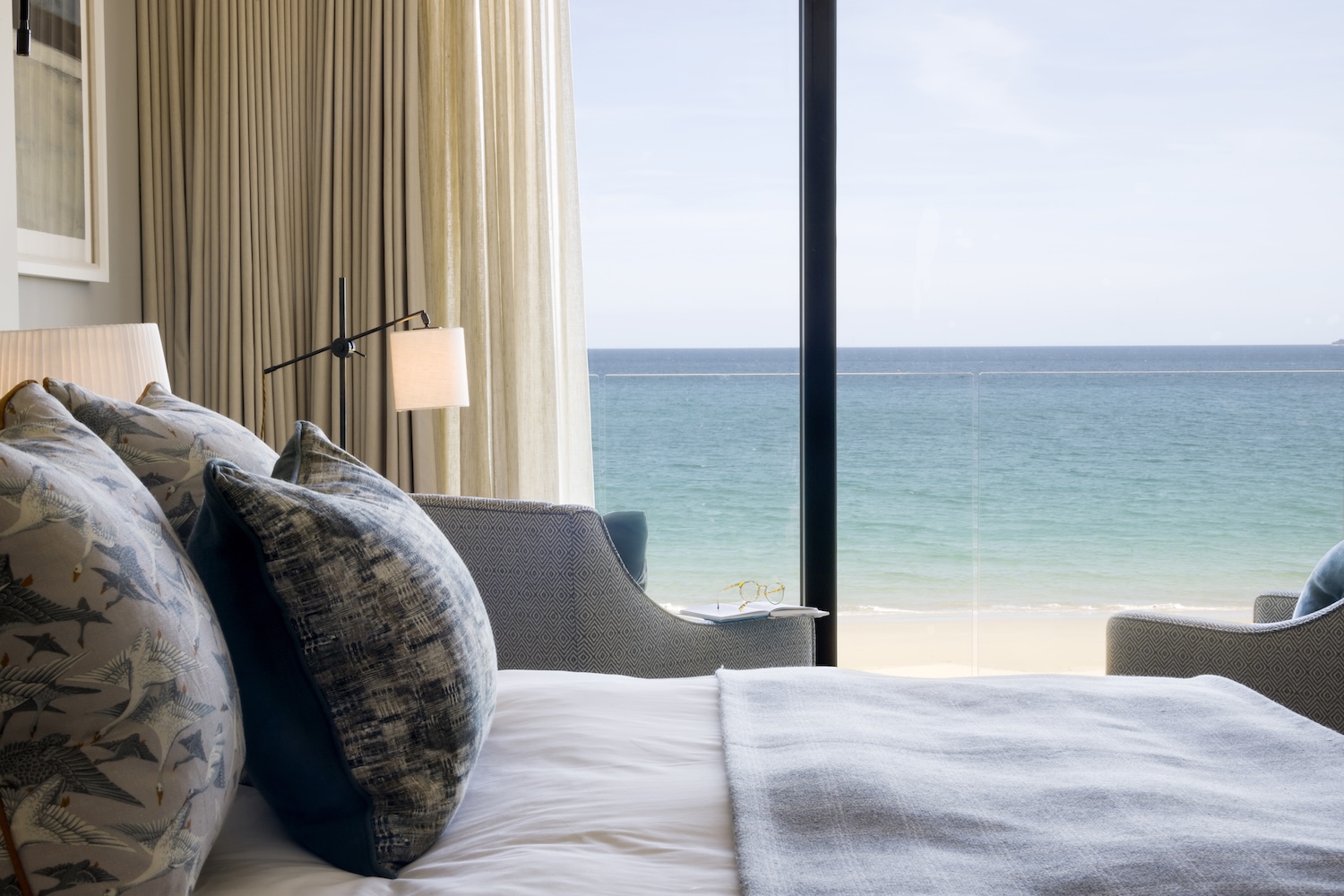
Inside, the architecture is clean and contemporary, but nothing competes with what lies beyond the windows. Open them and Carbis Bay immediately fills the room. You hear the repeated hush and collapse of the waves, salt hangs in the air, carried in on the breeze. Almost every room seems to offer another perspective on the water, leave your windows open so you are awoken to the scent and sound of the sea, there is nothing quite like it.
On the beach below, group of local ladies are gathered together in the water, talking and laughing as though the Atlantic were their living room. Further along the sand, a father carries his toddler towards the shoreline and lowers him just enough for his tiny feet to tip-tap on the surface of the water. He squeals with delight; his mother, watching from a blanket on the beach, claps and laughs from a few metres away.
From the balcony, we watch these tiny fragments of other people’s mornings play out beneath us, a little slice of paradise. There is a palpable sense of community here and the beach is the heart of it.
Inside the villa, another expression of Cornwall is waiting. The kitchen has been stocked with local produce: proper Cornish all-butter shortbread that disappears far too quickly and freshly baked scones accompanied, inevitably, by generous bowls of jam and thick Cornish cream. Slather on an irresponsible amount of strawberry jam first, of course, as the Cornish do.
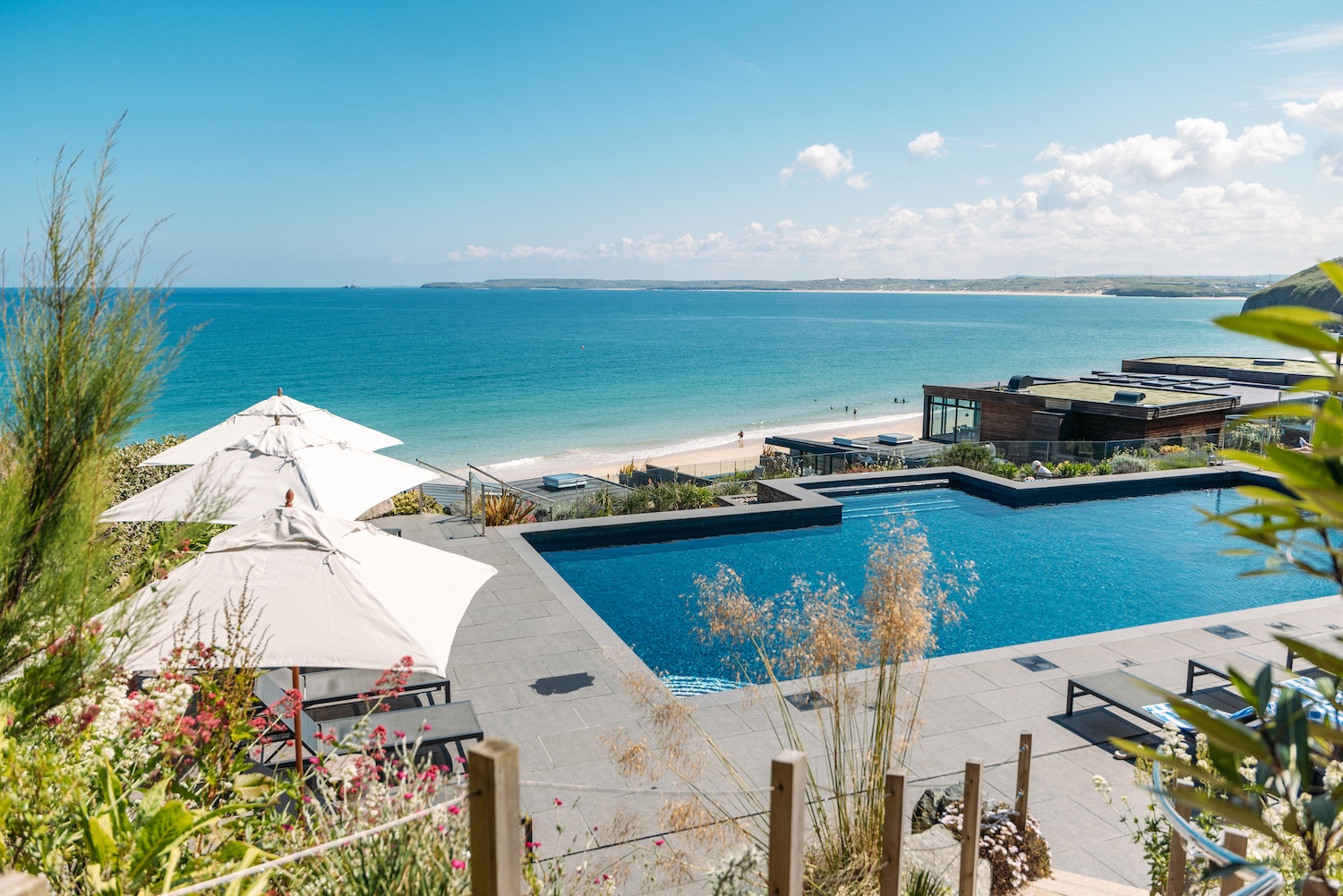
Beyond the lodge, Carbis Bay Estate operates almost as its own tiny coastal world. Its Blue Flag beach stretches beneath the hotel; the C Bay Spa sits above the water with a heated outdoor pool, hydro pool and sauna overlooking the bay; the South West Coast Path passes through the estate towards St Ives; and restaurants, terraces and the Beach Club spill towards the shoreline.
And somewhere along the shoreline, candles are beginning to be lit at two-Michelin-star chef Tom Sellers new restaurant MOR at Carbis Bay.
MOR by Tom Sellers: A Love Letter to Cornwall
Tom Sellers has built a career on the belief that the most memorable food should make you feel something.
He opened Restaurant Story in London at just 26, earning its first Michelin star within five months and a second in 2021. Since then, storytelling, seasonality and provenance have become signatures of his cooking. At MOR, his new restaurant at Carbis Bay created with Executive Chef Tom Anglesea, those ideas are given perhaps their most dramatic setting yet: perched above the Atlantic, with Cornwall itself providing both the inspiration and much of what arrives on the plate. It’s even in the name – mor, the Cornish word for sea.
“Cornwall has a magic unlike anywhere else in the world,” Sellers says. “At MOR, I want to capture that sense of wonder, connecting people to the sea, the seasons, and to each other through food, craft, and storytelling.”
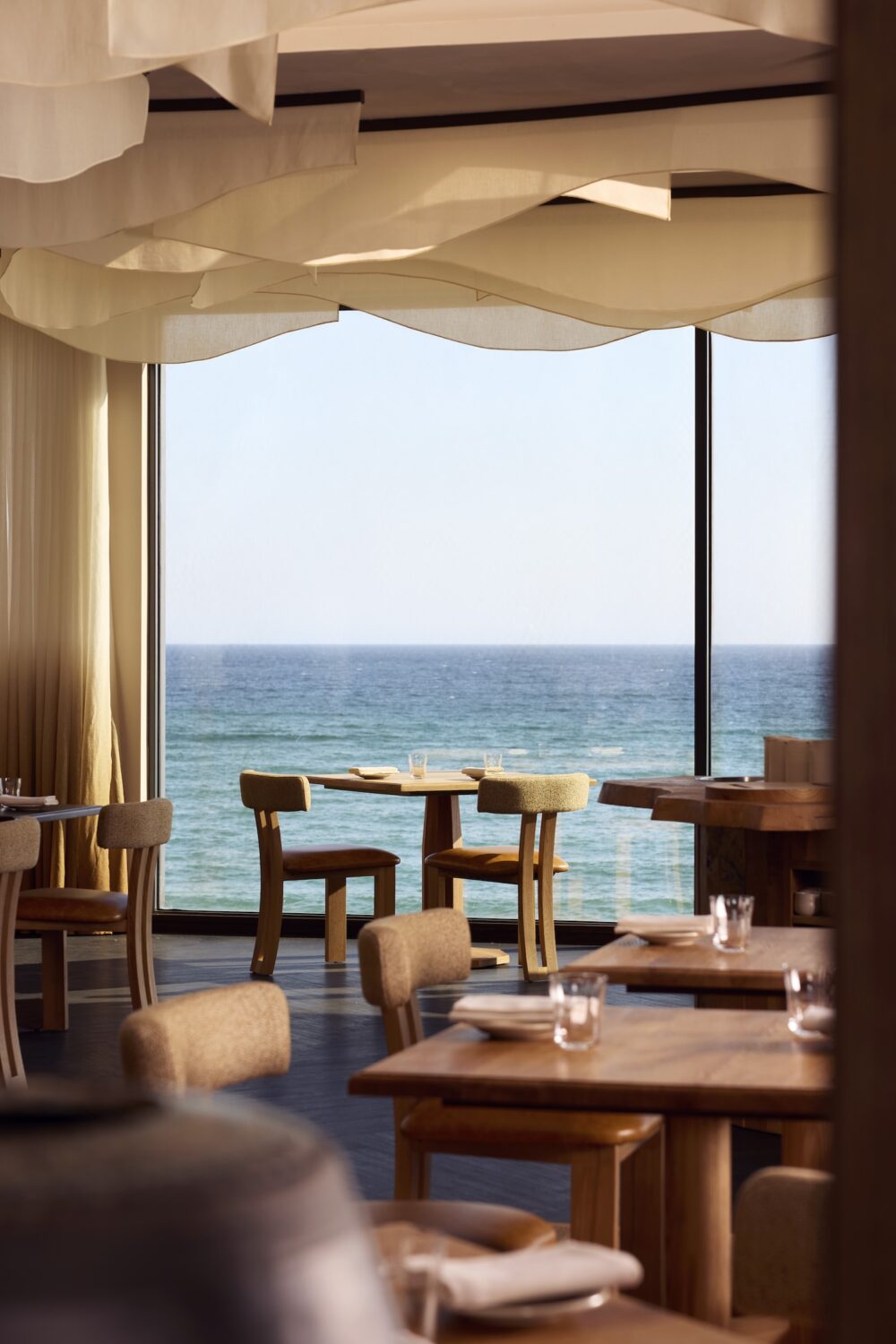
We arrive as the sun begins to fall over Carbis Bay and the sky and sea take on a soft lilac hue. Inside MOR, you feel suspended between land and water. Floor-to-ceiling glass opens the dining room onto the bay as the evening light falls slowly over the Atlantic, turning the water into liquid silver. Inside, candles flicker against stone and timber whilst Cornwall performs its own spectacular changing of the guard outside.
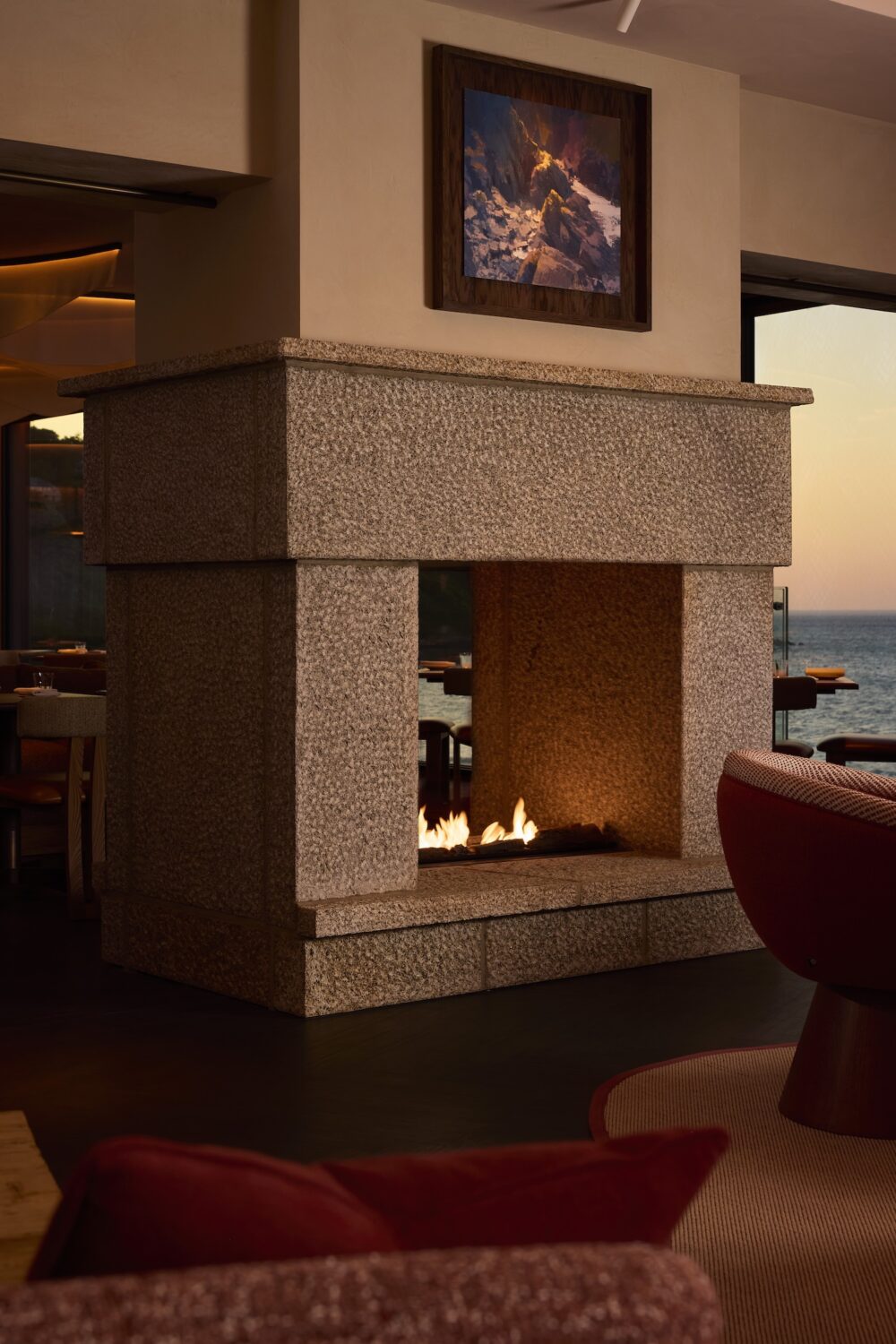
Acclaimed designer Shayne Brady has drawn on Japanese Shinto traditions and Cornish Celtic mysticism. Warm yellow ombré tones echo sand, sunlight and the mutable Cornish sky; sheer fabrics soften the room; organic forms blur the line between the restaurant and the landscape beyond. Overhead, Elephant Road Studio’s sculptural fabric installation seems to ripple like it is caught in a sea breeze, while a monumental fireplace hewn from Cornish granite gives the room its centre of gravity.
It is luxurious but deeply connected to the beautiful wildness outside. The Atlantic is the pulse of MOR and that extends to what is served on the table. Sellers and Anglesea do not simply reference Cornwall; they cook according to it. Day-boat fish is sourced from Kernow Sashimi, vegetables from organic Mora Farm, while crab and lobster arrive from independent fisherman John Tonks. There is an on-site kitchen garden, and the day’s catch sits proudly on the MOR counter, meaning the sea can dictate dinner almost as directly as the chefs do.
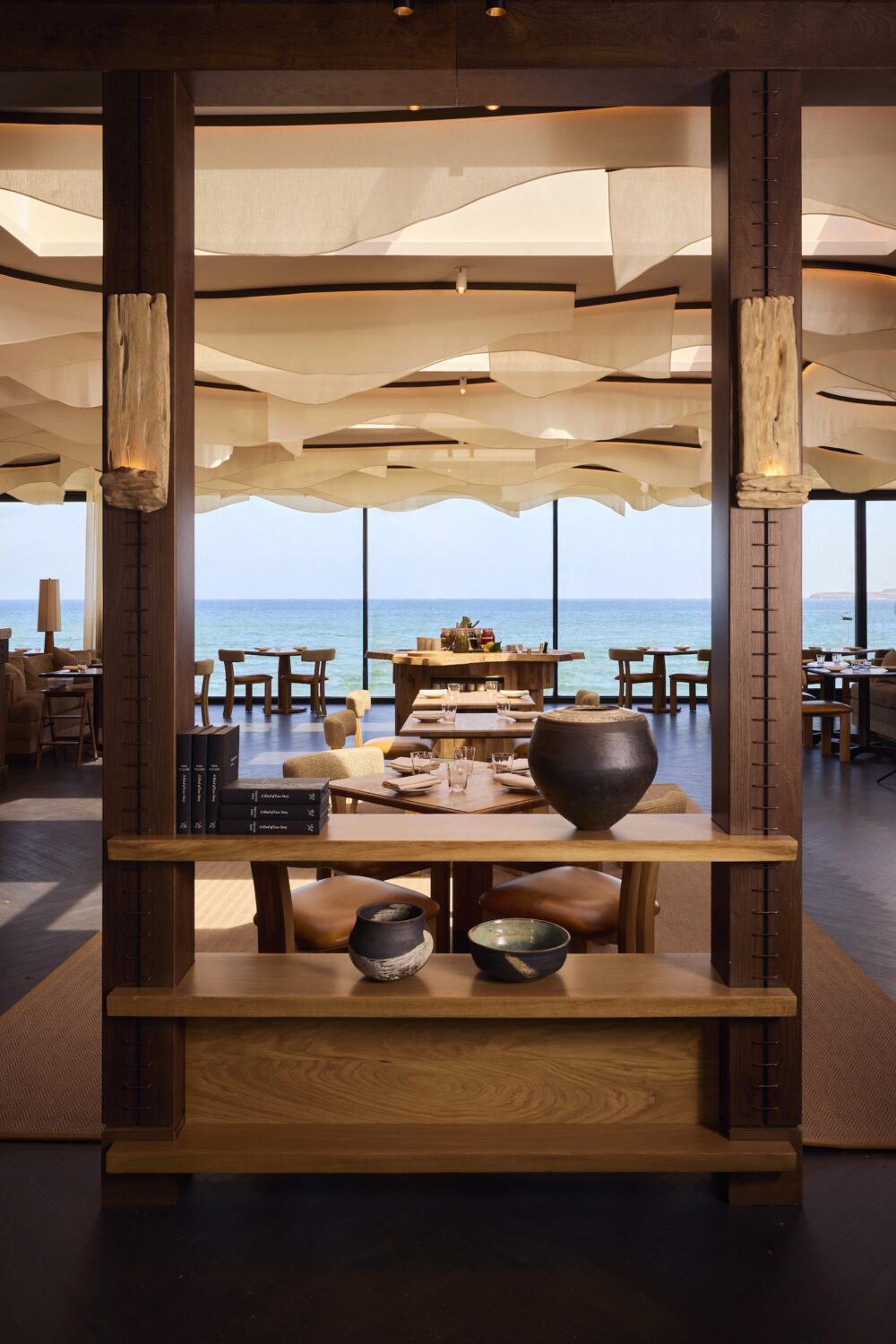
The menu describes itself as “a true reflection of Cornwall and its seasons”, and indeed dinner unfolds like an edible map of the coast.
It begins with the sea in its purest form. Porthilly Rock oysters are sharpened with elderflower vinegar. Summer garden crudités arrive with whipped smoked scallop roe and nori. The MOR sashimi plate pairs pristine raw fish with smoked soy, young ginger and English wasabi, clean, saline flavours that feel almost inseparable from the sea visible beyond the glass.
Cured Cornish bream is brightened with kaffir lime and alliums, while Cornish bluefin tuna tartare is given depth by tomato and tonnato. Grilled Mora Farm beans come with Gordal olive and pistachio; smoked tomatoes are delicately submerged in chilled dashi.
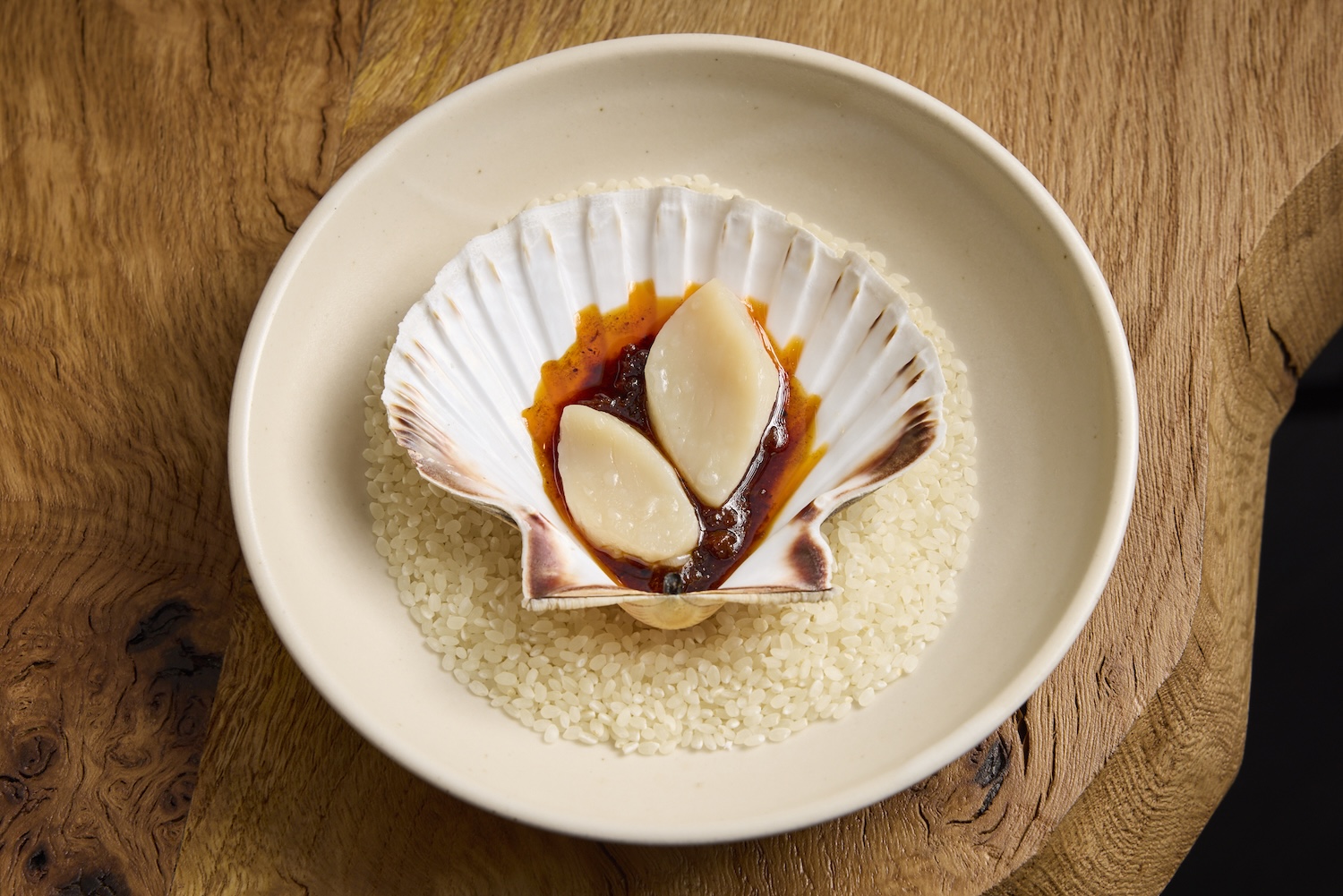
Then comes the cured ‘One Breath’ scallop: pearlescent, dressed with Amalfi lemon, white soy and black lime. It captures MOR at its best. There is formidable technique behind the plate, but no desire to bury the ingredient beneath it.
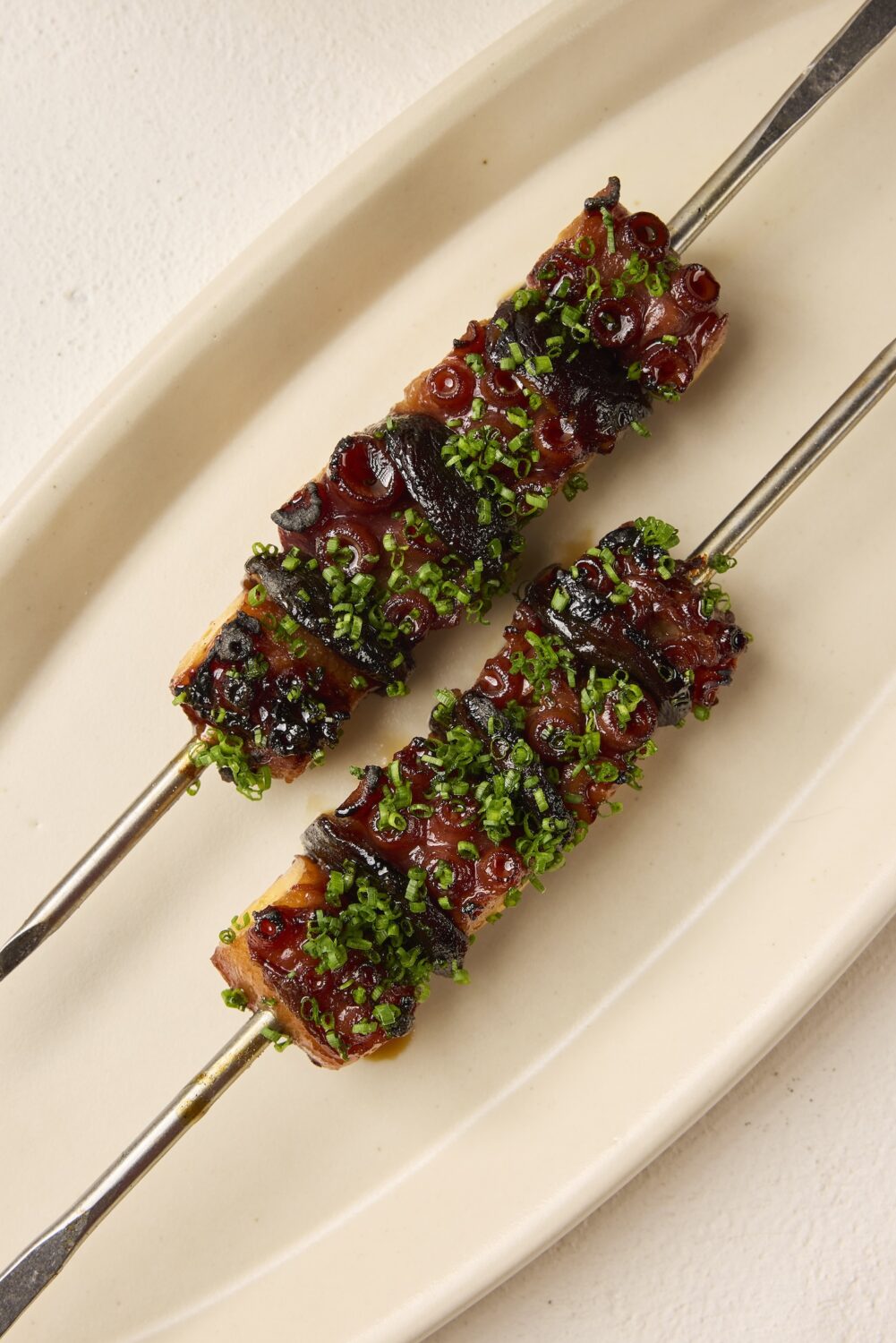
As dinner moves towards charcoal and flame, everything intensifies. Octopus and shiitake are lacquered with tare and scattered with chives. A scallop returns to the table baked in its shell beneath roasted chilli paste and salted butter. Fritto misto is electrified by gooseberry and shiso, while braised cuttlefish comes with gremolata and Oil of Life. Spatchcock BBQ quail arrives from the grill, and lamb from The Cornwall Project is paired with sheep’s yoghurt and sumac.
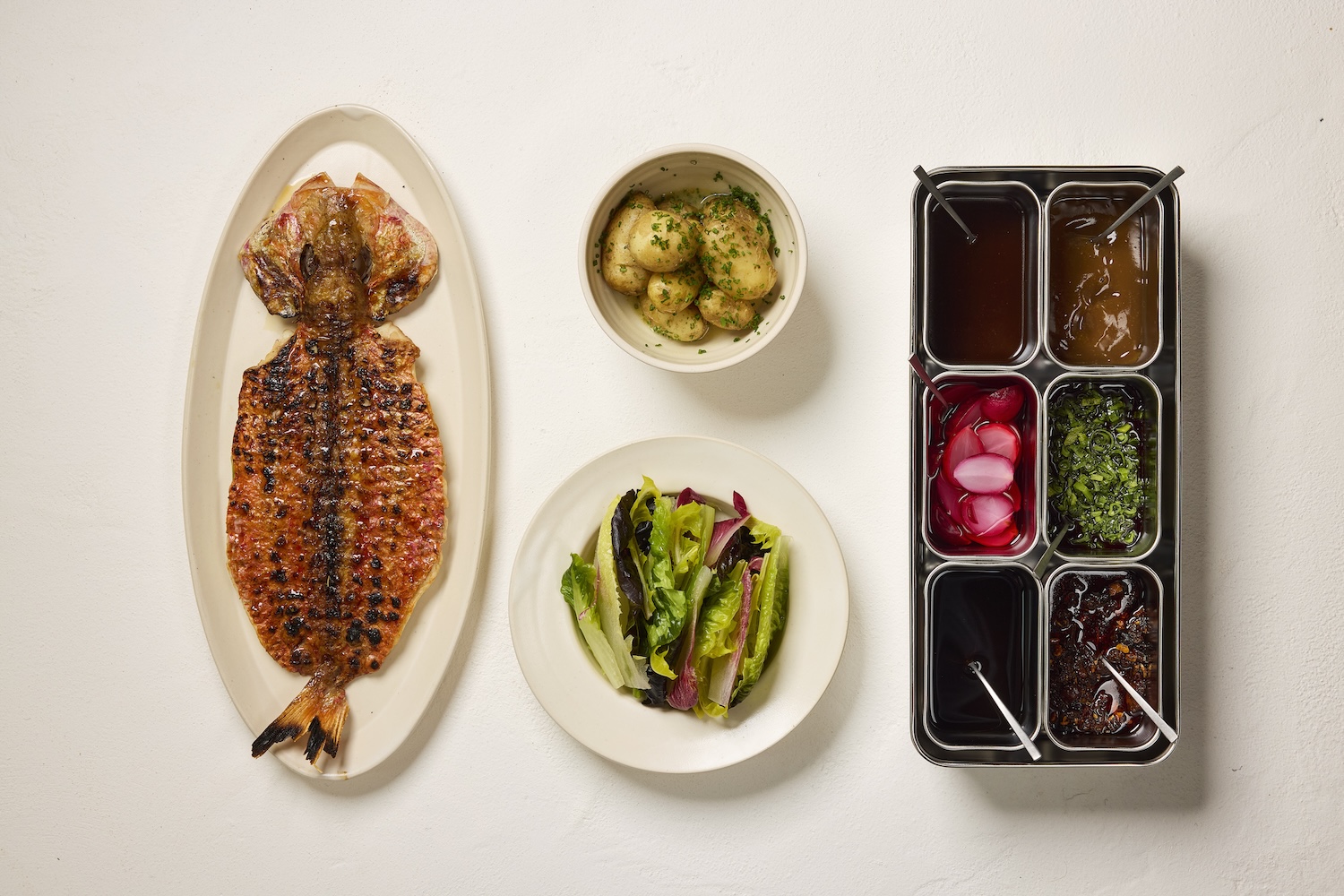
Then MOR pulls your attention back towards the water. Succulent Seabass, Mackerel, John Dory and Monkfish tail, whatever the boats have brought in. Make your choice from the fish counter before watching it grilled or steamed and served with a garden salad, potatoes and MOR’s selection of signature accoutrements.
Shellfish can be finished with Cornish cider, nori butter or XO sauce; Cornish crab is prepared tableside à la minute. Even the oven-baked crisp seafood rice, enriched with Coombeshead Farm charcuterie and rouille, carries that same interplay between coast, countryside and fire.
There is a confidence to all of it. Nothing feels designed simply to impress for the sake of it. Even the most intricate dishes retain an elemental quality, as though Sellers and Anglesea understand that when the provenance is this good and the landscape outside this extraordinary, the greatest skill is letting it shine.
From the fisherman landing the morning’s catch, the vegetables pulled from Cornish soil, the salt carried through the air, the charcoal burning in the kitchen, the Atlantic at the end of your nose, MOR offers the true taste of Cornwall in every bite.
Alchemy After Dark
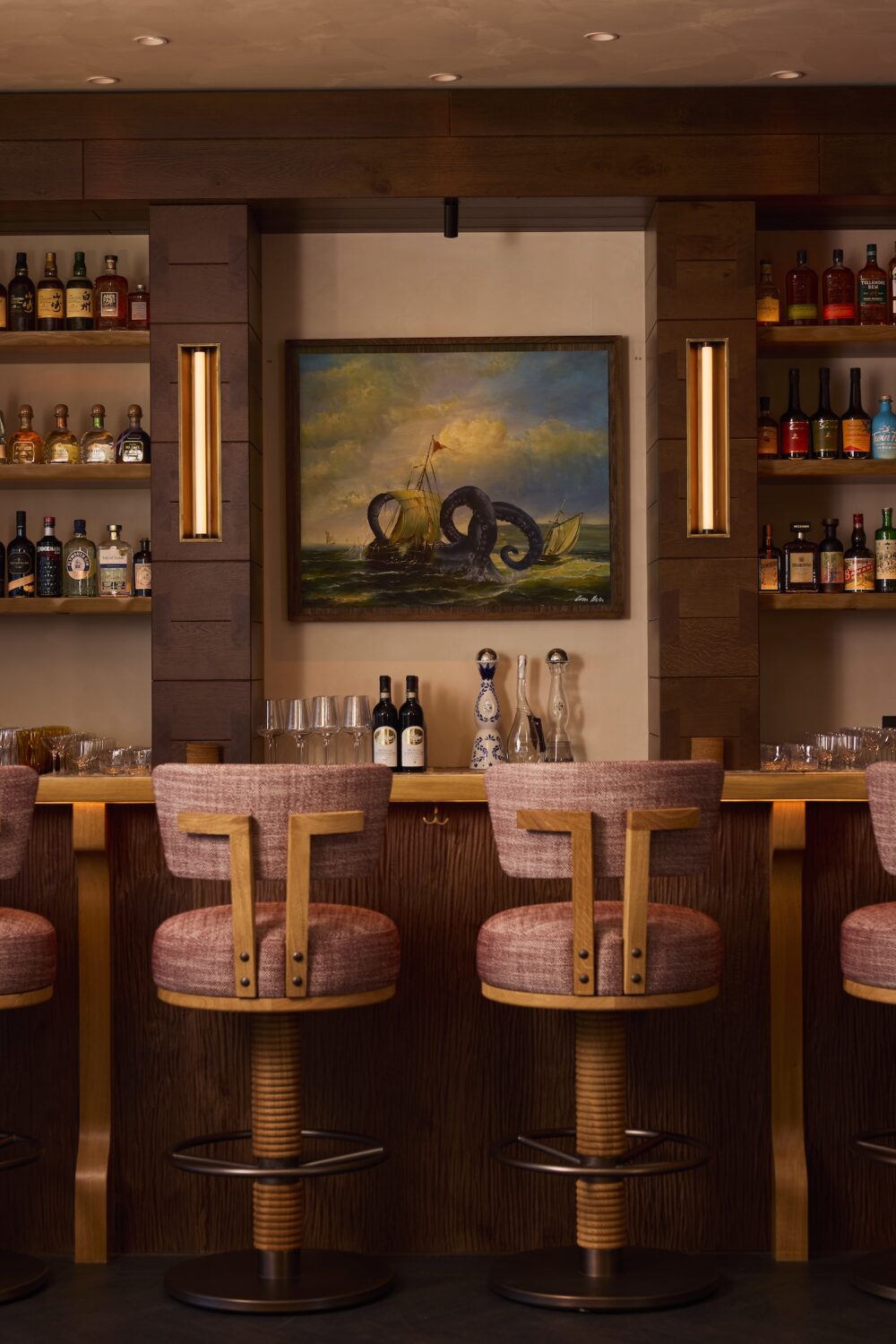
We move from the candlelit warmth of the dining room into ONE MOR, the adjacent bar. The pearlescent moonstone tones of dinner give way to bottles that glow behind the counter like stained glass in a chapel; beyond the floor-to-ceiling windows, the Atlantic has disappeared almost completely, leaving only a blanket of inky-black velvet with the occasional silver fracture of moonlight.
Then Joe Bakewell, Head Mixologist at MOR begins to pour his elixirs and we are hypnotised.
There is something distinctly alchemical about the way he works: bottles of spirits infused with herbs and flowers, homemade cordials and bitters, ingredients arranged around him like the contents of an apothecary.
“All of the 10 signature cocktails are named after artists that are either local or spent time doing work in St Ives,” Bakewell explains, adding that the menu is built around “seasonality, locality and highlighting English ingredients.”
ONE MOR is the liquid counterpart to Sellers’ kitchen. MOR showcases Cornwall through what grows, swims and is harvested here; at ONE MOR Bakewell showcases it through spirits, botanicals and the artists who have been drawn to this coastline.
Sickert arrives pale and deceptively delicate. English Gattertop damson vodka is infused with lavender, then layered with elderflower, Suze, cranberry, Gusbourne Blanc de Blancs and Cornish Navas tonic. Bakewell describes it as “a spritz highlighting Cornish ingredients” – refreshing, certainly, but considerably more complex.
Hamada is different again. Lemon-and-basil-infused vodka meets Muyu Jasmine, Suze, fresh lemon, homemade peach cordial, bitters and tonic to create what Bakewell calls “a really nice refreshing highball”.
Its name honours Shōji Hamada, the Japanese ceramicist who worked around St Ives in the 1920s. Even here, with a glass beading condensation between your fingers, the drink is tethered firmly to the place in which you are drinking it.
And the deeper you travel into the menu, the more seductive it becomes. Leach folds Tonka-infused tequila into mezcal, coconut, spiced pineapple, crème de banane, lime, star anise and jalapeño. Hepworth combines two gins with Green Chartreuse, lychee, violet, thyme and cucumber. Lanyon’s Road takes Cornish Trevethan Gin and sends it somewhere unexpected with peach, Gusbourne Blanc de Blancs, sea buckthorn and turmeric kombucha.
The complexity of the cocktails is intentional. Bakewell spent three weeks developing the menu at two-Michelin-star Restaurant Story, subjecting each drink to some formidable palates.
“Then we can tell that story of what the ingredient is, where it comes from,” he says. Ultimately, he wants the drinks to offer “storytelling, depths of flavour, and to offer something quirky and fun and interesting that the guest hasn’t tried before.”
The best drinks do exactly that. Halfway through a glass, you find yourself questioning, ‘what is that?‘. A bitterness you cannot immediately place. A perfume you recognise but cannot name. Something smoky, something sharp, something unexpectedly saline. And in that moment of curiosity, mission accomplished Bakewell.
The End of The Grand Tour
The Grand Tour was ultimately a celebration of the fine details that make an experience extraordinary. Perhaps that is British excellence at its most compelling: precision, craft and provenance in the things you notice, remember and cherish.
As the Pilatus descends towards Goodwood, the blanket of cloud gives way to the South Downs, we find ourselves back where we began but forever changed for the better.
On the tarmac below, a beautiful Rolls-Royce Spectre II is waiting. The Spirit of Ecstasy, once again, ready to lead us home.
Road, sky and sea and not a single ordinary mile between them.
Rolls-Royce
@rollsroycecars | rolls-roycemotorcars.com
Hans Jet
Carbis Bay Estate
@carbisbayestate | carbisbayhotel.co.uk
Carbis Bay, Saint Ives TR26 2NP