On a weekday afternoon in a dance studio, the light falls in long rectangles across a sprung floor. An eight-year-old is working on her turns — not performing them, working on them: the same quarter-second of motion repeated until it belongs to her. When three finally land in a row, nobody applauds. She grins at the mirror, resets her feet, and goes again.
The moodytiger dancing collection was designed for exactly this child. Not the recital version of her — the Tuesday version.
The gap between class and costume
Dance has always had a wardrobe problem hiding in plain sight. At one end: costumes — sequined, structured, built for a stage and a single season, worn a handful of hours a year. At the other: generic activewear — leggings and tops engineered for yoga studios and school runs, tolerable in a dance class but designed for none of it.
Between the two lies where a dancing child actually lives: hundreds of hours of practice, stretch, repetition, and slow improvement. That middle ground is what the dancing collection is built for — clothes with the technical seriousness of sportswear and the grace the studio deserves, made for children who dance as a way of being in their bodies, not just an activity slot on Saturdays.
Designed from the movement out
moodytiger’s design process has always started with observation rather than trend boards, and dance sharpened that discipline. Dance asks things of clothing that ordinary sport does not. A ballet stretch takes fabric to the far end of its range and holds it there. Floor work drags hips and knees across hardwood. An arm line is only as clean as the sleeve that follows it — a cuff that shifts or a shoulder seam that pulls will show up in the mirror long before the teacher says a word.
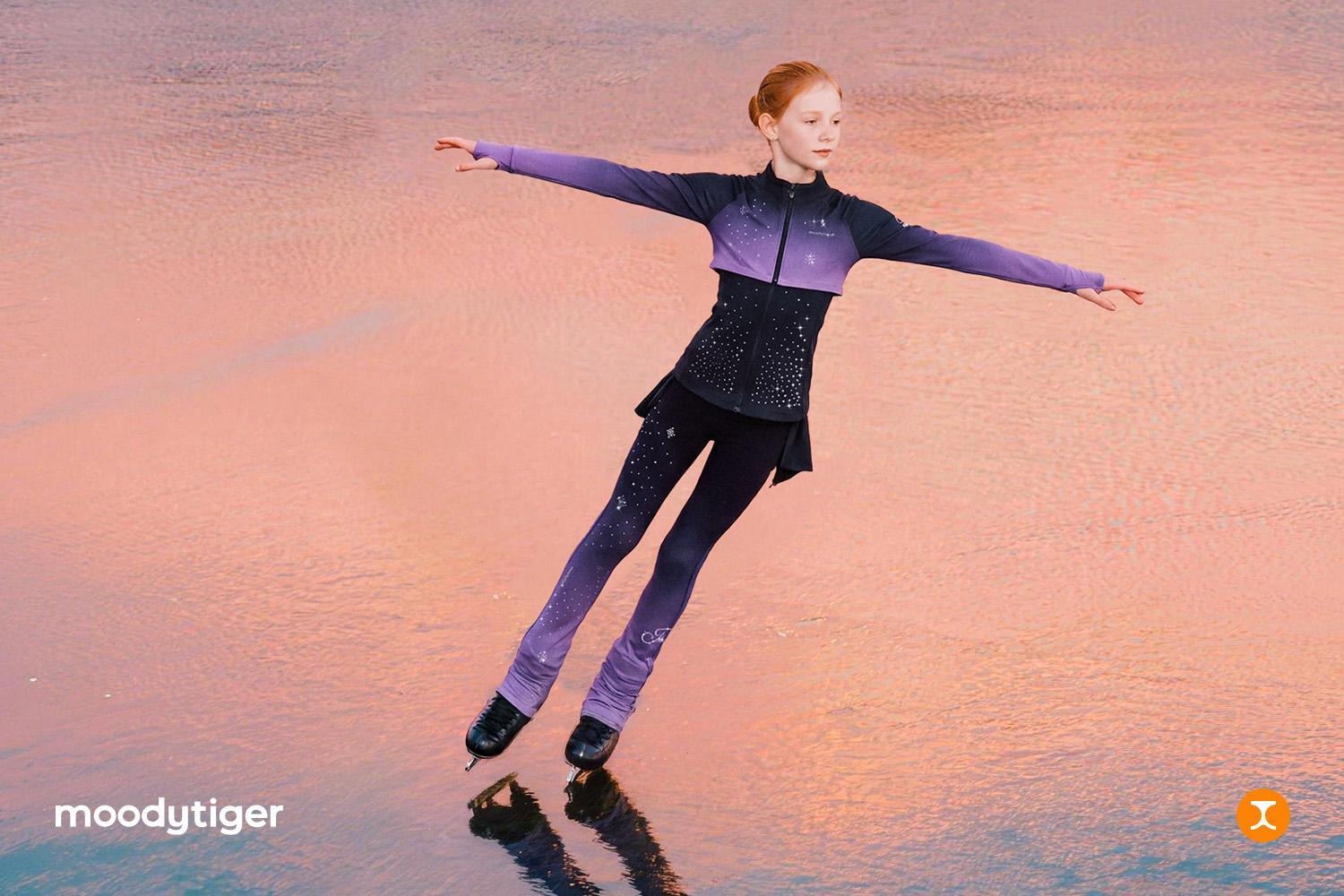
So the collection is cut for extension, not just motion. Four-way stretch fabrics with genuine recovery, so a line stays true through the hundredth plié rather than bagging after the tenth. Seams placed flat and away from friction points, because a raised inner seam is a distraction a nine-year-old shouldn’t have to dance around. Waistbands that stay anchored through bends and inversions. Breathable knits that manage the heat of a working class — dance is athletic effort, however elegant its surface, and a warm studio in October is its own small climate.
None of this is visible from the viewing gallery. All of it is felt on the floor, which is exactly the order of priority the brand intends.
Light, caught in passing
And then there is the shine — handled the moodytiger way, which is to say: quietly.
Select pieces in the collection are embellished with Swarovski® crystals, placed with restraint where movement naturally carries the eye — a scatter along a neckline, a trace at the wrist. The crystals don’t announce themselves under studio light. They flicker. A turn catches them for a quarter-second; an arm line draws a brief thread of light; then it’s gone until the next movement finds it.
The design position is deliberate: the child is the spectacle, the garment is the frame. Shine that shouts belongs to costumes. Shine that responds — that rewards motion rather than replacing it — belongs to practice, where a small glint at the wrist can make the hundredth repetition feel slightly ceremonial. Free to Shine, the idea the collection is named for, reads less like a slogan than an order of operations: the freedom comes first; the shining is what movement does when nothing stands in its way.
From studio to everywhere else
The pieces don’t clock out when class ends, and for parents this has become the collection’s quiet superpower. These are garments polished enough for the world outside the studio and technical enough for the work inside it: a dance dress that reads, on the street, as simply a lovely dress; leggings that go from barre to birthday party without a costume change.
In a childhood that moves — school to studio to someone’s kitchen to the park — clothes that need a changing bag between scenes don’t survive. These are built not to need one. That crossover isn’t an accident; it’s the brand’s founding logic applied to new territory. moodytiger has always been designed for the whole moving day of a child, not the ninety scheduled minutes of it.
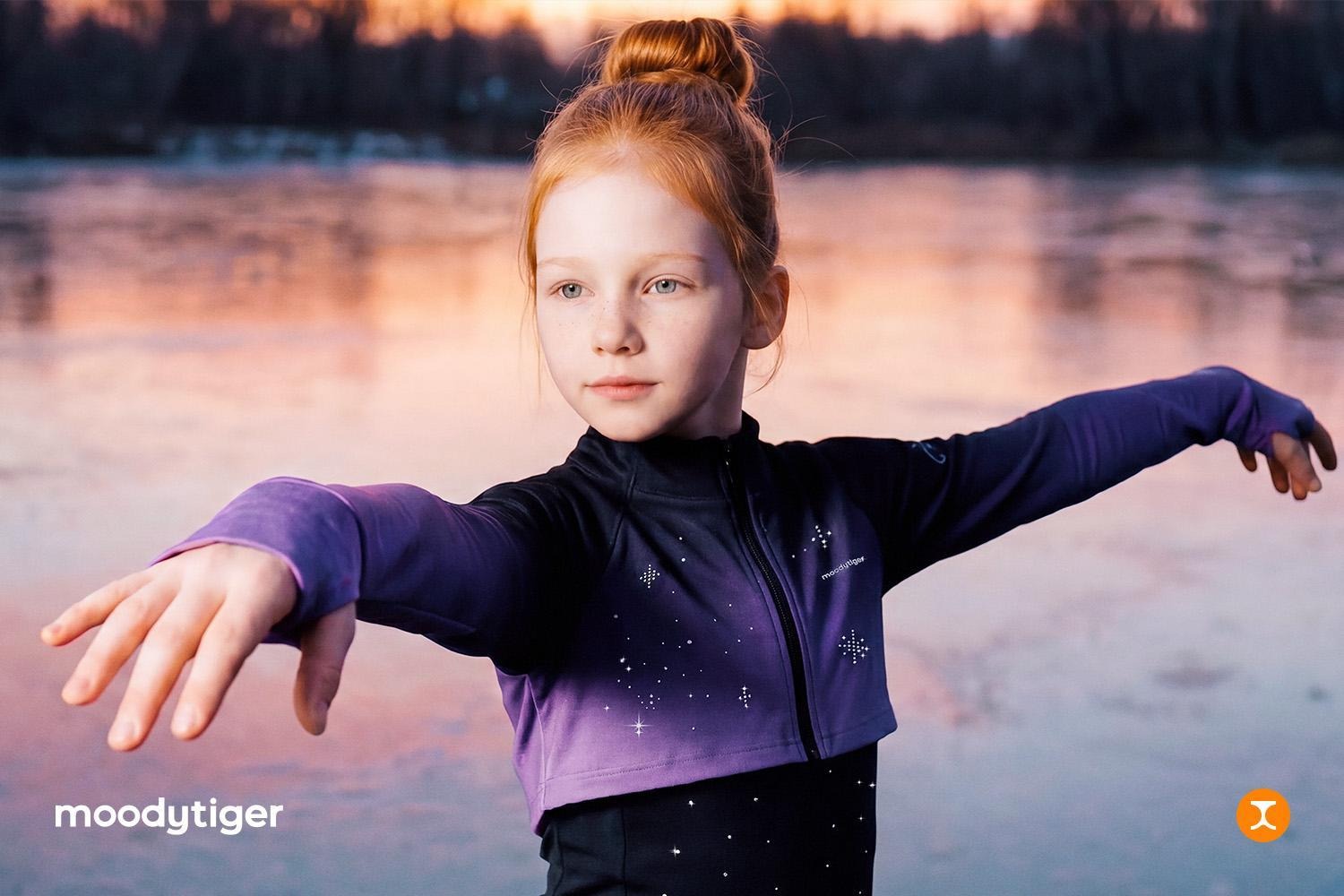
It’s also, not incidentally, what the design-conscious parent has been asking of children’s dancewear for years: something she’d happily stand next to at pickup. The palettes are considered, the silhouettes clean, the fabric substantial in the hand. It photographs beautifully precisely because nothing about it is trying to.
Practical life is accounted for, too. The pieces are built to be washed like activewear — frequently, quickly, without ceremony — because a garment that demands special care doesn’t survive a real family’s week. Growth is part of the brief as well: the cuts allow for a season of getting taller without ever reading as oversized, so a favorite piece fits properly for longer than a single term of classes. It’s the unglamorous engineering underneath the light — and it’s what makes the collection livable rather than precious.
Restraint as a design language
Put the dancing collection next to the rest of the children’s market and the difference is mostly what’s missing. No slogans. No cartoon franchise. No neon bidding for attention. The branding stays nearly silent — the same restraint that has drawn design-led parents to the brand since its founding in Hong Kong by Zoe Ng and Donald.
That discipline matters more, not less, once crystals enter the picture. Embellishment without restraint tips quickly into costume. Held inside a design language this quiet, it lands as intended: a small, earned light on a garment that takes a child’s practice seriously. The pieces still wash like activewear, wear like activewear, and survive like activewear — the sparkle is a detail, never the structure.
The deeper bet
Underneath the fabric and the light sits a conviction about what dancewear is for. Children don’t practice to become watchable; they practice because the body learns, and learning feels good. The collection’s job is to remove every reason to stop — the itch, the pull, the overheat, the self-consciousness — and to add one small reason to keep going: the flicker in the mirror that says the turn was clean.
Staying in the play has always been the brand’s north star. The dancing collection is that idea with the music turned on.
Now in the world
The moodytiger dancing collection is now available internationally through the brand’s directly-operated stores and its online channels — arriving, fittingly, just as studios reopen and a new term of Tuesday afternoons begins.
Somewhere today, a child will land three turns in a row for the first time. What she’s wearing won’t get the credit — and that, precisely, is the design working.
About moodytiger
moodytiger is a design-led children’s activewear brand founded in Hong Kong by Zoe Ng and Donald. It builds technical clothing around how children actually move — performance fabrics, flat seams, fits drafted for growing bodies, with select materials bluesign® approved — and sells through directly-operated stores across Asia, the Middle East, and the United States, plus its online channels. Learn more at moodytiger.