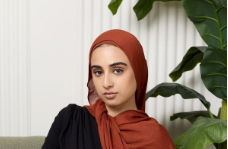
Woman in a rust-coloured hijab beside a plant. Image: Alkareem London
A good wardrobe is built, not bought, and the same is true of hijabs. Most women who wear one every day own far more scarves than they reach for. The favourites tend to have something in common: the fabric suits the day.
Start there, and a small, well-chosen collection does more than a drawer full of impulse buys.
Start With Fabric, Not Colour
Colour catches the eye in a shop, but fabric decides whether a hijab gets worn. It governs how the scarf drapes, how warm or cool it feels, whether it slips and whether it needs an under cap. Think in three settings: everyday, warm days and evening. One well-chosen piece for each is the foundation of a hijab wardrobe that works.
Some brands make this easier by leading with fabric. The Alkareem London hijab collection, for instance, is organised around the material of each scarf and sits alongside the under caps and pins that go with them, so you can shop by what a hijab needs to do rather than by colour alone.
The Everyday Essential: Jersey
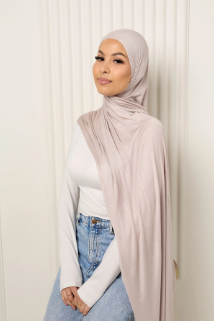
Woman wearing a light-coloured jersey hijab. Image: Alkareem London
Jersey is the workhorse. It has a little stretch, grips without much pinning and keeps its shape through a long day. It is also the most forgiving fabric to wrap, which is why so many women learn on it. The Emirati jersey hijab from Alkareem London measures 170cm by 75cm, generous enough for full coverage, and comes in dozens of shades. One neutral and one deep tone will cover most of a working week.
For a dressier everyday option, liquid jersey adds polish. The brand describes its version as “thin yet opaque, with a smooth drape and a subtle, elegant sheen”.
For Warm Days: Cotton Silk
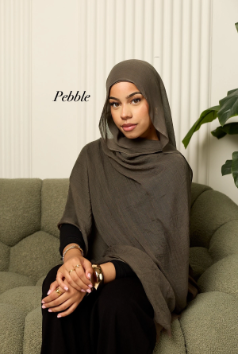
Woman in a grey cotton silk hijab. Image: Alkareem London
When the weather turns warm, heavier fabrics become a burden. Cotton silk is soft against the skin, and Alkareem London describes its cotton silk hijab as “lightweight and breathable”. There is a trade-off: it is semi-transparent, so the brand recommends wearing it with an under cap. At 180cm by 95cm, it is wide enough to layer.
For Evening: Chiffon
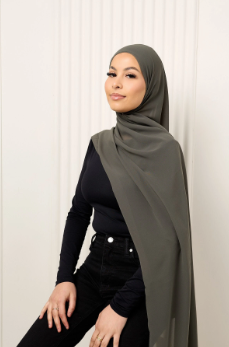
Grey chiffon hijab with a soft drape. Image: Alkareem London
Chiffon is the occasion fabric. It is fine and fluid, catches the light and falls in soft folds that suit weddings and dinners. It is also the most slippery, so it pairs best with an under cap that grips. The brand’s Emirati chiffon hijab is cut long, at 200cm by 75cm, which leaves room for more elaborate wraps.
Colour: A Palette That Works With Your Wardrobe
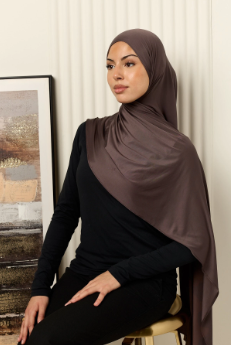
Liquid jersey hijab with a subtle sheen. Image: Alkareem London
With the fabrics settled, build colour around the clothes you already own. Neutrals do most of the work: black, navy, stone, taupe and soft grey sit with almost anything. Add two or three deeper shades that suit your skin tone, such as olive, plum or chocolate, for days when you want the hijab to lead. Save bright colours and prints for summer and celebrations, when one bold scarf can carry a whole outfit.
One practical test: hold the hijab against your face in daylight before you commit. A colour that looks right on screen can drain you in person.
The Finishing Details
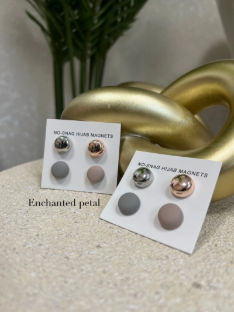
Set of four hijab magnets in neutral colours. Image: Alkareem London
The pieces that never make it into photographs matter as much as the scarves. An under cap keeps hair in place and stops fine fabrics slipping. Fastenings deserve thought too. Pins are traditional, but magnets are a neat alternative for fabrics that snag; the brand says its hijab magnets hold the scarf “without pins or clips”.
Store hijabs folded or rolled rather than hung, which can stretch jersey, and wash delicate fabrics by hand.
The result is a hijab wardrobe of perhaps eight or ten pieces that covers every season and occasion, each one chosen for a reason. That is what makes a wardrobe considered.