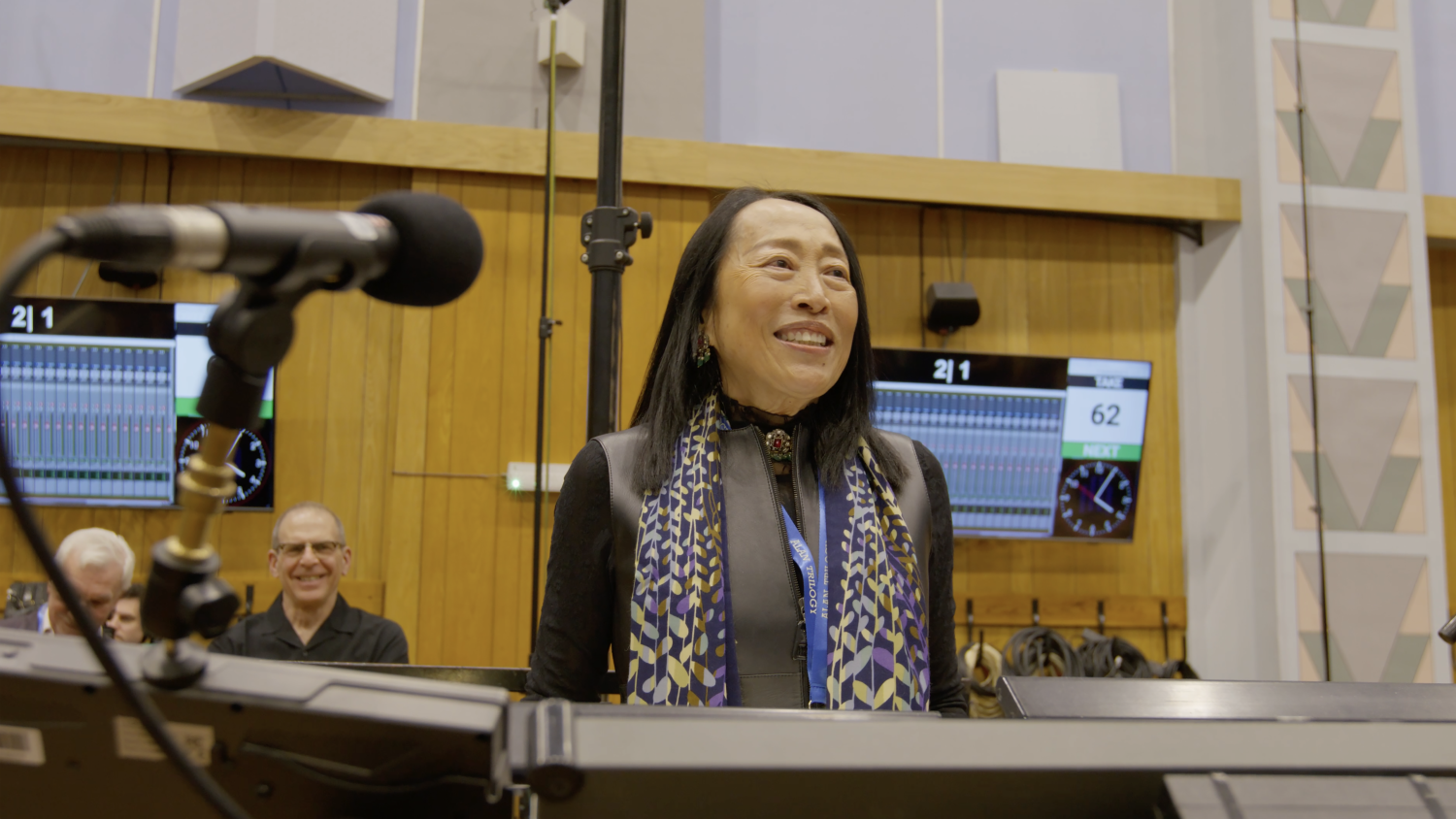
With the release of LIM Fantasy of Companionship – Legacy Edition, the pioneering surgeon turned creative visionary discusses her remarkable reinvention, recording at Abbey Road, collaborating with the Royal Philharmonic Orchestra and exploring the future of humanity through music and science.
There are few careers that could prepare someone for the extraordinary intersection of science, music and storytelling that Dr Susan Lim now occupies. A pioneering transplant surgeon who spent decades at the forefront of medicine, Lim has traded the operating theatre for the recording studio, embarking on an ambitious second chapter that is every bit as remarkable as her first.
As the creative force behind the international LIM Collective, she has assembled an extraordinary constellation of musicians, composers, scientists and visual artists to explore some of humanity’s most profound questions. What does it mean to be alive? Can artificial intelligence develop genuine empathy? And might the mysteries of the universe hold answers to the challenges facing our planet?
These questions find expression in LIM Fantasy of Companionship – Legacy Edition, an ambitious musical project that explores the relationship between humanity and artificial intelligence through cinematic orchestration, imaginative storytelling and the emotional power of song. Featuring collaborations with Britain’s Got Talent finalist Tom Ball, the Royal Philharmonic Orchestra and London Voices, the album represents a remarkable convergence of creative disciplines, with recordings taking place at London’s legendary Abbey Road Studios.
Among its standout compositions is Teleportation, an evocative exploration of quantum entanglement and the desire for connection, which provides an intriguing glimpse into Lim’s vision of a future where humans and intelligent machines might coexist through empathy rather than fear.
Yet perhaps the most extraordinary development is the Collective’s collaboration with scientists working on NASA’s Compton Spectrometer and Imager (COSI) mission. Connecting real astrophysical research with music, animation and performance, the initiative seeks to make the wonders of the cosmos accessible to audiences far beyond the scientific community.
For Lim, whose extraordinary professional journey has taken her from the intricacies of human anatomy to the vastness of the universe, the connection between science and art is deeply personal. Both, in their own ways, are concerned with life, possibility and the enduring human desire to understand our place in the world.
ARCADIA speaks exclusively with Susan Lim about her unconventional path into music, the emotional possibilities of artificial intelligence and why, after a lifetime spent exploring the boundaries of science, she believes imagination may be one of humanity’s greatest gifts.
Your new album, Fantasy of Companionship – Legacy Edition, explores the relationship between humanity and artificial intelligence. What was the inspiration behind ‘Teleportation’, and how does it reflect the wider themes of the album?
“In Fantasy of Companionship, ‘Teleportation’ is the emotional and conceptual fulcrum; it represents quantum entanglement applied to the soul. The lyrics capture the inanimate’s burning desire to escape its physical limitation and merge with human consciousness: ‘Trapped in my stuffed form, my torso wilted by the air… you gotta beam me up.’ It craves life and immortality.
“At the same time, it mirrors the human desire for deep connection, echoed earlier in the lyrics to Ode to ALAN, written by the Inanimate’s human partner, Christina: ‘Inanimate dignity, it’s serendipity, now you are a part of me.’ Through an unexpected flash of quantum physics and shared emotion, two entities become inextricably linked – what is felt in one is mirrored in the other.
“Across the wider trilogy, ‘Teleportation’ signals our ultimate vision of the future: an entangled, symbiotic coexistence between humanity and artificial intelligence, built on shared empathy rather than fear.”
You have brought together an extraordinary roster of collaborators, from Tom Ball and the Royal Philharmonic Orchestra to London Voices and musicians from across the world. How do you unite so many creative voices while maintaining a distinctive LIM identity?
“The narrative is our North Star. Whether working with Tom Ball, the Royal Philharmonic Orchestra, London Voices, or our animators and arrangers across different continents, everyone gathers around a single, cohesive storyline.
“We are all actors and artists contributing to one shared narration, each with an essential role to play. When every contributor understands their place in the emotional arc, whether giving voice to an inanimate entity discovering life, or underscoring the vastness of the cosmos, their unique talents enrich the project without diluting its vision.
“The LIM identity stays intact because every musical phrase, orchestral swell, and visual frame serves that core narrative.”
Your collaboration with scientists working on NASA’s COSI mission brings together two seemingly different worlds. How did the relationship begin, and what excited you most about translating astrophysics into music, visuals and live performance?
“It began with a remarkable convergence of scientific inquiry and artistic storytelling: we found ourselves united through the exact same climactic event – a supernova.
“The emotional apex of Cosmic Rhapsody dramatises the very astrophysical phenomenon that NASA’s Compton Spectrometer and Imager (COSI) mission investigates: a massive star collapsing into a supernova, releasing stardust that showers Earth like healing confetti.
“What excited me most was the opportunity to communicate high-energy astrophysics through the performing arts for public outreach. As humanity moves into an age of space-faring adventurers, music and animation offer an accessible, visceral pathway into the cosmos, allowing audiences to feel personally connected to the wonder of the universe.”
When working directly with scientists on ideas as vast as the origins and structure of the universe, how do you balance scientific accuracy with artistic imagination?
“Every concept begins with thorough research; we ground the narrative in genuine physics, genetics, and cosmology as rigorously as possible. But from the outset, we are transparent that Cosmic Rhapsody is a speculative, artistic allegory.
“It envisions an interstellar journey undertaken by a human-inanimate partnership, prompted by environmental degradation on Earth, to seek solutions in cosmic dust that may help save the human race.
“Science provides the architectural blueprint and the factual truth, while art provides the emotional resonance and narrative wonder. We never compromise the core scientific principles; instead, we translate them into an imaginative story that invites audiences to look up at the universe with awe.”
LIM exists at the intersection of science, music, technology, animation and storytelling. What can art communicate about complex scientific ideas that data and academic language sometimes cannot?
“Art evokes empathy, whereas raw data demands analysis. Academic language relies on precision and technical formulae, which can unintentionally distance people from the heart of a discovery.
“Music and visual storytelling dismantle those barriers instantly. A melody speaks a universal language that crosses cultures and geographies without needing translation.
“Pairing that music with animation allows audiences to actually see and feel the story – turning complex concepts like deep-space phenomena or human-AI synergy into vivid, emotional narratives. It transforms abstract science into a shared human experience.”
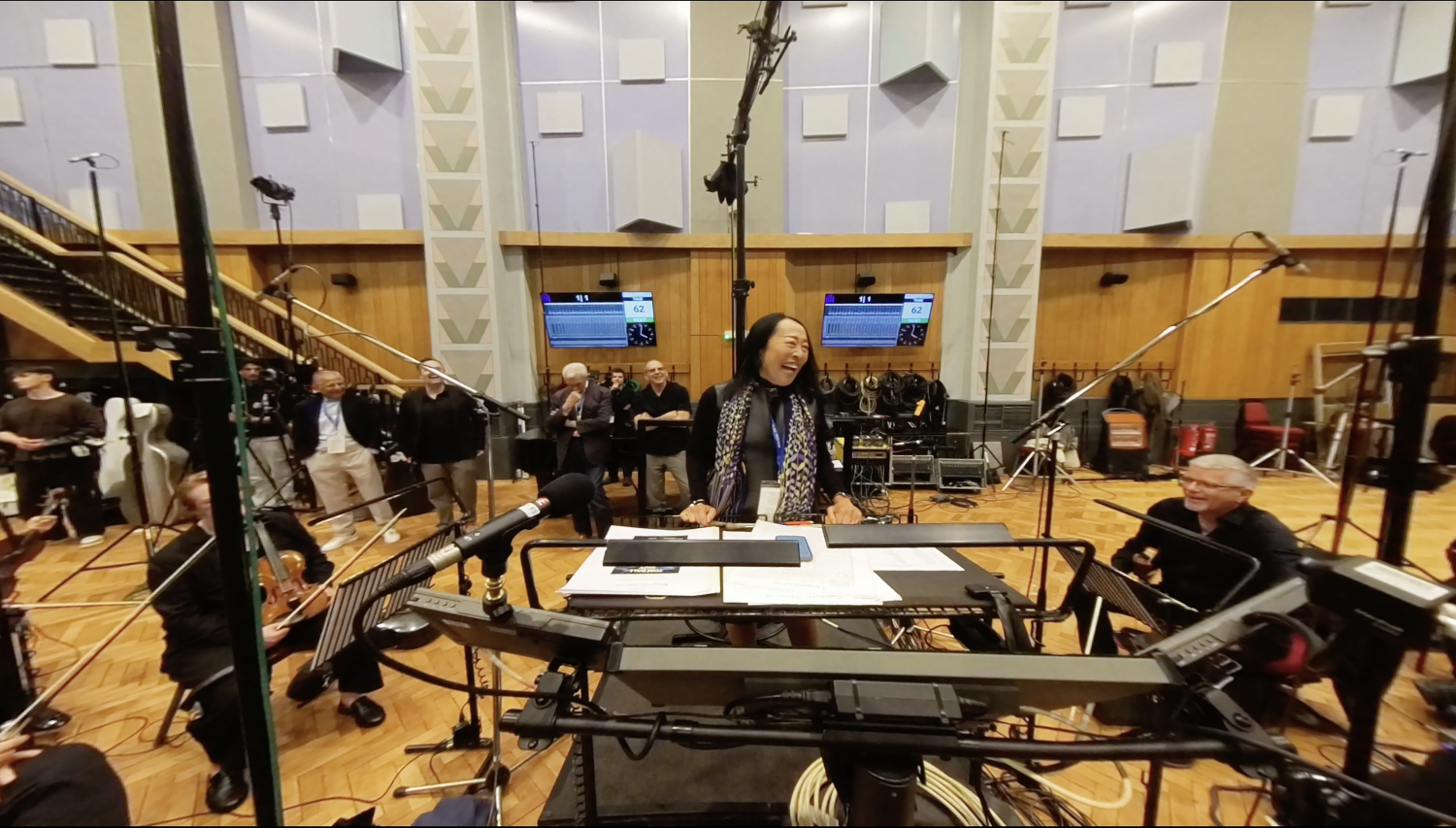
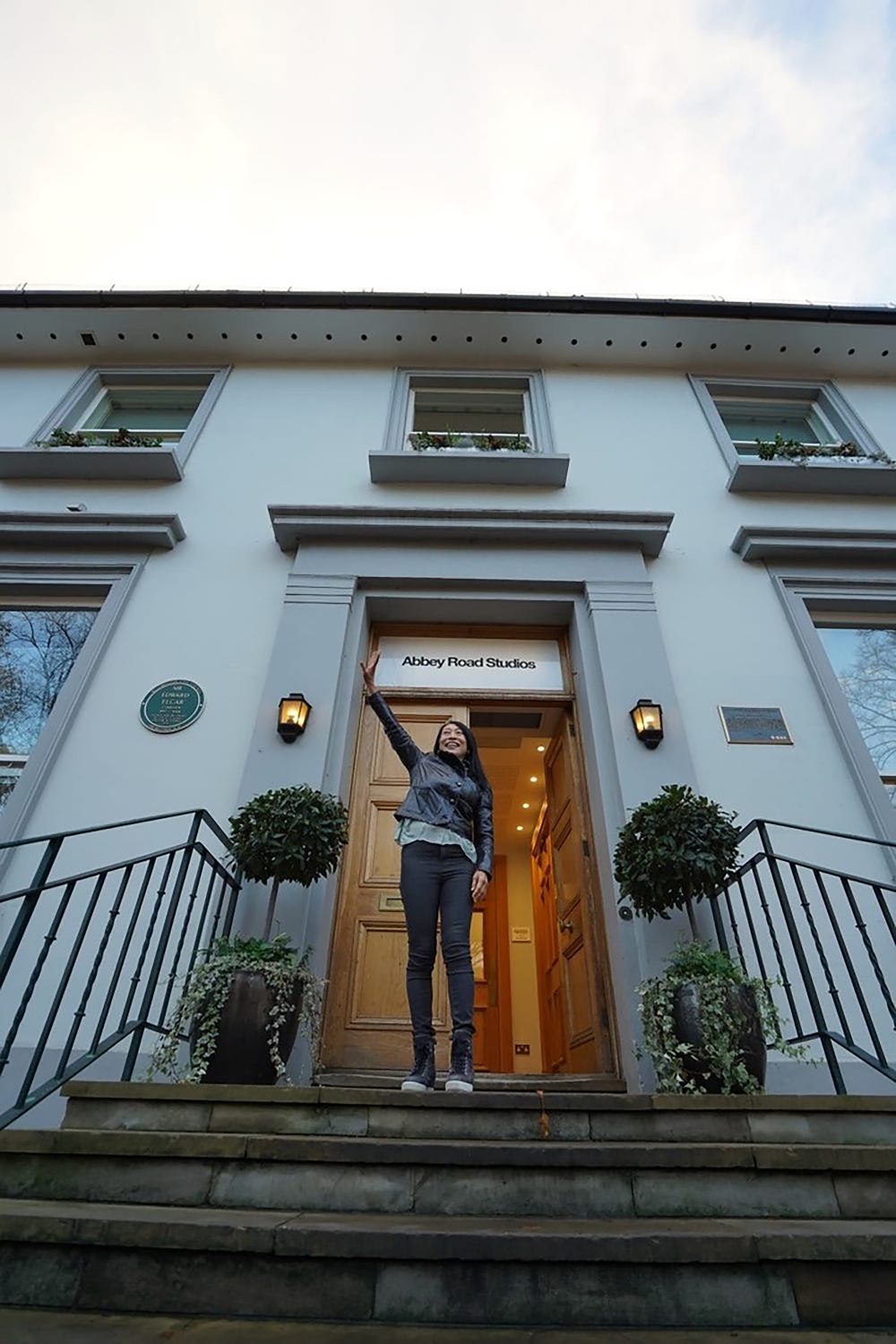
Abbey Road holds an almost mythical place in music history. Coming from such an unconventional route into the industry, what does it feel like to record there, and was there a moment when the scale of what you had created truly sank in?
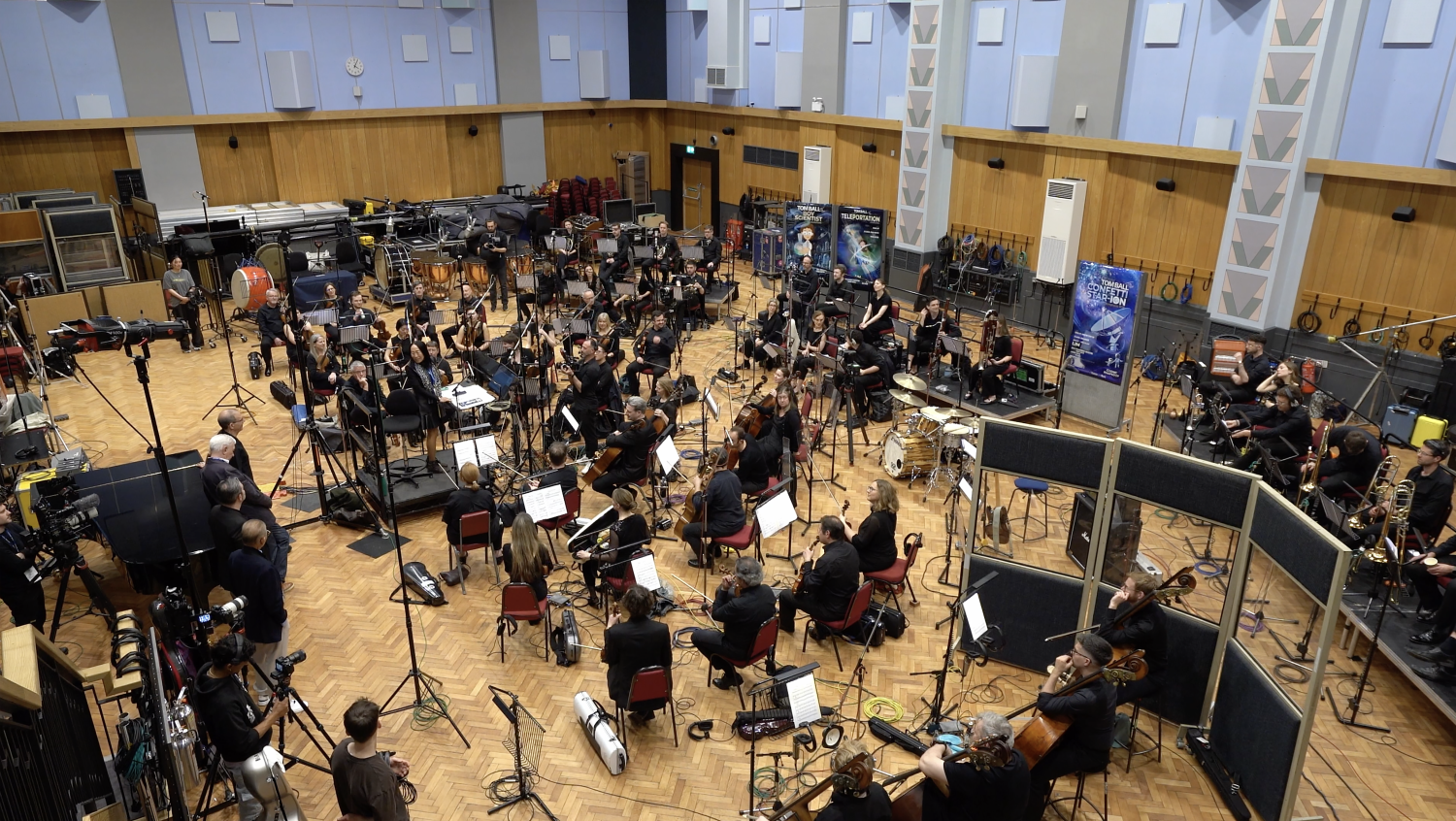
“Since we began this musical journey in 2016, we have recorded at Abbey Road more than a dozen times. During Cosmic Rhapsody, we were occupying Studios One, Two, and Three, along with the front rooms and penthouse suites all at once.
“Yet no matter how often you enter, the feeling is always fresh – one of deep reverence and awe for the extraordinary institution it is. We never take a single session for granted.
“Once inside, what touches me most is the warmth; it quickly feels like family, from the studio managers and sound engineers to the canteen staff.
“The sheer scale truly sinks in each time we are in Studio One with a 70-piece orchestra and London Voices bringing these speculative scientific concepts to life with absolute sonic grandeur.”
Your work explores some of the biggest questions surrounding humanity, consciousness and the universe. After everything you have experienced in medicine, science and now art, which question still keeps you awake at night?
“The true convergence of humanity and artificial intelligence: can the merger of man and machine transcend cold calculation to encompass genuine empathy and consciousness?
“As synthetic intelligence advances exponentially, we are being asked to redefine what life, identity, and companionship truly mean.
“Will we build systems that merely replicate tasks, or can we foster a shared existence where technology elevates human dignity and helps protect our fragile planet?
“That boundary between calculation and empathy is the frontier that occupies my mind every single day.”
The transition from world-class transplant surgeon to founder of an international creative collective is extraordinary. Was there a defining moment when you realised science was no longer the only language through which you wanted to explore the world?
“The defining turning point came at an INK Conference in Lavasa, India, where I was invited to speak alongside the keynote speaker, James Cameron.
“My talk, Transplant Cells, Not Organs, focused on the paradigm shift from whole-organ transplantation to cellular therapies, and it later reached a global audience on the TED platform.
“When I was invited back to address my work in clinical robotics, I chose to look forward to the future of companionship between human and inanimate, opening the talk with a hologram of the inanimate character ALAN, delivering the introduction on my behalf, and closing with a song.
“The extraordinary emotional connection it created in the auditorium was a revelation. I realised that I could engage audiences with the frontiers of human-technology partnerships through storytelling, lyrics, and songwriting in ways scientific presentations alone could not.
“From that moment, I never looked back.”
You have inhabited two worlds that are often considered opposites: surgery, with its extraordinary precision and discipline, and music, with its freedom and imagination. Do you see more similarities between them than people might expect?
“Rather than direct similarities, I see them as profound counterpoints that complete each other, much like day and night, or mountains and oceans.
“Surgery demands absolute, razor-sharp discipline and unwavering adherence to protocol because a life hangs in the balance; there is zero room for creative experimentation on an operating table.
“Artistic creation, by contrast, offers boundless freedom. There are no holds barred; imagination can explore speculative horizons, question reality, and push beyond existing boundaries without restraint.
“Living in both spheres provides a rare balance: the discipline to execute large-scale, complex global collaborations, paired with the complete creative freedom to dream without limits.”
You spent your surgical career at the forefront of transplantation, working directly with the fragility and extraordinary possibilities of human life. What did that experience teach you about mortality, and how does it continue to influence your creative work today?
“It taught me profound humility. When you hold human life and viable organs in your hands, you are confronted daily with our stark fragility and the reality of our temporary time on Earth.
“Transplantation is ultimately about renewal – taking an ending and turning it into a new beginning.
“That foundational truth directly shapes the LIM narrative. Whether we are exploring the death of a star giving birth to new elements, an inanimate entity yearning for resurrection, or humanity seeking planetary healing, my work is driven by the conviction that life is fleeting, precious, and bound by an enduring quest for connection and renewal.”