Bathroom counters used to look like mini pharmacies. Ten-step routines, shelves full of serums, essences, acids, and oils became the standard for anyone who cared about their skin. Now many beauty lovers are doing the opposite. They are cutting steps, choosing fewer products, and still seeing better results.
This shift is not about giving up on good skin. It is about getting smarter. Overloading the skin often leads to irritation, wasted money, and routines that feel impossible to keep up. A simpler approach protects the skin barrier, saves time, and makes consistency easier. That is why more people are moving toward fewer, better-chosen products.
What is driving the change?
Social media once celebrated maximalist routines. The more bottles, the more serious you seemed. Reality caught up. Layering multiple actives at once can weaken the skin’s natural barrier. Redness, dryness, sensitivity, and unexpected breakouts become common. Many people notice their skin calms down the moment they stop using everything and stick to basics.
Time is another factor. Busy mornings and tired evenings leave little room for long rituals. A routine that takes under five minutes is easier to maintain every single day. Consistency beats complexity for long-term results.
Cost and clutter matter too. Buying every new launch adds up. Half-used bottles sit unused. Simplifying reduces spending and packaging waste. It also cuts decision fatigue. Choosing what to use each night stops feeling like a chore.
K-beauty has its own version of this shift, often called skip-care. Instead of many thin layers, the focus is on a few intentional products that do more than one job. Barrier support comes first. Results follow.
How a simplified routine actually works
A strong foundation still includes the same core steps most dermatologists recommend: cleanse, treat if needed, moisturize, and protect with sunscreen during the day. The difference is in how few products handle those jobs.
Many people now look for multi-tasking formulas. One cream that hydrates and delivers an active ingredient replaces a separate serum and moisturizer. A cleanser that also removes makeup cuts an extra step. This approach makes it clearer what is helping your skin and what is not.
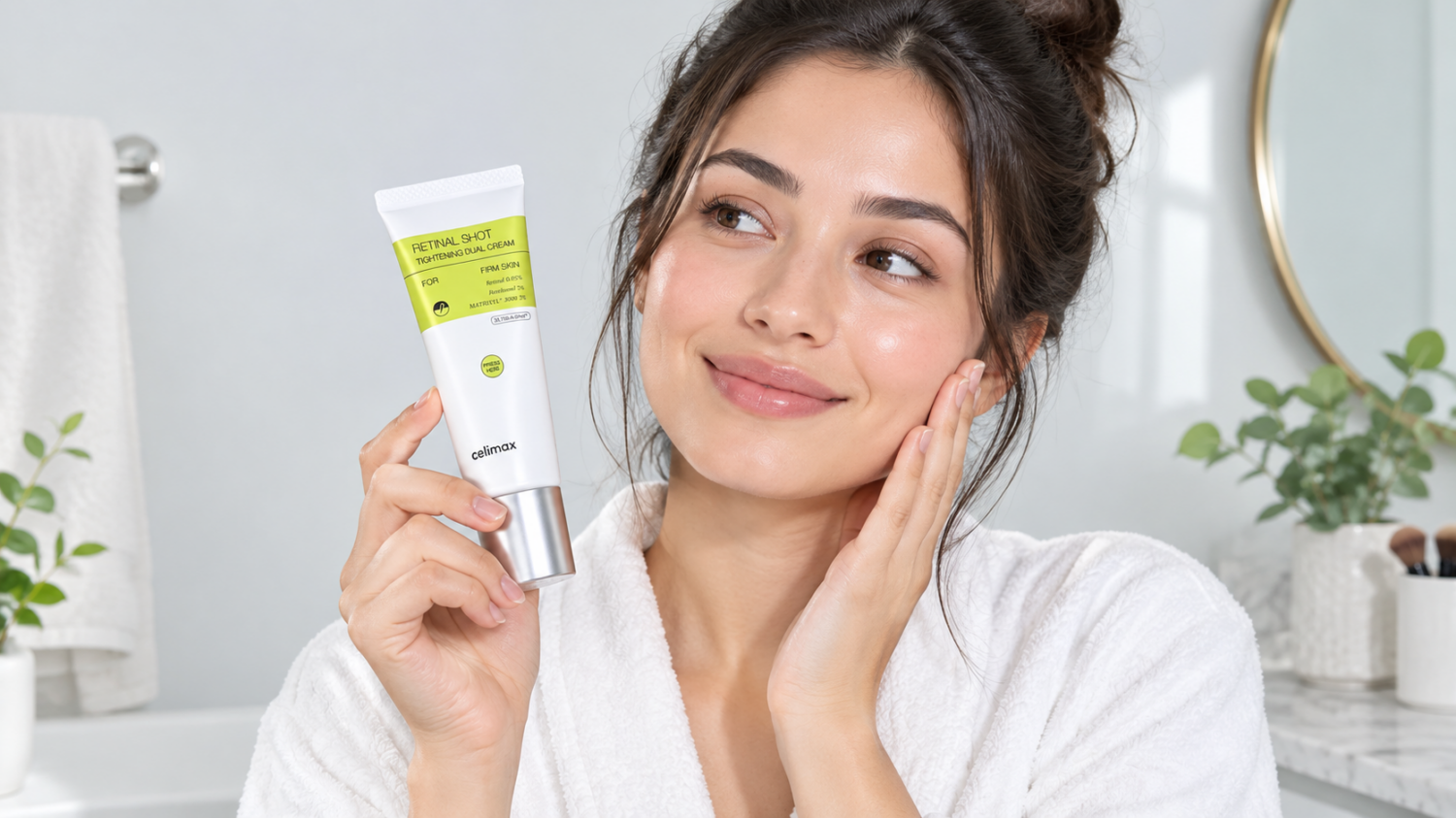
For concerns like fine lines or loss of firmness, you do not need a full shelf of anti-aging products. A well-formulated treatment cream can deliver results without adding multiple layers. The celimax retinol dual cream is one example of this kind of product. It combines retinal (a form of vitamin A that works efficiently) with tightening benefits in a dual-cream format. Used at night after cleansing, it covers treatment and moisture in one step for many people. Pair it with a gentle cleanser and daytime sunscreen, and the routine stays short while still targeting visible signs of aging.
Benefits that show up quickly
- Less irritation and a stronger barrier. Fewer products mean fewer chances for ingredients to clash or over-exfoliate.
- Easier consistency. A short routine is realistic on busy days and travel days.
- Clearer results. When something works (or does not), you can tell which product is responsible.
- Lower cost over time. Quality multi-taskers often replace several single-use items.
- Less mental load. Skincare feels supportive again instead of another obligation.
How to simplify without losing results
Start by auditing what you already own. Keep the products you reach for most and that your skin clearly likes. Set aside the rest for a few weeks. Notice how your skin feels with less.
Build around three to four steps maximum:
Morning: gentle cleanse (or just water if your skin prefers it), moisturizer if needed, broad-spectrum SPF.
Night: cleanse, one treatment product if you use actives, moisturizer.
Introduce or keep actives slowly. Retinal or retinol works best a few nights a week at first, especially if your barrier needs recovery. Always follow with moisture. Sunscreen every morning remains non-negotiable.
Choose multi-functional products that match your main concerns. If firmness and texture matter, look for formulas that deliver both treatment and hydration. Stores that focus on effective, intentional skincare, such as Yesora Beauty, make it easier to find these kinds of options without endless scrolling through trends.
Pay attention to how your skin responds over two to four weeks. Adjust based on what you see and feel, not on what is currently popular online.
Conclusion
Beauty lovers are simplifying their skincare routines because it works better for real life and real skin. Fewer products mean less irritation, more consistency, and clearer results. You still get the benefits of effective ingredients without the overwhelm of a crowded shelf. Start with the basics, keep only what your skin actually needs, and choose multi-tasking formulas that earn their place. Healthy skin comes from steady care, not endless steps. A shorter routine makes that care easier to keep up every single day.
FAQs
Why are people simplifying their skincare routines now?
Too many products often irritate the skin barrier and make routines hard to stick with. People want better results with less time, less money, and less decision fatigue.
Does a simple routine still work for aging skin?
Yes. One well-chosen treatment, like a dual cream with retinal for firmness and texture, can deliver results without multiple layers. Consistency matters more than the number of bottles.
Will my skin get worse if I cut products?
Most people notice calmer skin within a couple of weeks. If you were overusing actives, your barrier may need a short recovery period first.
How many steps should a simplified routine have?
Three to four is enough for most people: cleanse, treat (if needed), moisturize, and sunscreen in the morning. Keep only what serves a clear purpose.
Can I still use retinol or other actives?
Yes. Use them a few nights a week at first, follow with moisturizer, and pair with daily sunscreen. Choose formulas that combine treatment and hydration so you do not need extra products.
Is this approach good for sensitive or acne-prone skin?
It often helps. Fewer ingredients reduce the chance of irritation or clogged pores. Focus on gentle cleansers and barrier-supporting products first.
How do I choose multi-tasking products?
Look for formulas that address your main concern while also hydrating or protecting. Test one new product at a time so you can see what works.