December, 1956. A 21-year-old Elvis Presley is driving around Memphis with a friend, Cliff Gleaves, and a dancer he once dated called Marilyn Evans. Also accompanying him: the flames of fame that lick his heels ferociously as he speeds across America delivering dangerous sounds and dangerous hip wiggles to ever-bigger audiences.
As this particular Christmas approaches, Elvis has officially been in the business for two years, and it is safe to say that he is a Big Deal, not just in Memphis, but across America, with his sound and style bleeding outwards across the globe, infecting teens at a rate that makes some adults very afraid indeed; critics and fans are equally as passionate about this singer they find hard to categorise.
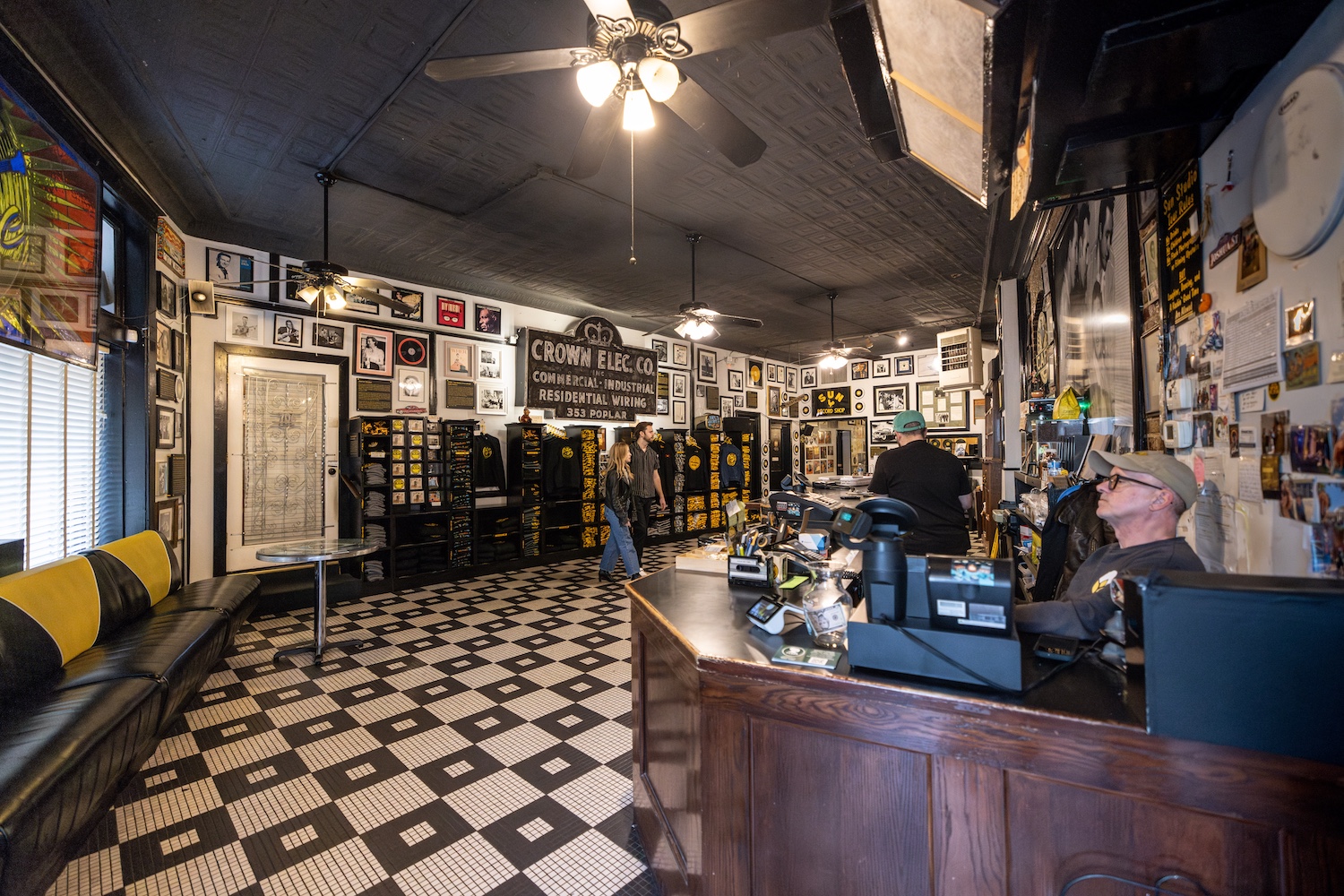
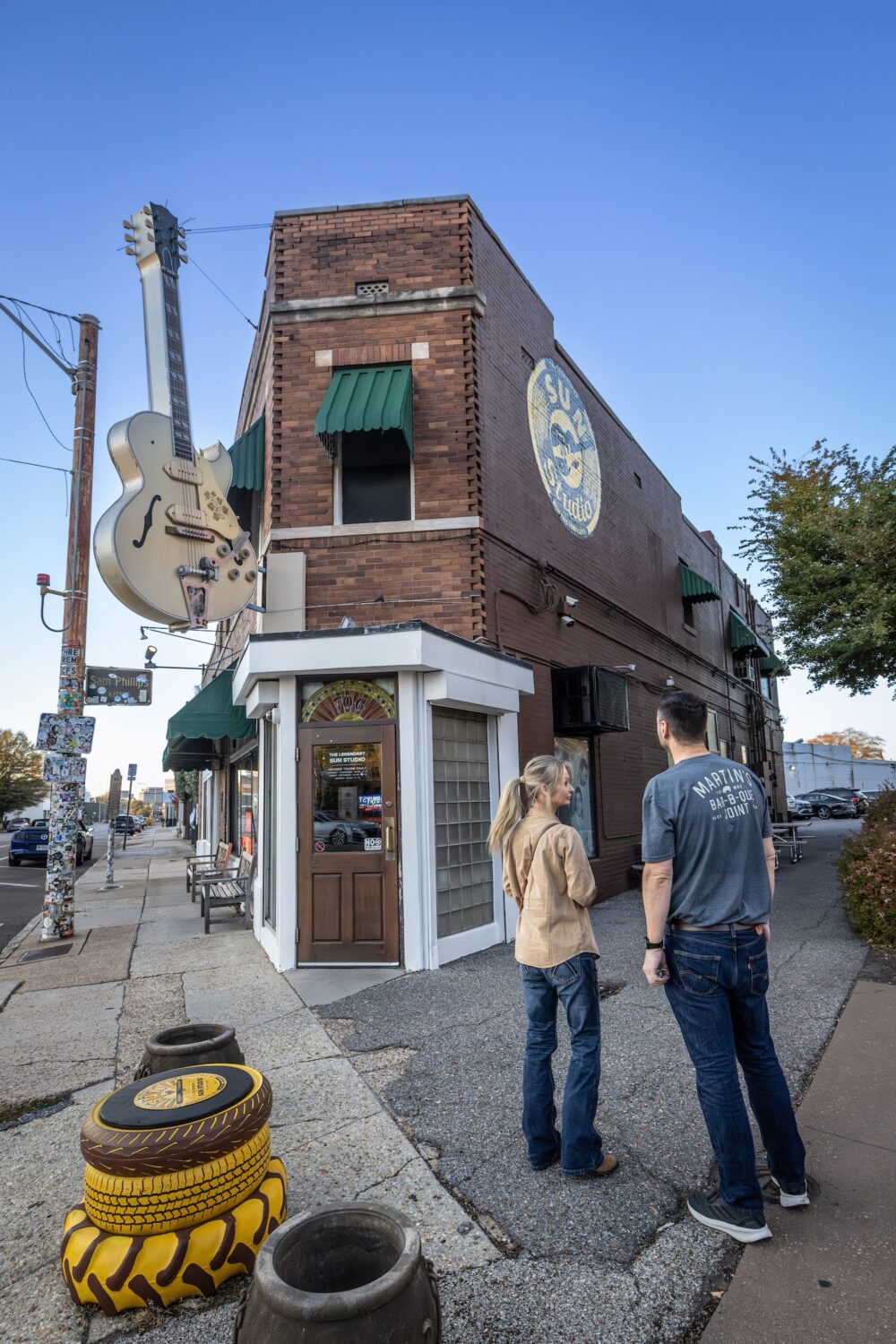
The furore surrounding him has started to shape his existence, stealing his freedom, but in Memphis he still behaves like a young man cruising around his hometown, stopping to see old friends at his favourite haunts. As he makes his way down Union, he spots a stack of Cadillacs outside 706, aka Sun Studio, so parks and heads inside.
The owners of the cars are Carl Perkins and Jerry Lee Lewis – both singers who, like Elvis, got their start at Sun Studio, the small independent record label and recording service helmed by Sam Phillips and Marion Keisker. They’re in there, too, and as the boys start to share stories and sing together, Sam hits record and phones his latest find, Johnny Cash, who duly joins the party.
That impromptu session came to be known as the Million Dollar Quartet. Recording it: the microphone that captured, wait for it, Jerry Lee Lewis singing Great Balls of Fire, Johnny Cash singing I Walk the Line, Carl Perkins singing Blue Suede Shoes, Elvis singing That’s All Right, and all of Sun’s other star vocalists, including Roy Orbison and Howlin’ Wolf.
70 years on, I’m standing in that exact room on the precise same floor tiles, holding that microphone. It’s hard to comprehend that this cold cage of metal harnessed the most iconic voices of the 20th century, that I am allowed to cradle it, imagining. Shouldn’t it be in a museum? Probably, but this is what Sam Phillips wanted for it – his big goal from the off was to capture the real sounds of the South, and an impulse in the same vein led him to, on selling Sun Studio, insist that this piece of music history would never sit behind glass.
We can’t linger on the microphone for too long. It’s a tiny piece of the musical legacy I’ve flown out to Memphis to see. There’s more within these 300-odd square miles that has influenced the sounds meeting our ears now than I could’ve imagined.
Let’s start with a whistle-stop tour of the Elvis places. As a staunch fan, I wrote endless notes on these hallowed spots: Graceland (smaller than I’d envisaged, but also somehow precisely the same as in the photos); Lansky Brothers (Elvis fetishised this place as a youth and ended up buying most of his clothes here. It was once located on Beale Street – where a signpost remains – but is now under The Peabody Memphis); Arcade Restaurant (opened in 1919, still family owned and now in its fourth generation, Elvis used to come in and huddle in a booth in the corner with his back to the room in the hope he’d remain undetected); his teenage apartment in Lauderdale Courts (eerily 1950s, the most moving of the Elvis places I visited), and Overton Park Shell.
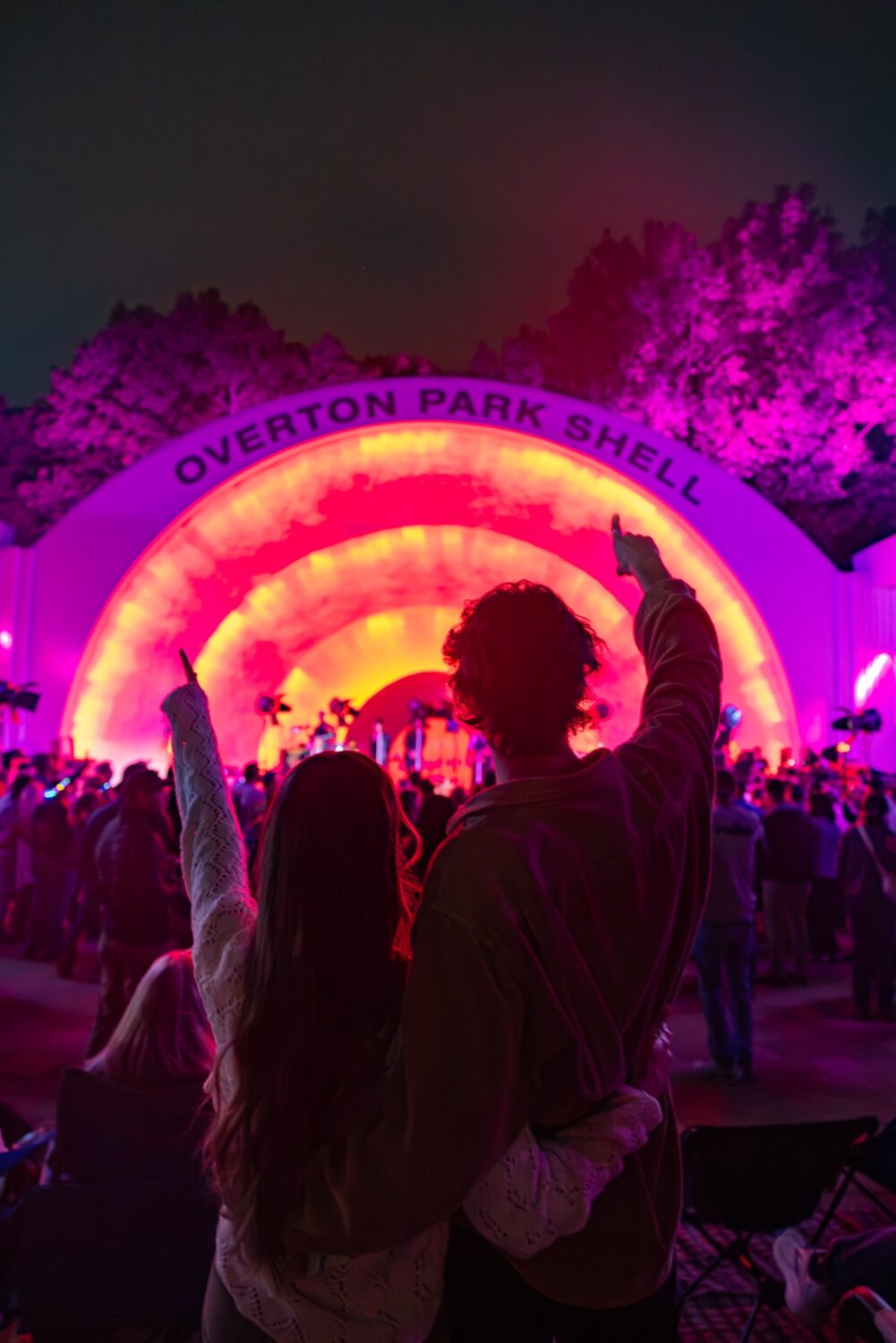
Here is one example of where the impressive music history of Memphis gives way to a scene that’s happening right now. Overton Park Shell is where Elvis made his first major public appearance – 1954, when he was merely 19, his name listed as ‘Ellis’ – but it’s still very much a place where artists draw huge crowds, as was evidenced when I went to the Shell Daze Music Festival and saw Grammy-winning Molly Tuttle steer the audience through a set on the very same stage where those Sun Studio names once held court.
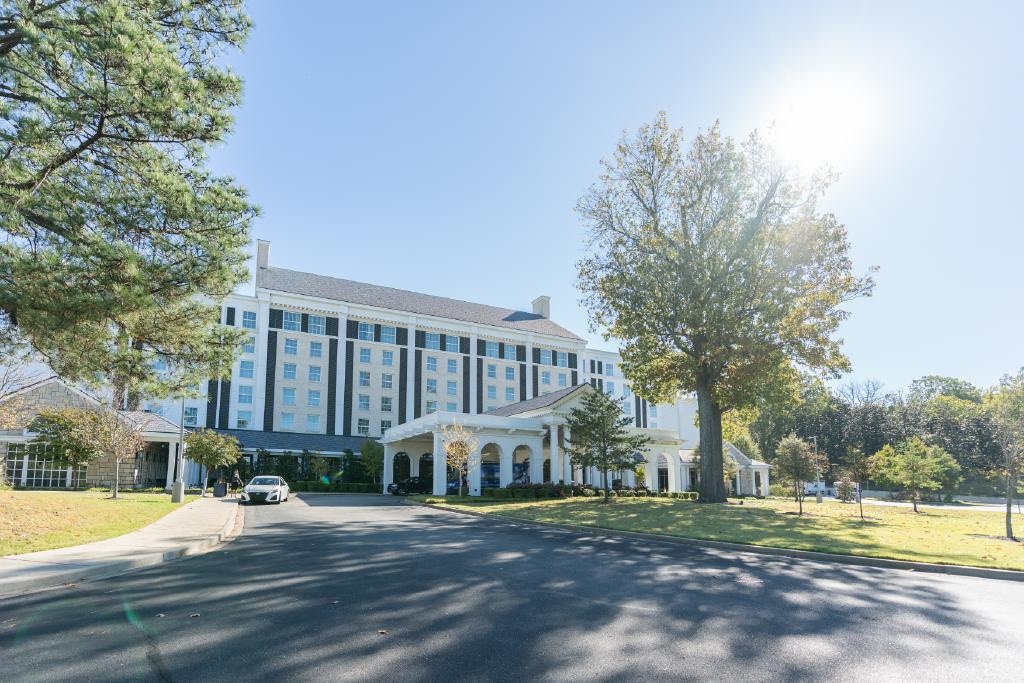
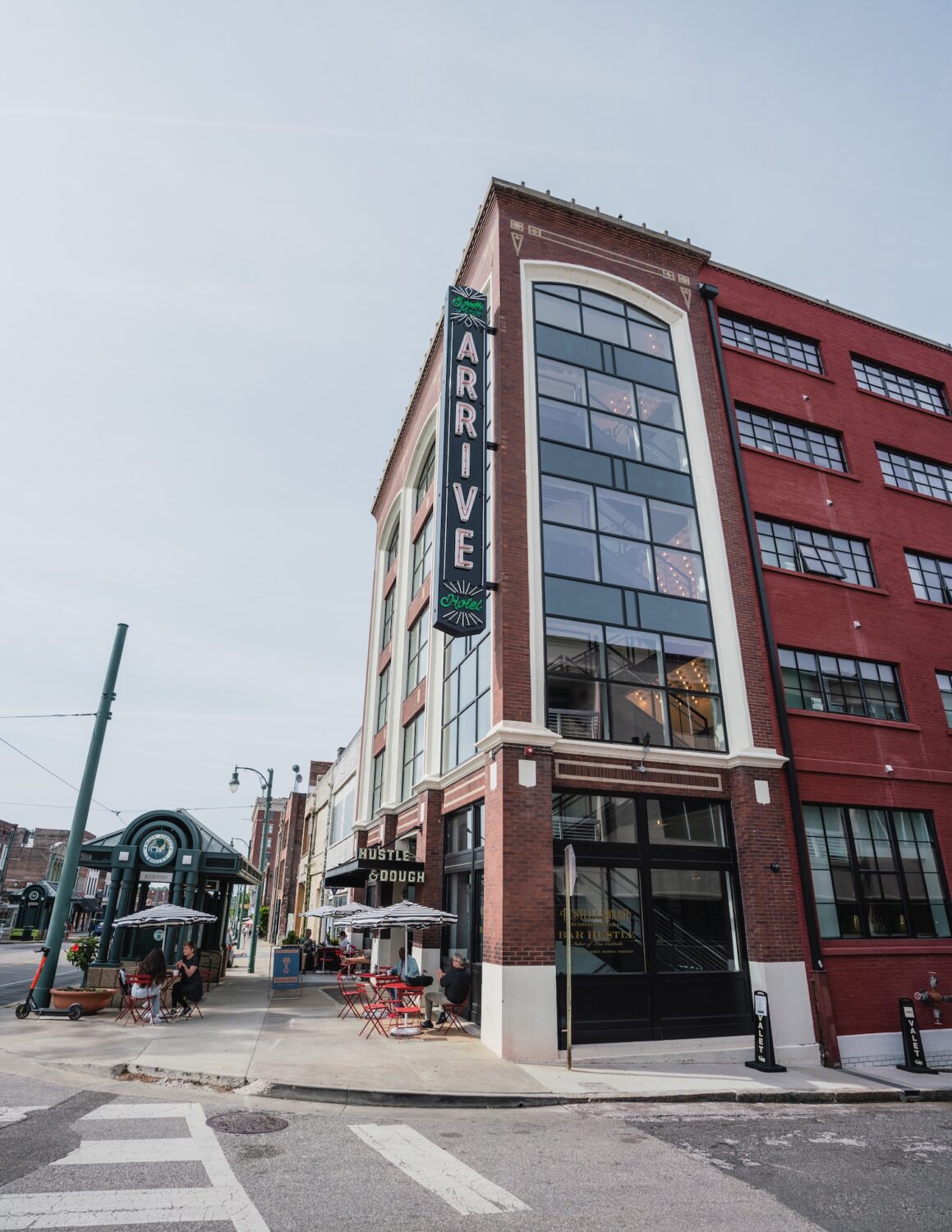
After that, I made my way back to my hotel, ARRIVE Memphis, which is carved into old bricks, owing to the common Memphian belief that buildings should be preserved, their historic bones important. The view from my room is a cityscape of inimitably American wide streets, buildings biting into the skyline.
My eyes flutter across the landmarks scattered before me. Dead ahead is a low building, the metal balconies painted pale green, one festooned with a huge red and white wreath. It is where Martin Luther King was shot, and is now home to the National Civil Rights Museum. They’ve done an astonishingly thorough job of representing the brutality of slavery, the bravery in those who worked to unshackle themselves and others from its clutches.
To my right is what once served as Central Station, now the Central Station Hotel. Next to it: Ernestine & Hazel’s, a dive bar that inspired the opening lyric of the Rolling Stones’ Honky Tonk Women. Opposite, the aforementioned Arcade Restaurant. To the left: the gutted hollows of Hotel Chisca, now home to a restaurant called Catherine and Mary’s (where the cornbread is unsurpassed). It is from this edifice that DJ Dewey Phillips (no relative of Sam’s) broadcast, and it was he who on the 8th of July 1954 first sent Elvis Presley’s voice into the hot night air. The response was feverish: calls peppered the WHBQ station to ask who the singer was, listeners unsure of the gender or race of this human singing in such a new style.
Just beyond Chisca, out of my eye-line, lies The Peabody Memphis, where Neil Diamond penned Sweet Caroline, and where an 18-year-old Elvis, before all the adulation, took his girlfriend Regis Wilson to the prom. Famous still are the Peabody ducks, a flock of mallards who march through the hotel twice daily.
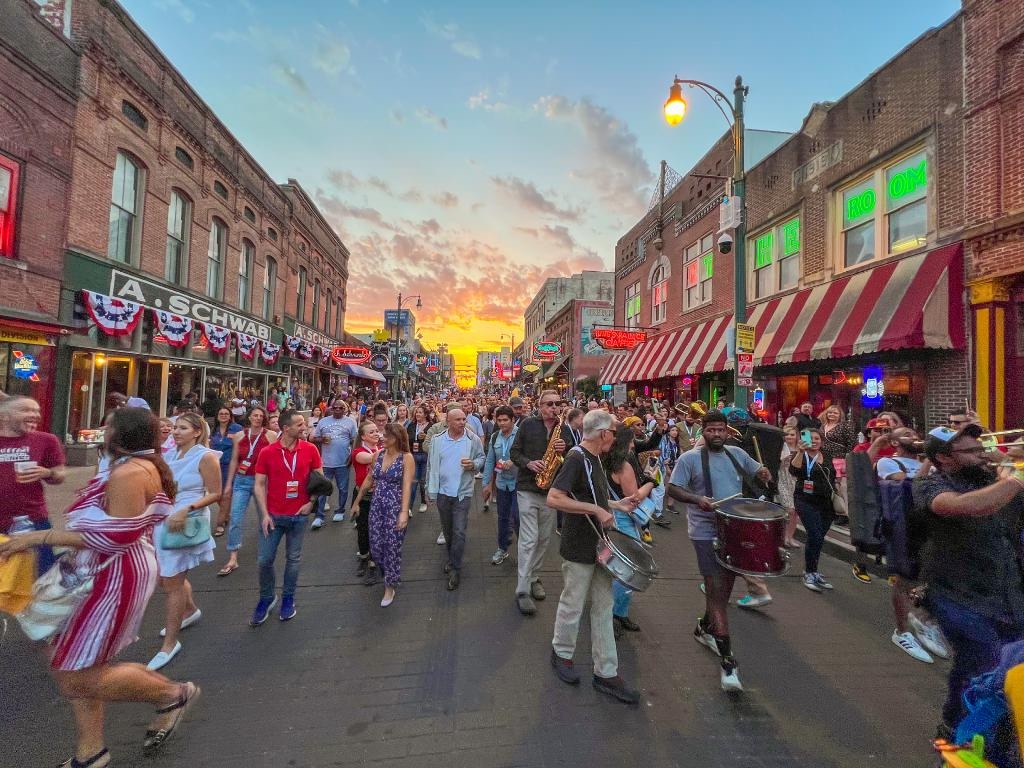
To get to the Peabody from my hotel, you walk down Beale Street, a place so synonymous with music you probably don’t need me to tell you more about it. Suffice to say that on the night I spend tucked in B.B. King’s Blues Club it is very much still music, music, music that pulses through the street, and I am vitally aware that the soles of my feet are walking on hallowed ground for music fans.
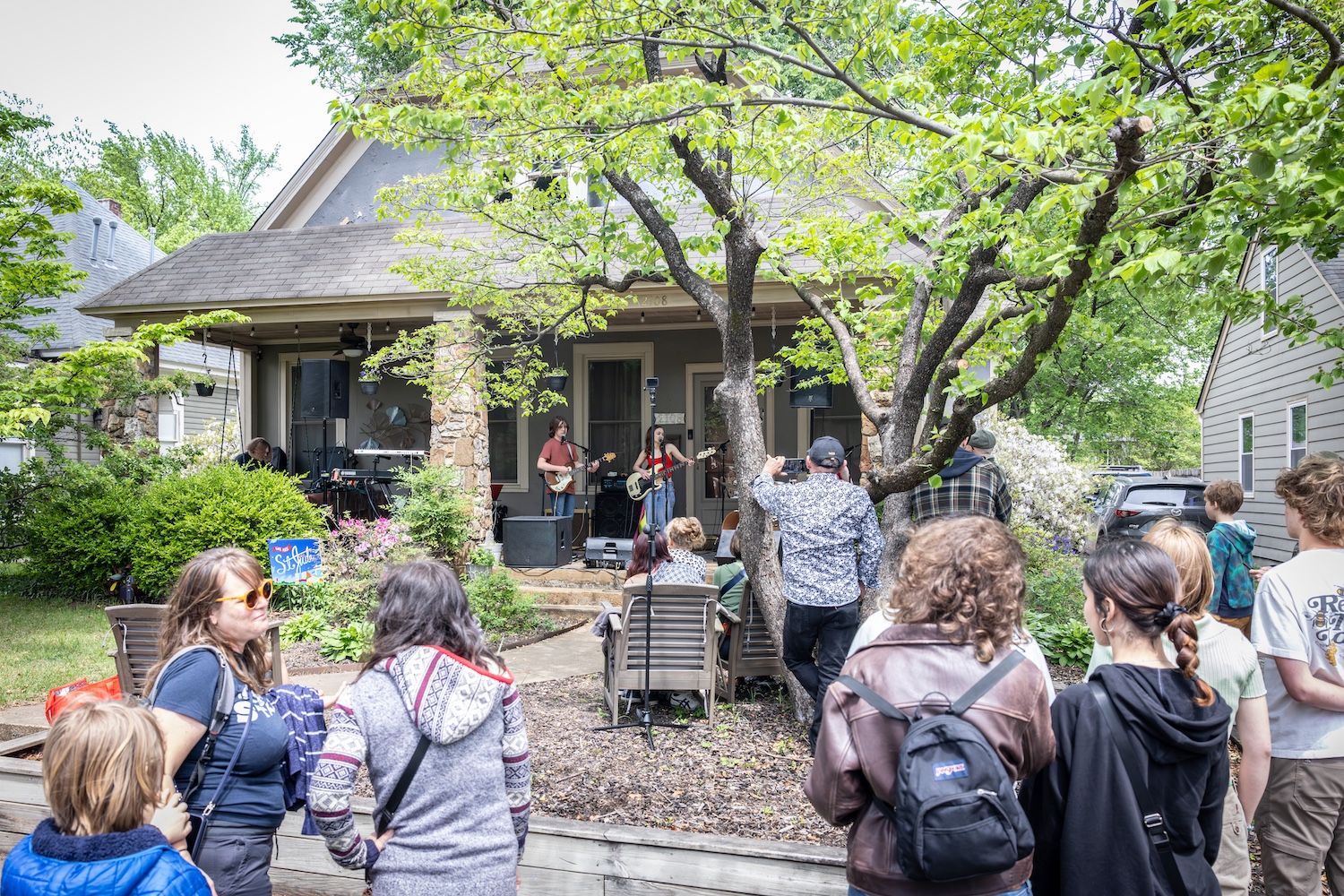
During the weekend I’m in Memphis, there’s more music on offer, of two very different varieties. First: Porchfest, a music festival where local residents fling open their doors/set up bands on their porches and just play. You wander from house to house and hear anything from rap to classical to hip hop to pop. It was a highlight of my time in Memphis, and I’d recommend trying to visit while it’s on.
Next: one of the more astonishing experiences of my life. Al Green’s church. THE Al Green. In we tumble on a Sunday morning along with many women and some men in their finest, and watch the 80-year-old make his way to the pulpit, his soulful voice now entirely devoted to singing songs of his God. At one point he mentioned having been asked to go to Europe to sing, hitting his fist onto the surface before him to emphasise his refusal: “Al Green sings HERE, in Memphis.”
So, yes, the long shadow of Elvis’ influence is still cast across Memphis – but after my time there, I considered him the gateway drug to a place that’s determined not to rest on its laurels. In fact, I wouldn’t be surprised if the next big music movement has its roots there, sucking inspiration from the legacies that lie casually dotted across the city.
memphistravel.com