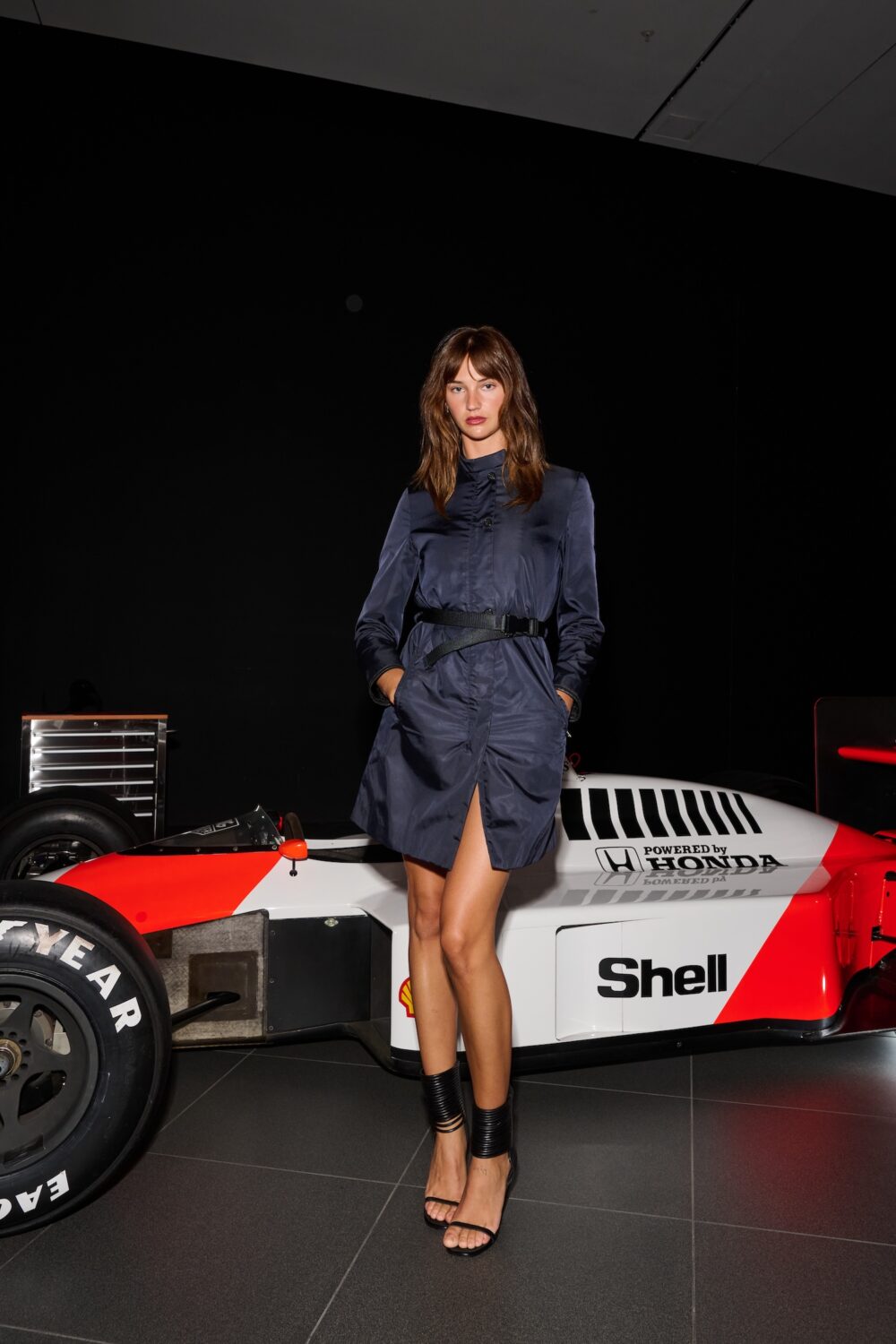
As darkness fell, the McLaren Technology Centre glowed papaya orange, transforming one of motorsport’s most advanced spaces into a spectacular showcase of fashion, engineering and imagination. Inside the futuristic glass-and-steel headquarters, designed by Sir. Norman Foster, championship-winning machinery, emerging design talent and cutting-edge technology fused into something more immersive – part high-fashion runway, part innovation lab and unmistakably Formula 1.
Bathed in an electric wash of papaya orange, the vast, glass-and-steel home of McLaren Racing was transformed into an ethereal stage for Designed to Race: Front Row, an ambitious collision of Formula 1, fashion, technology and art created with Central Saint Martins, UAL and Official Partner Dell Technologies.
Few venues could have been more appropriate. The McLaren Technology Centre is a spaceship. It feels like a vision of the future: immaculate, aerodynamic and futuristic. But after dark, illuminated in papaya and filled with historic cars, experimental fashion and some of the sport’s most recognisable faces, the building took on an entirely different energy.
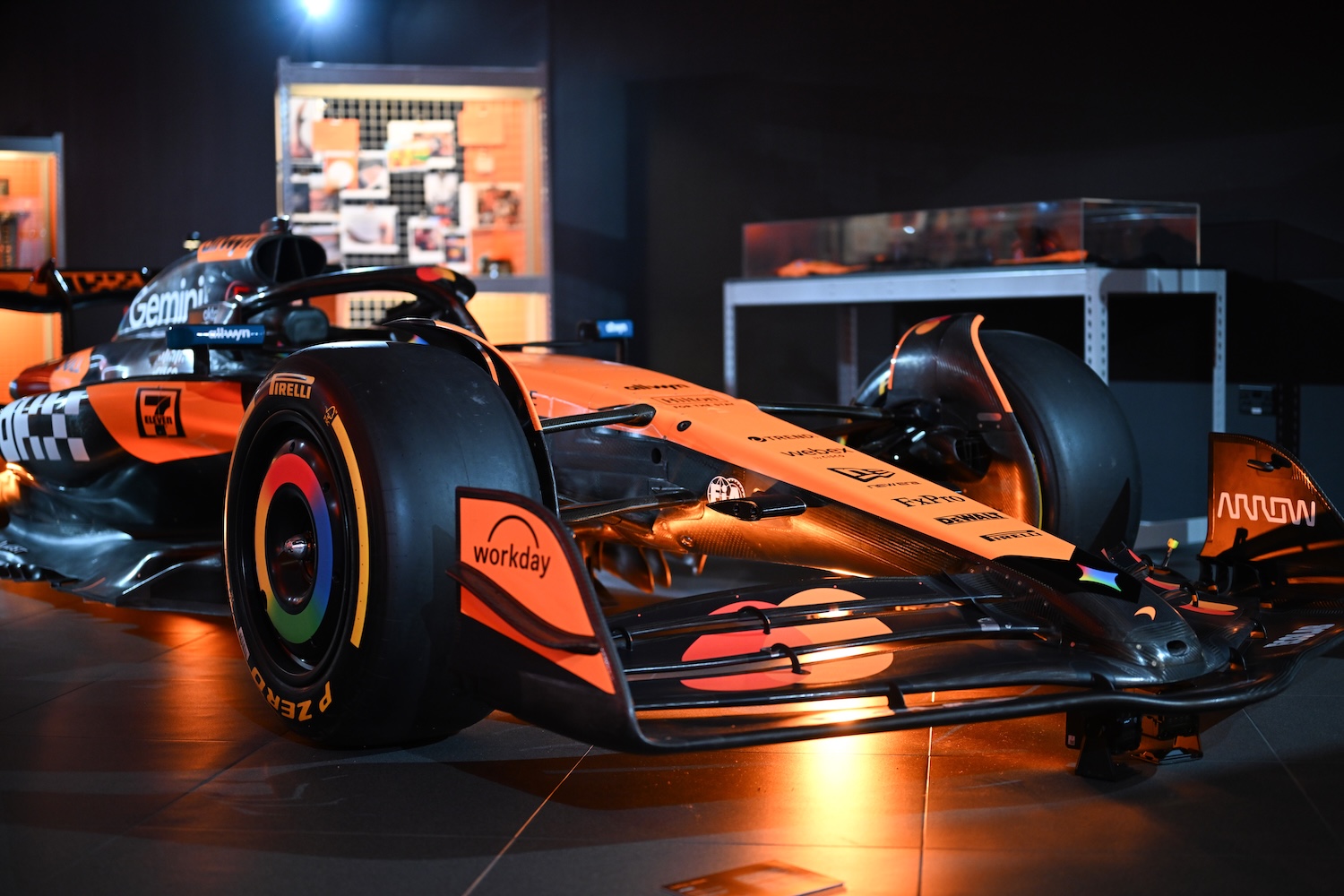
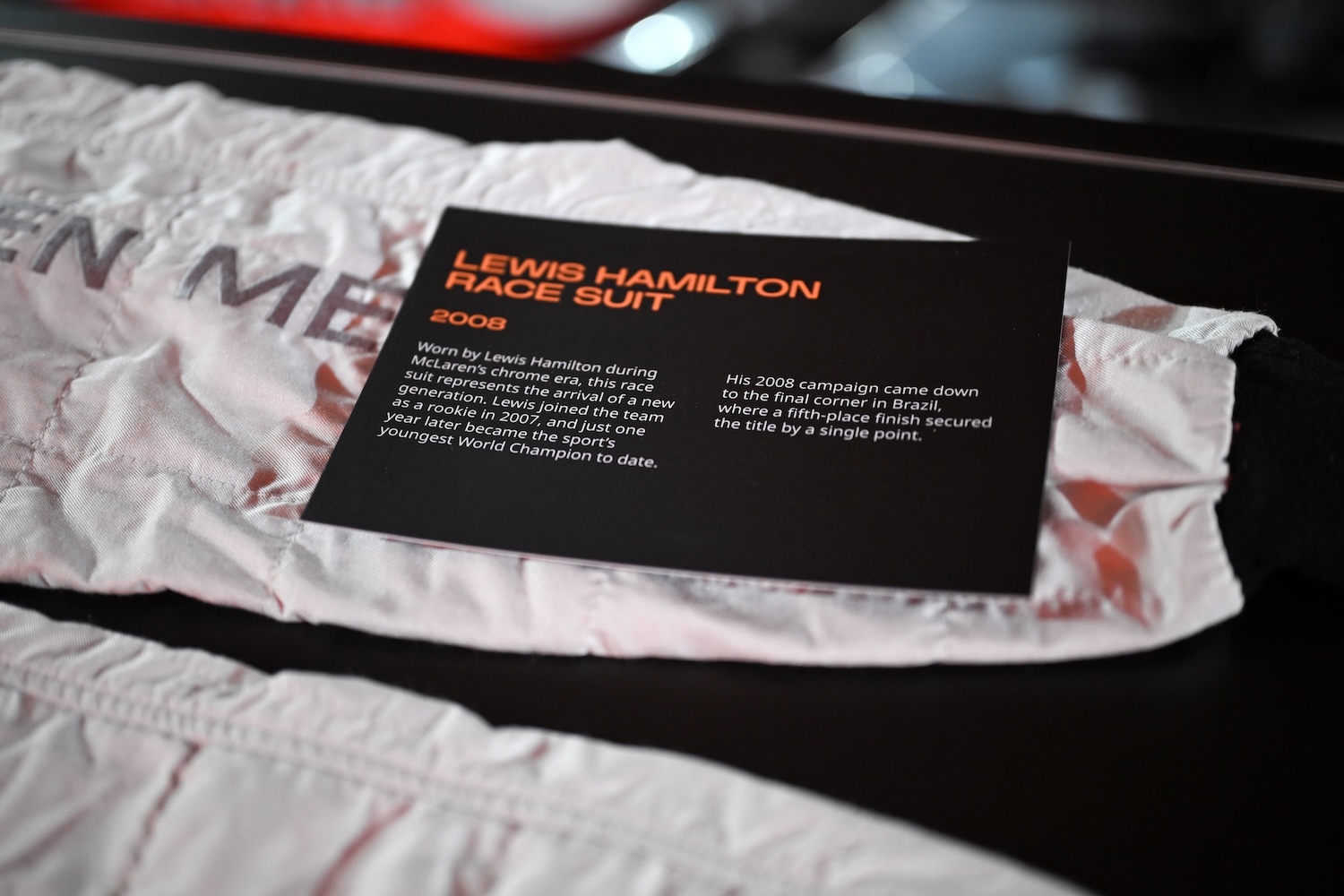
McLaren Racing was founded by Bruce McLaren in 1963 and entered its first Formula 1 race three years later. Since then, the team has built one of the most formidable legacies in motorsport, with 23 Formula 1 World Championships, more than 200 Grand Prix victories, three Indianapolis 500 wins and victory at the 24 Hours of Le Mans at its first attempt. For many institutions, history of that scale becomes untouchable. McLaren chose the more interesting route: handing it to a new generation of designers and asking them to reinterpret it.
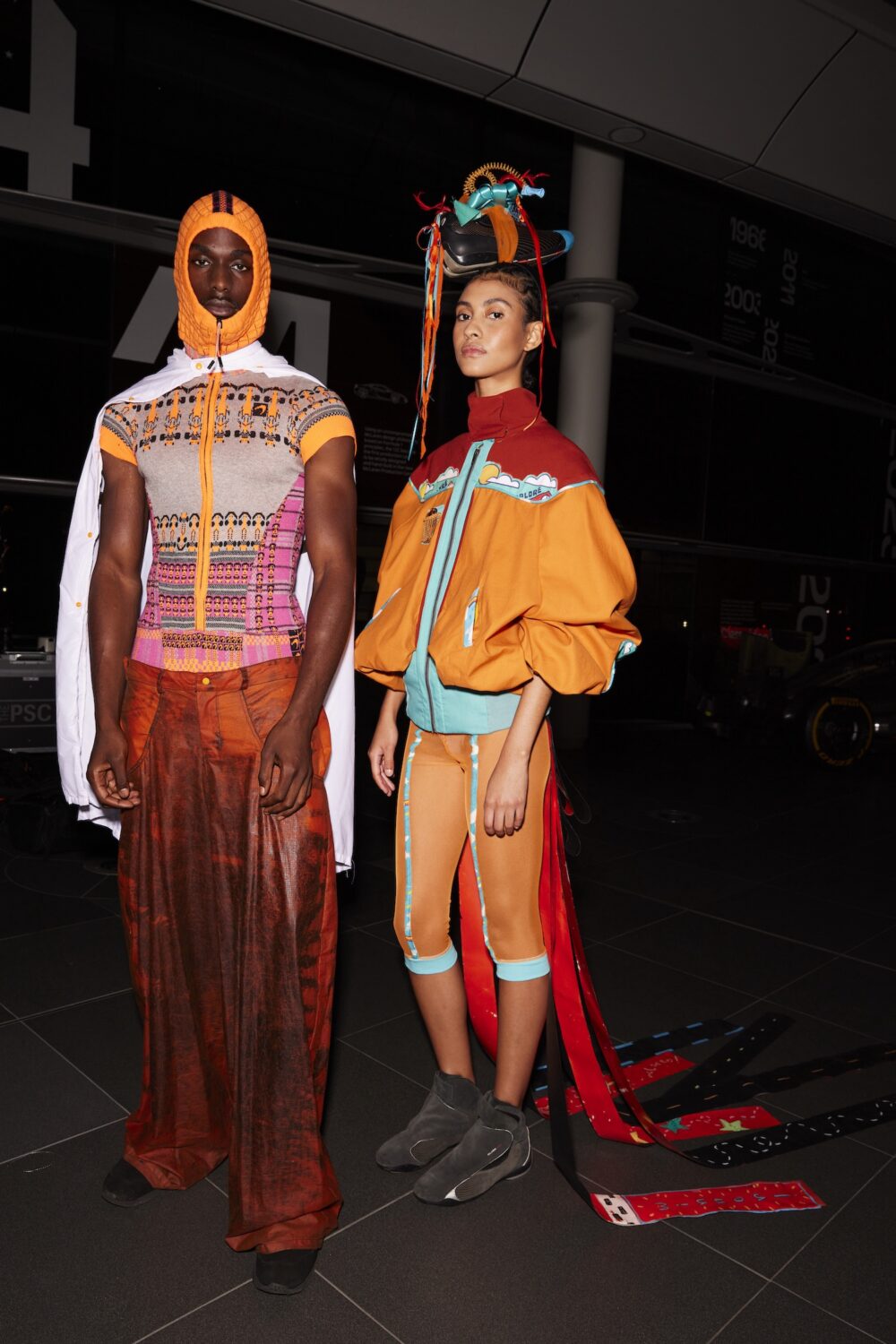
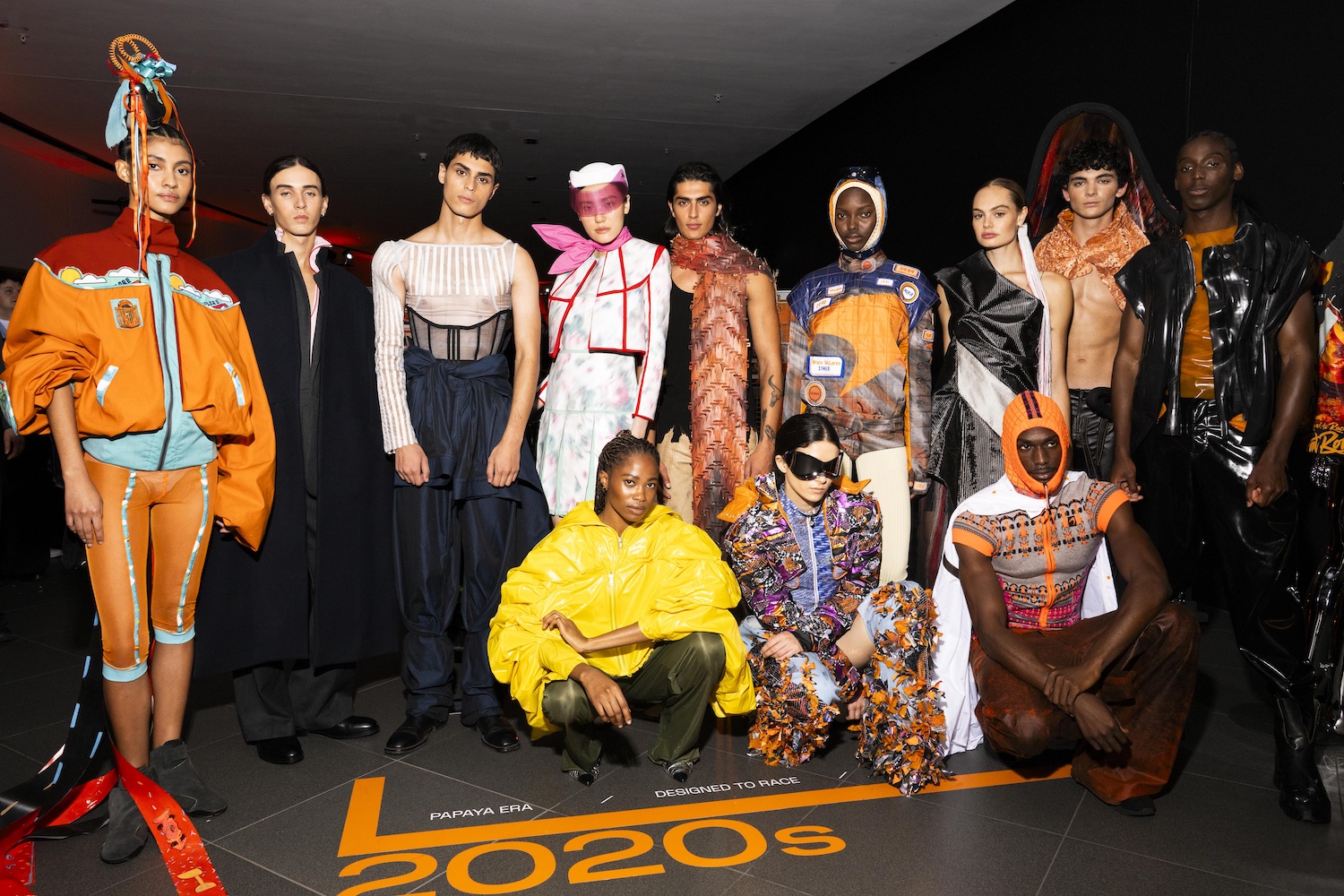
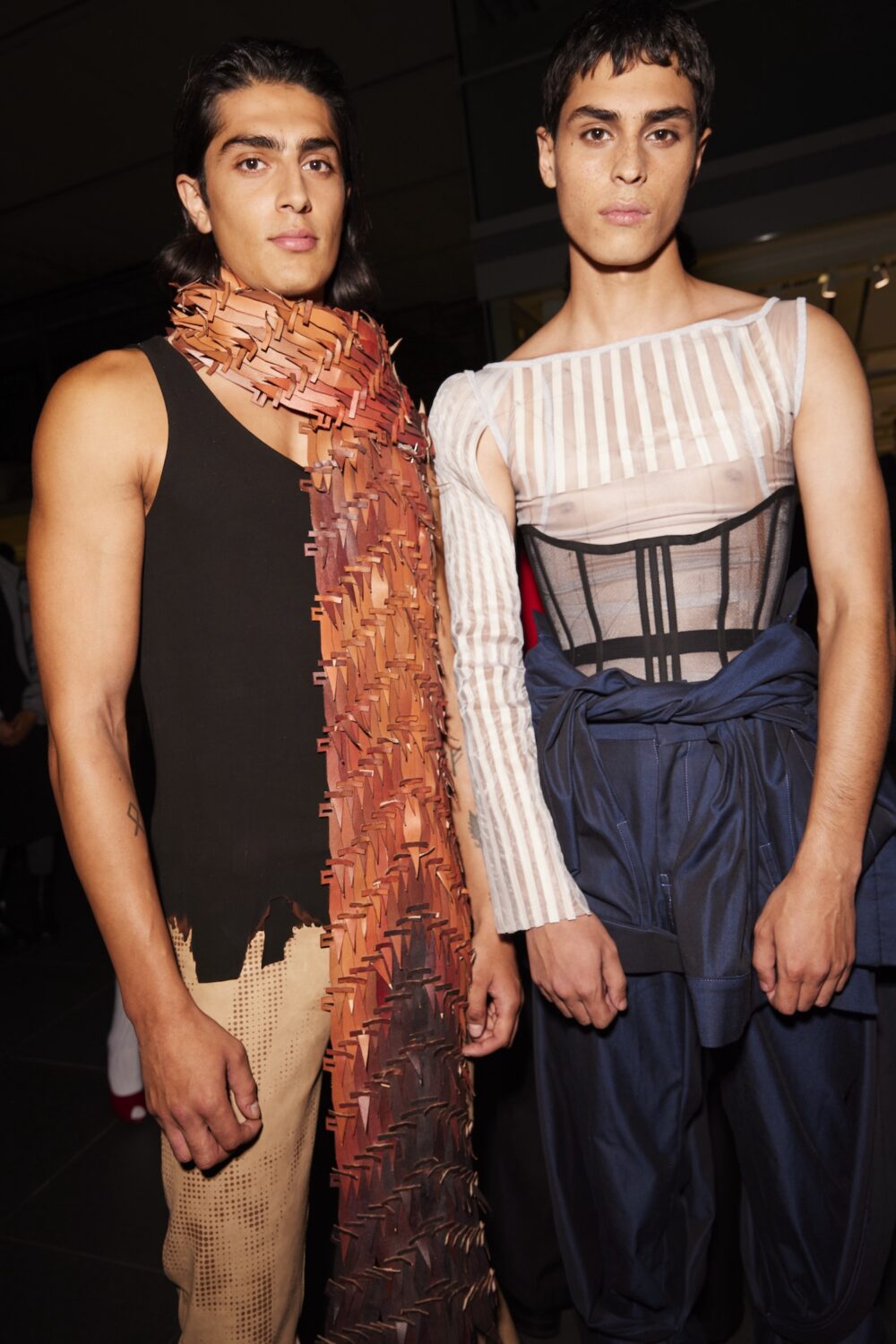
“What might happen if we invited some of the world’s most exciting emerging creative talent to reimagine our story through fashion?” was the question behind the project, according to McLaren Racing Chief Marketing Officer Louise McEwen. The answer arrived on the runway. Championship-winning machinery gleamed beneath the lights. The runway cut through decades of McLaren history while 46 emerging designers from Central Saint Martins’ prestigious MA Fashion course presented 12 extraordinary looks inspired by engineering, defining victories and more than 60 years of McLaren racing.
This was proof that the two worlds of Formula One and fashion now speak the same language. Formula 1 is no longer a sport watched on Sunday afternoons. It has become a global cultural phenomenon: an engineering marvel, entertainment machine, fashion movement and increasingly, a lifestyle.
Formula 1 reports a global fanbase of 827 million people. Some 43 per cent of its audience is under 35, while 42 per cent is female. Perhaps most revealingly, around 58 per cent of Gen Z Formula 1 fans say that style and fashion form an active part of their fandom.
Fans do not merely want to support a team trackside. They want to carry that identity into everyday life. Papaya orange becomes a visual code. Team jackets become streetwear. Drivers become style references in their own right. F1 has moved beyond sport and into culture. Fashion, art and technology have never felt more intertwined. For McLaren, performance will always come first, but style has become another way to go racing.
Designed to Race captured that evolution brilliantly. The Central Saint Martin’s students were invited to reinterpret McLaren through their own creative language, taking fragments of the team’s history and turning them into something unexpected, expressive and entirely new. Some references were instantly recognisable to Formula 1 obsessives. Others were almost subliminal. Even the iconic Monaco hairpin, one of the most distinctive corners on the calendar found itself translated into fashion.
Formula 1 is a world governed by microscopic margins. Every gram matters. Every surface matters. Every degree of temperature, every fraction of aerodynamic resistance and every millimetre of movement can influence performance. In a sport where a difference in weight equivalent to segments of an orange can separate triumph from disaster, precision is everything.
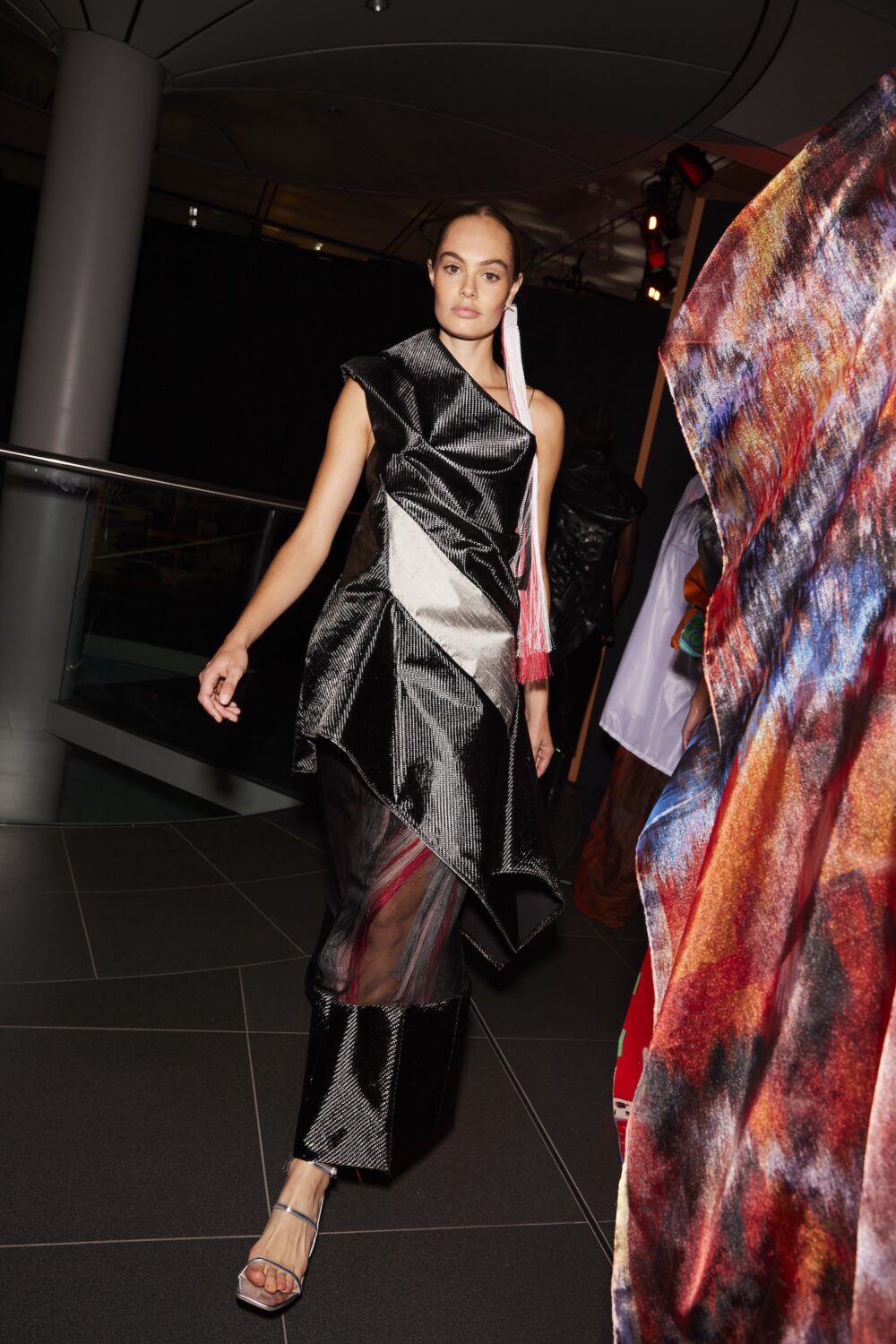
That obsessive discipline became one of the most compelling threads running through the collection. The Central Saint Martins designers approached McLaren with the same fascination for structure, detail and material that defines the racing team itself. Engineering blueprints became graphic language, aerodynamic forms informed dramatic silhouettes, technical fabrics were manipulated into sculptural shapes. Even carbon fibre, one of the defining materials of modern motorsport, escaped the confines of the car and entered the world of fashion.
Upcycled racing seat belts were reconfigured into garments, giving objects built for safety and performance an entirely new creative life. The results felt simultaneously mechanical and emotional. Hard, technical materials sat alongside fluid movement and engineering became ornamental as well as functional.
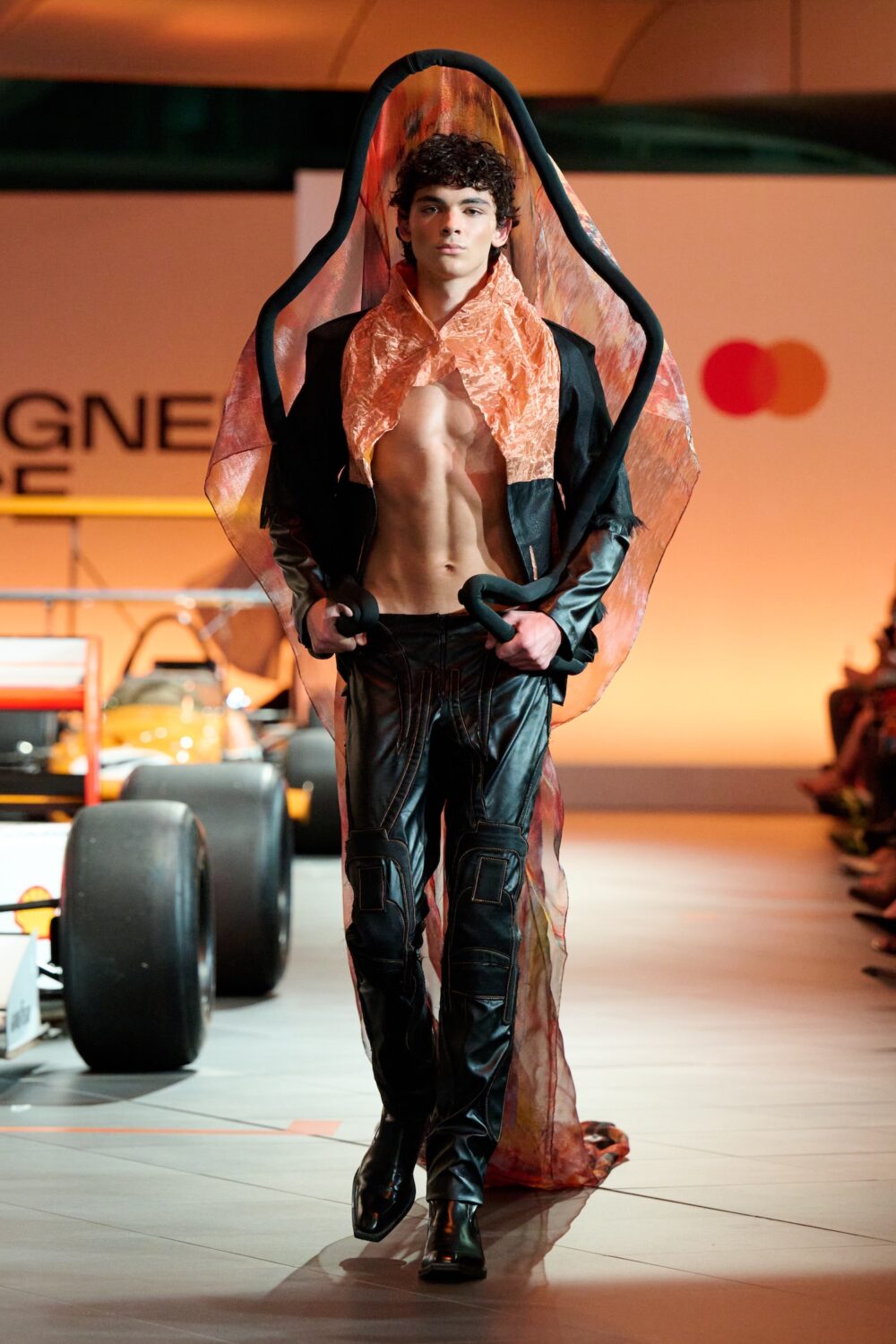
One of the evening’s most theatrical pieces transformed the visual language of the racing seat into a billowing cape. As the model moved, the fabric erupted behind them, suggesting velocity and turbulent air, while blurred faces of the McLaren team appeared across the surface. It looked as though speed itself had been captured in cloth.
Elsewhere, there were references to Ayrton Senna and his unmistakable yellow helmet, to female pioneers within motorsport and to the anonymous systems, structures and engineering intelligence that quietly underpin every race weekend.
There is something beautiful about how differently people fall in love with Formula 1. For one fan, it is the scream of an engine, for someone else it is the geometry of a front wing, for another it is the tension before a race start or the sensation of watching a car disappear through Eau Rouge.
Designed to Race gave those different forms of adoration a physical language. McLaren’s history became less of an archive and more of an opportunity to see and celebrate Formula 1 through different lenses.
Each student approached the team from a different perspective, allowing engineering, personality and heritage to coexist on the runway.
Formula 1 could be understood through fashion and it was a reminder that a racing team can mean completely different things to different people and that this unique emotional connection is becoming increasingly powerful as the sport reaches new audiences.
Perhaps the most exciting idea behind the evening was that technology was not positioned as the opposite of creativity, but as its accelerator.
Dell Technologies approach is through a STEAM philosophy – science, technology, engineering, art and mathematics. The A is crucial.
For years, creativity and technology were often treated as separate worlds: one emotional and intuitive, the other rational and analytical. Designed to Race made that distinction feel increasingly obsolete.
Throughout the project, the designers worked with Dell Technologies XPS laptops, combining traditional craft with AI, digital software and advanced design tools.
Bespoke patterns were developed digitally. Construction possibilities could be pushed and rethought. Ideas that might once have remained sketches could be explored rapidly, visually and repeatedly.
Technology became not just a tool but a creative partner. Dell offered the students a gateway to the infinite. Dell provided the digital architecture; the students decided how far they wanted to push it.
Artificial intelligence sat alongside handcraft. Digital pattern-making met recycled racing materials. Fashion design met data, engineering and experimentation. Technology can unlock extraordinary innovation, and here it did so in full view.
Some of the most visually arresting pieces also carried one of the evening’s most important messages. The materials born inside motorsport that were given second lives. The carbon fibre, racing seat belts and technical components that were repurposed and reimagined, turning objects created for competition into objects of beauty. There was something deeply satisfying about the circularity of it. A material might begin life engineered to withstand extraordinary forces inside a Formula 1 environment then liberated from function and transformed into fashion.
For McLaren, that thinking is particularly significant. The team is a signatory to the UN Sports for Climate Action Commitment and has pledged to achieve net zero by 2040, while also working to foster greater diversity and inclusion across motorsport. The message was not simply to use less, but to imagine more. What if the materials of yesterday could become the creative language of tomorrow?
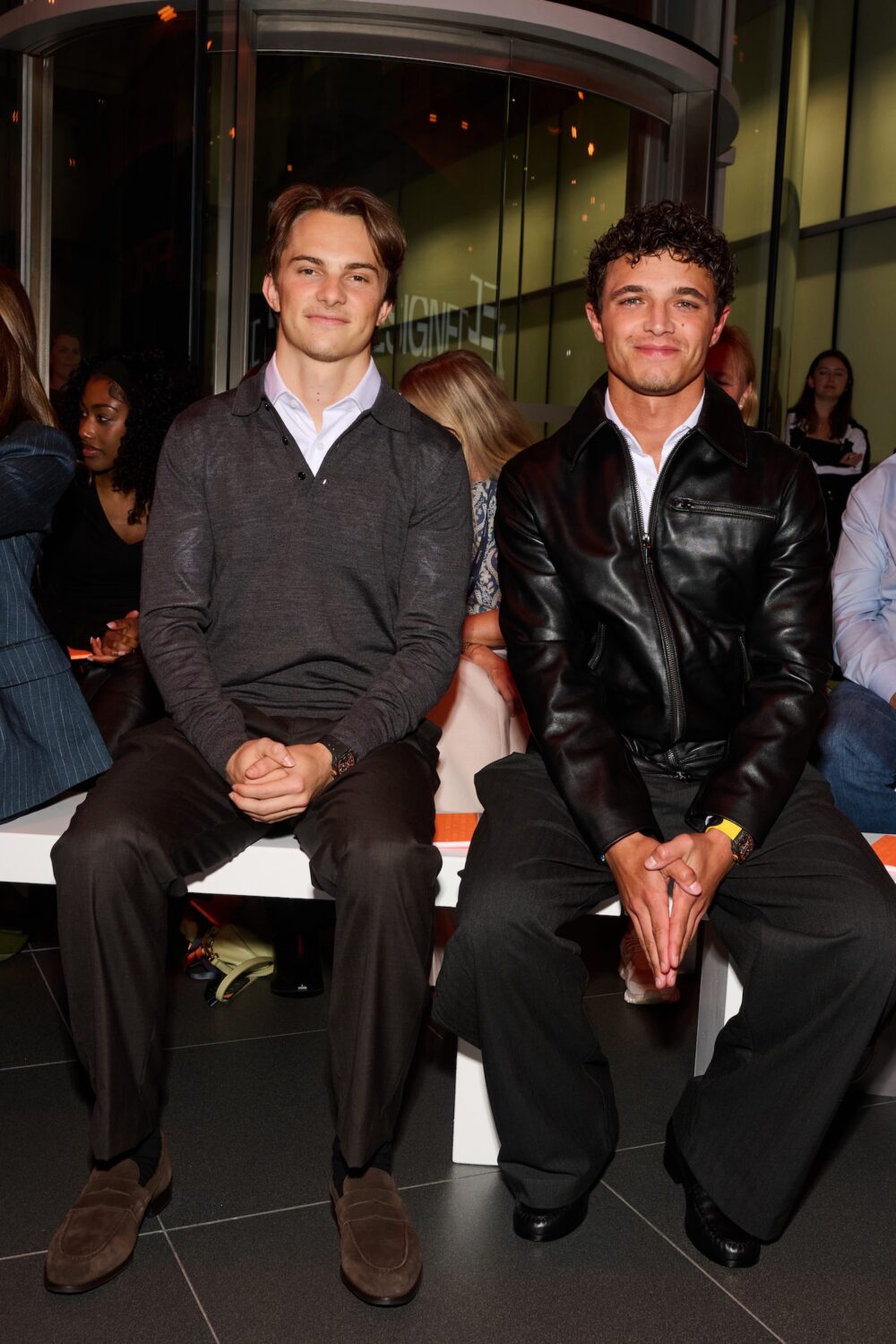
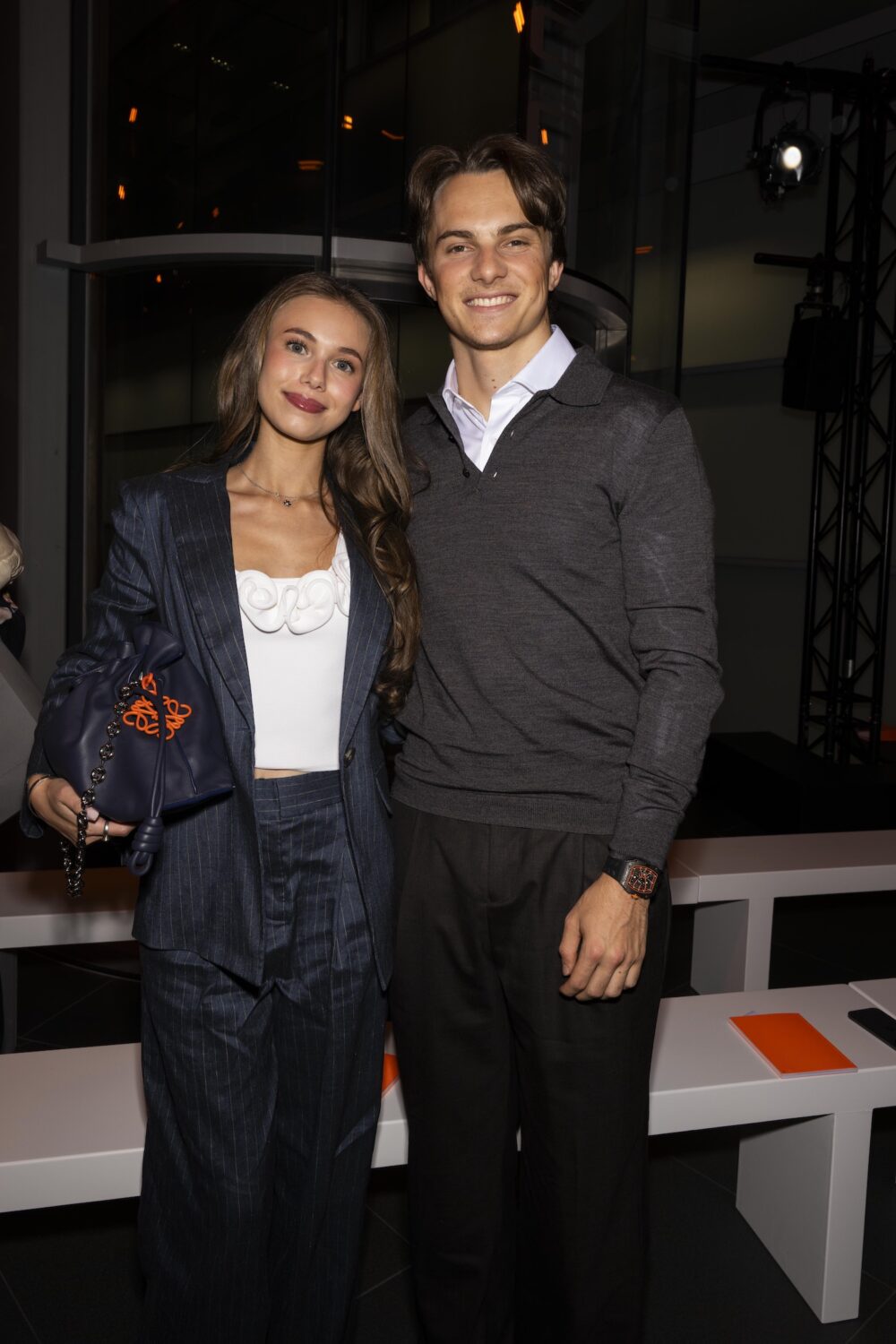
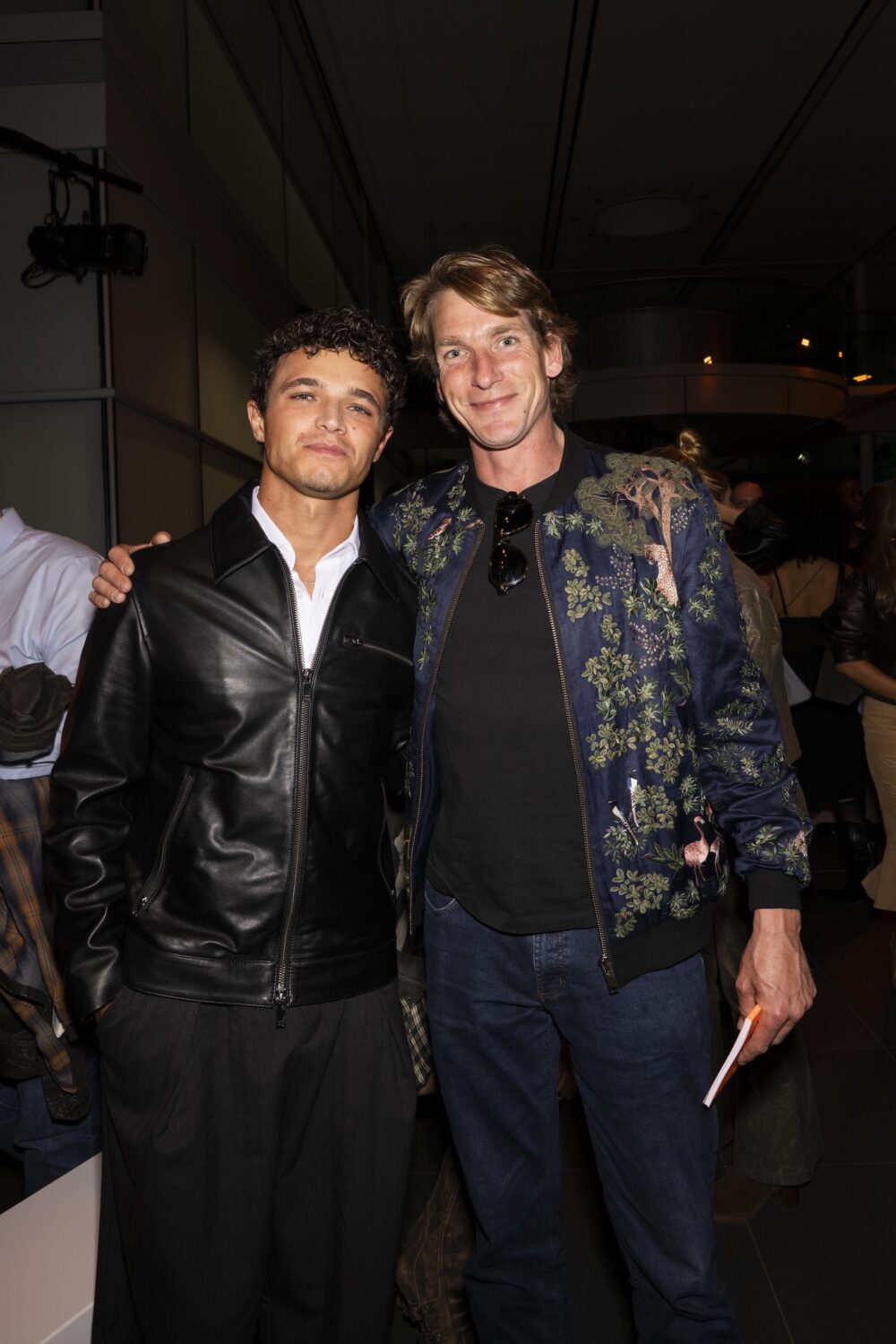
The runway belonged to the designers, but the front row told its own story. McLaren Formula 1 stars Lando Norris and Oscar Piastri were in attendance alongside McLaren F1 Academy drivers Ella Lloyd and Ella Stevens, bringing together some of the most recognisable faces of McLaren’s present and future.
The sons of Formula 1 icon James Hunt also sat on the front row, adding another beautifully layered connection between past and present. Around them sat a new generation of names drawn from fashion, music, sport and culture, including Ariana Bravo, Mia Regan, Amechi Madu, Denola Gray, Kojey Radical, Dennis Okwera, Olympic medallist Amy Hunt, Paralympian Felix Streng and Edie Liberty Rose.
PUMA’s new James Hunt collection was presented exclusively to guests at Designed to Race ahead of its global launch on 19 October. Hunt has always existed somewhere between sportsman and cultural icon. World Champion, rebel, playboy and reluctant style figure. His appeal now feels unexpectedly contemporary, at a moment when Formula 1 drivers are photographed as closely for what they wear as for what they drive, revisiting Hunt feels inevitable.
McLaren Racing currently competes across Formula 1, INDYCAR, F1 Academy and F1 Sim Racing, yet Designed to Race suggested something larger about the direction of the team. It was a demonstration of how broad the modern definition of a racing team has become.
Formula 1 has always been a meeting point of disciplines: aerodynamicists, engineers, software specialists, strategists, mechanics, designers and drivers all working towards the same relentless objective. But that circle is widening. Artists, fashion designers, technologists and sustainability innovators now have a place in the conversation too.
Formula 1 can be understood through almost infinite lenses. Last night, racing was reinterpreted in spectacular fashion. Every reference, material and silhouette drew from the team’s formidable legacy while pushing its visual language somewhere new. McLaren has always known how to honour where it has been. Designed to Race proved it is just as determined to define where it goes next.
Designed to Race: Front Row is available to watch free and exclusively on the McLaren Racing Club, available to download on Google Play and Apple stores.