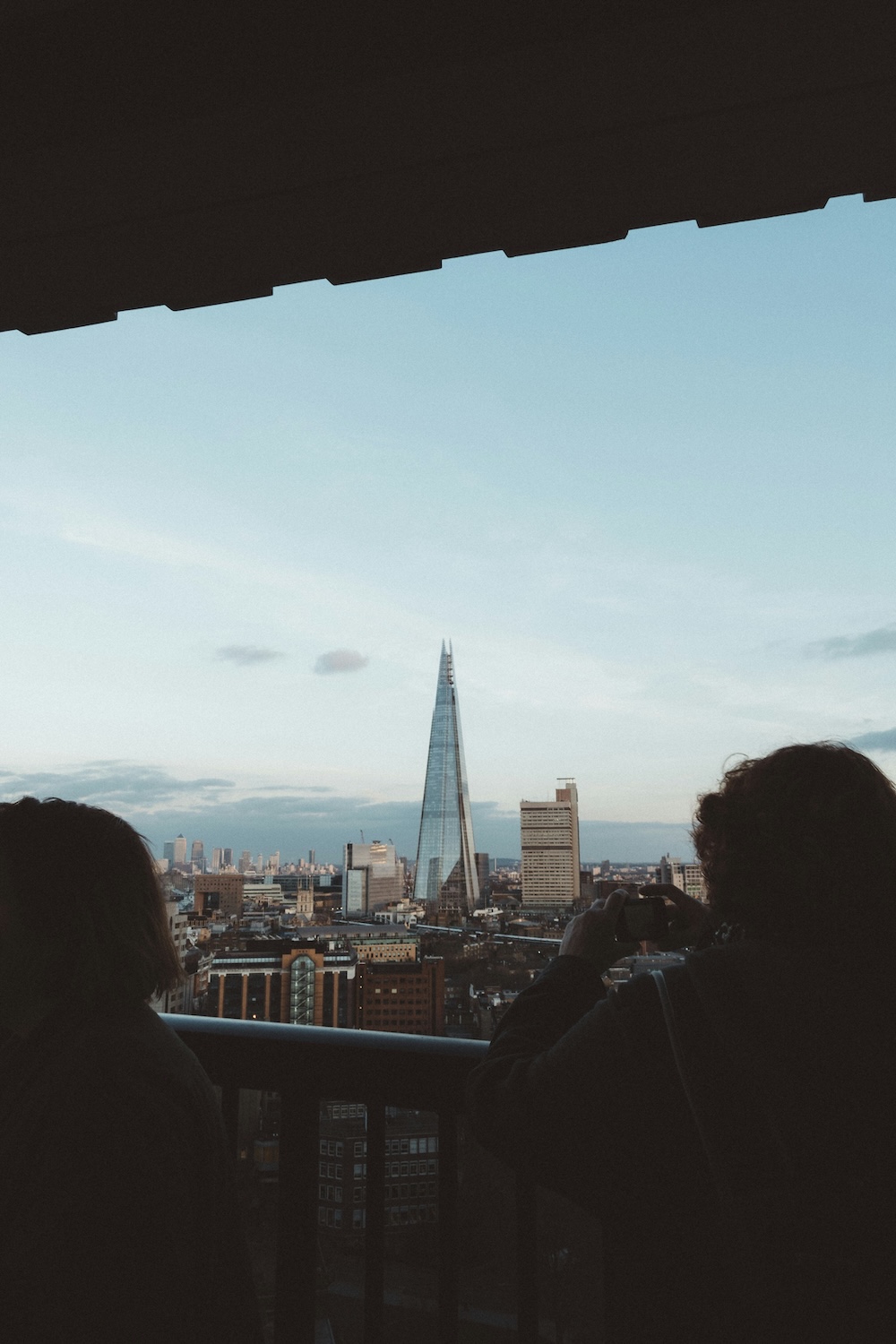
Cross London Bridge from the City on any given evening and the change in register is immediate. Glass towers give way to converted warehouses, trading floors give way to theatres, and the river itself seems to slow down. This is Southwark, the borough that has spent two thousand years being London’s more interesting neighbour, and right now it is having something of a moment.
For readers who split their time between capitals, Southwark offers a rare combination: serious cultural weight, a genuine sense of neighbourhood, and a property market that still rewards those who look properly rather than just admire from across the water.
Key Takeaways
- Southwark stretches from Bankside to Dulwich, taking in Tate Modern, The Shard and Borough Market.
- Tate Modern alone drew around 4.5 million visitors in 2025, making it the world’s most visited modern art gallery.
- London Bridge station places the City and West End minutes away via the Jubilee and Northern lines.
- The borough’s average house price sits at £582,000, though this varies sharply by neighbourhood and property type.
- A £4 billion regeneration at Elephant and Castle is reshaping the borough’s southern edge.
Two Thousand Years on the South Bank
Southwark’s story begins with a bridge. Around 43AD, the Romans identified the south bank as the natural crossing point over the Thames, and the settlement that grew up around it became the only dry route into London for centuries. That accident of geography still shapes the borough today, from the density of its transport links to the layout of its oldest streets.
Freed from the City of London’s jurisdiction across the water, medieval Southwark developed a reputation for entertainment that the City itself could never quite manage. Theatres, taverns and markets flourished along Bankside, and Shakespeare’s Globe stood on this stretch of riverbank from 1599, staging the plays that still draw audiences today. That slightly rebellious streak, historians argue, never really left the borough.
| Fast Fact: London’s first bridge, built by the Romans around 43AD near modern-day Southwark, remained the only dry crossing of the Thames for well over a thousand years. |
The Victorians added railways and warehouses, the twentieth century added social housing and, more recently, glass, and the borough now reads like a cross-section of London’s entire architectural history in a single afternoon’s walk. Speak to Southwark estate agents working the riverside streets today and they will tell you this layered history is precisely what keeps drawing people back, long after the initial curiosity about the Globe or the Market has worn off.
Art, Theatre and Appetite: Southwark’s Cultural Anchors
Modern Southwark trades on a concentration of cultural firepower that few London boroughs can match. Tate Modern, housed in the former Bankside Power Station, still pulls a bigger annual crowd than any other gallery of its kind worldwide, with around 4.5 million visitors passing through its Turbine Hall in 2025 alone.
A short walk away, Shakespeare’s Globe continues to stage plays in a faithful reconstruction of the original Elizabethan playhouse, while The Shard, at 310 metres, punctuates the skyline as Western Europe’s tallest building and a permanent reminder of how far the area has travelled since its theatre-and-tavern days. For those planning a visit, Tate Modern’s own visiting guide is worth checking before you go, since major exhibitions can mean longer queues.
Where to Eat and Drink Like a Local
Borough Market, trading in some form since the twelfth century, remains the obvious starting point for food, though regulars tend to push slightly further out once the initial browse is done. Our own foodie’s map of Borough and Bermondsey dining rounds up the neighbourhood spots locals actually return to.
- Borough Market itself, for produce, cheese and a genuinely international food hall atmosphere
- Bermondsey Street, for warehouse-conversion restaurants and independent galleries
- Maltby Street Market, quieter and more local than its famous neighbour
- TĪNG and GŎNG, the hotel bars atop The Shard, for skyline views with cocktails or afternoon tea
For something more considered, our review of a weekend brunch at Mallow London captures the plant-based end of the market’s dining scene, while an evening at Shangri-La The Shard shows what the borough looks like from 32 floors up.
Getting Around Southwark
Southwark’s transport links are, frankly, one of its strongest selling points. London Bridge station alone serves National Rail, Jubilee line and Northern line services, and several other stations dot the borough besides.
| Station | Lines served | Zone |
|---|---|---|
| London Bridge | National Rail, Jubilee, Northern | 1 |
| Southwark | Jubilee line | 1 |
| Elephant & Castle | Bakerloo, Northern, National Rail | 1/2 |
| Borough | Northern line | 1 |
Congestion charging applies to the northern fringe of the borough, around Borough and the riverside, but most of Southwark’s residential streets sit outside the zone entirely, a detail that matters for anyone weighing up driving into the area regularly.
The Property Picture Across Southwark
Southwark’s average house price reached £582,000 in June 2026, according to the Office for National Statistics, up 2.2% on the year, against a backdrop of falling average prices across London as a whole. That resilience says something about sustained demand for a borough this well connected.
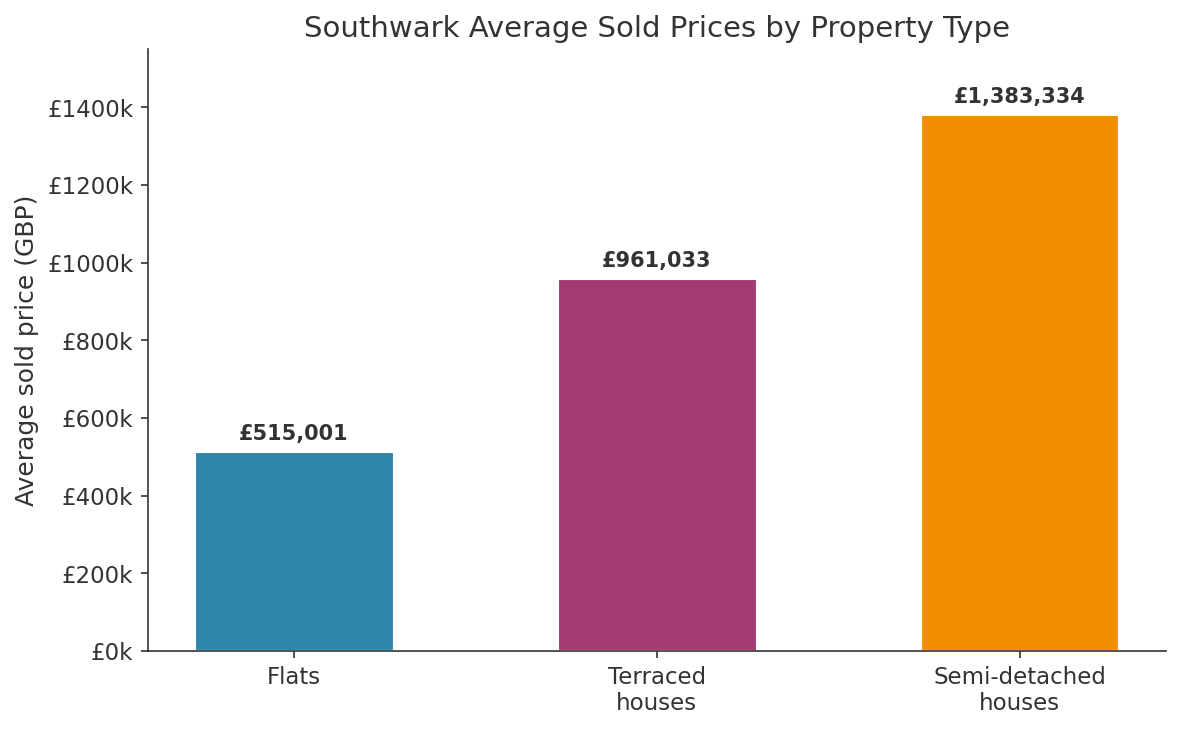
Flats, the dominant property type, averaged £515,001 over the past year according to Land Registry sold price data. Terraced houses reached £961,033, and semi-detached homes, rare enough in this part of London to command a premium, averaged £1,383,334. The riverside stretch between Tower Bridge and Blackfriars Bridge commands the sharpest premiums of all, where converted lofts and new-build apartments trade well above the borough average.
Council estates sit alongside luxury apartments, social housing near million-pound conversions, a contrast that defines Southwark’s character as much as any single landmark.
That contrast, striking as it is on paper, is part of what gives the borough its texture. It is not a uniformly wealthy postcode dressed up as characterful; it is a genuinely mixed community that happens to also contain some of London’s most expensive riverside addresses.
Elephant and Castle and What’s Next
The borough’s most dramatic change is unfolding at its southern anchor. Elephant and Castle sits roughly halfway through a fifteen-year, £4 billion regeneration programme that began in 2010, delivering thousands of new homes alongside a rebuilt, pedestrianised town centre.
| Worth Knowing: Southwark Council’s own regeneration pages for Elephant and Castle set out the current phase of works, including a new Northern line ticket hall and roughly 10,000 new jobs expected across the programme. |
Read the council’s own updates on the Elephant and Castle regeneration for the latest on what has opened and what remains under construction, since the timeline has shifted more than once since the project began.

Who Calls Southwark Home
The borough’s population skews young and international, drawn by proximity to jobs in the City, Canary Wharf and a thriving local creative sector. Major local employers span Southwark Council itself, Guy’s Hospital, King’s College London and several large property and asset management firms with offices around London Bridge.
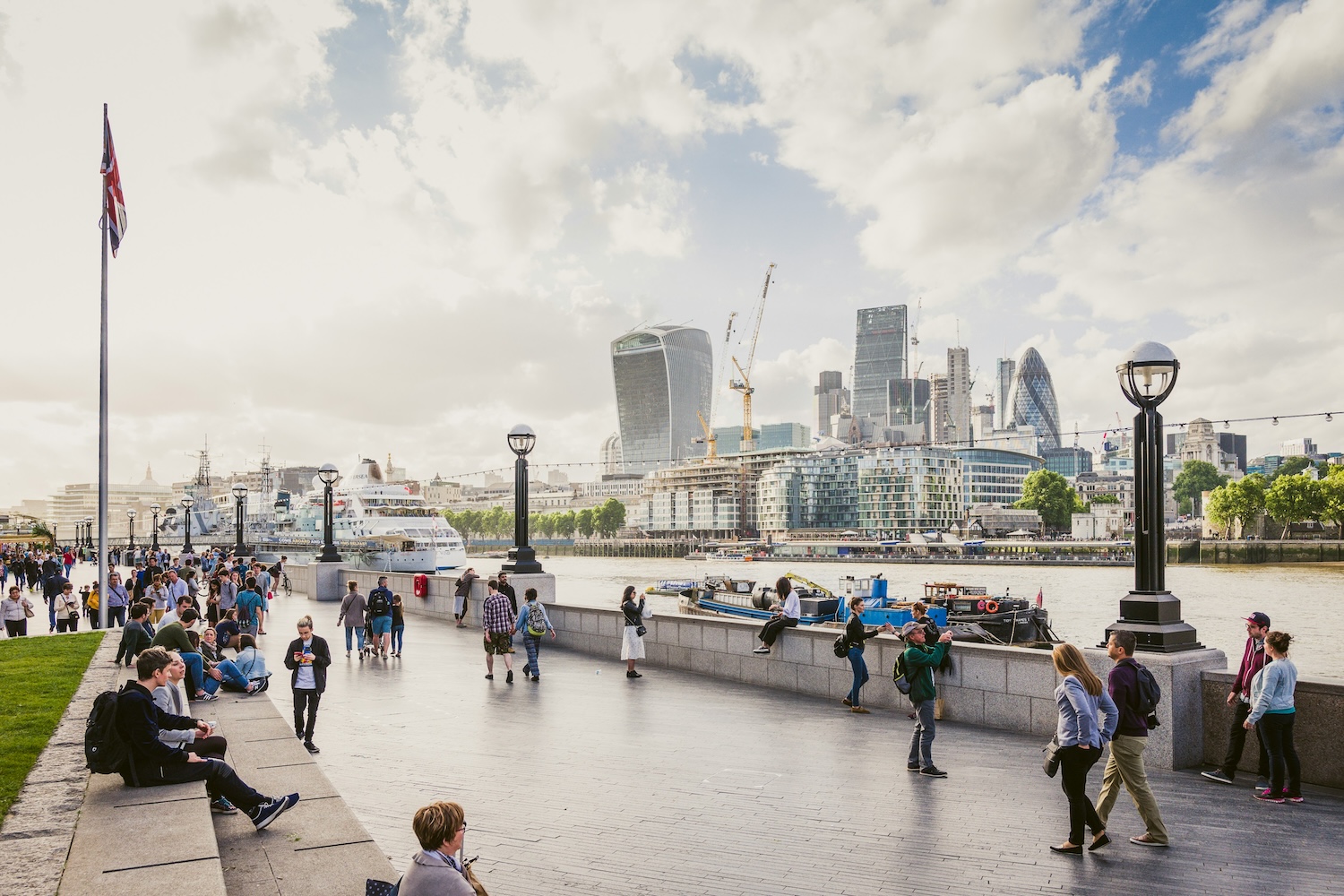
That mix of institutions, creative businesses and hospitality has produced a borough that feels outward-facing in a way few residential areas manage, helped along by the millions of visitors who pass through its theatres, galleries and markets every year without ever quite realising how many people call the postcode home.
Frequently Asked Questions
Is Southwark a good place to live in London?
It offers exceptional transport links, major cultural institutions on the doorstep and a genuine mix of communities. Whether it suits you personally depends on whether you want a residential borough with an outward-facing, visitor-heavy character, which Southwark undeniably has.
What is Southwark best known for?
The borough is best known for Tate Modern, Shakespeare’s Globe, Borough Market and The Shard, alongside its deep Roman and medieval history as the site of London’s first river crossing.
How do you get around Southwark?
London Bridge station handles National Rail plus two Underground lines, with Southwark, Borough and Elephant and Castle stations adding further Tube coverage across the rest of the borough.
What does property cost in Southwark?
Averages sat at £582,000 in June 2026, though flats typically trade closer to £515,000 while riverside conversions and larger houses can run well over £1 million depending on location.
Is Elephant and Castle worth watching for investment?
The wider scheme is midway through its fifteen-year run, with a rebuilt town centre and a large batch of housing still to complete, so it is worth checking Southwark Council’s latest published progress before treating any date as fixed.
Southwark has never needed to try particularly hard to be interesting; two thousand years of accumulated history and a steady supply of world-class art and theatre have done most of the work. What it offers today is rarer still: a genuinely lived-in borough that happens to sit five minutes from some of the finest culture London has to offer. For readers deciding where in the capital still rewards a closer look, that combination is hard to beat.