From inky irises and blousy pink peonies to swallows in flight, bathers and galloping horses, Bloomsbury Revisited’s latest lampshades turn lighting into something closer to a work of art.
There is something wonderfully liberating about a home that refuses to behave too perfectly. Rooms where paintings jostle with patterned textiles, old books lean against ceramic bowls, flowers spill loosely from vases and objects have been chosen because somebody loved them rather than because they happened to match. It is this layered, artistic approach to decorating — full of colour, character and the evidence of a life being lived, that sits at the heart of Bloomsbury Revisited.
Founded in 2020 by Jane Howard and artist Jane McCall, the British interiors brand takes its inspiration from the creative legacy of the Bloomsbury Group, translating that spirit of artistic freedom into lampshades, bases, wallpapers and cushions, all made in the UK.
Its newest lighting collections feel particularly joyful. Across a series of hand-painted designs, McCall draws from flowers, birds, horses and the human figure, treating the humble lampshade not simply as a functional object but as another canvas within the room.
Bringing the Garden Indoors
For summer, Bloomsbury Revisited turns first to the garden with Iris, Passion Flower and Peony, three expressive floral designs created around bold colour and botanical forms. The collection reflects a broader move away from pared-back minimalism towards warmer, more individual interiors filled with personality.
Passion Flower is perhaps the most exuberant of the trio. Against vivid green foliage, the extraordinary flowers unfurl in bursts of pink, purple and blue, their almost geometric centres making the shade feel as much like a painting as a furnishing.
The inspiration came directly from McCall’s own garden.
“We planted a rather leggy, sad passion flower which grows up between roses, and each year the eccentric blooms make me smile,” she says. “They are so full of colour and geometric surprise. It’s a fabulous case of so much unexpected beauty growing from so little.”
There is something especially charming about that origin: not an immaculate botanical specimen, but an imperfect plant that surprises its owner each summer.
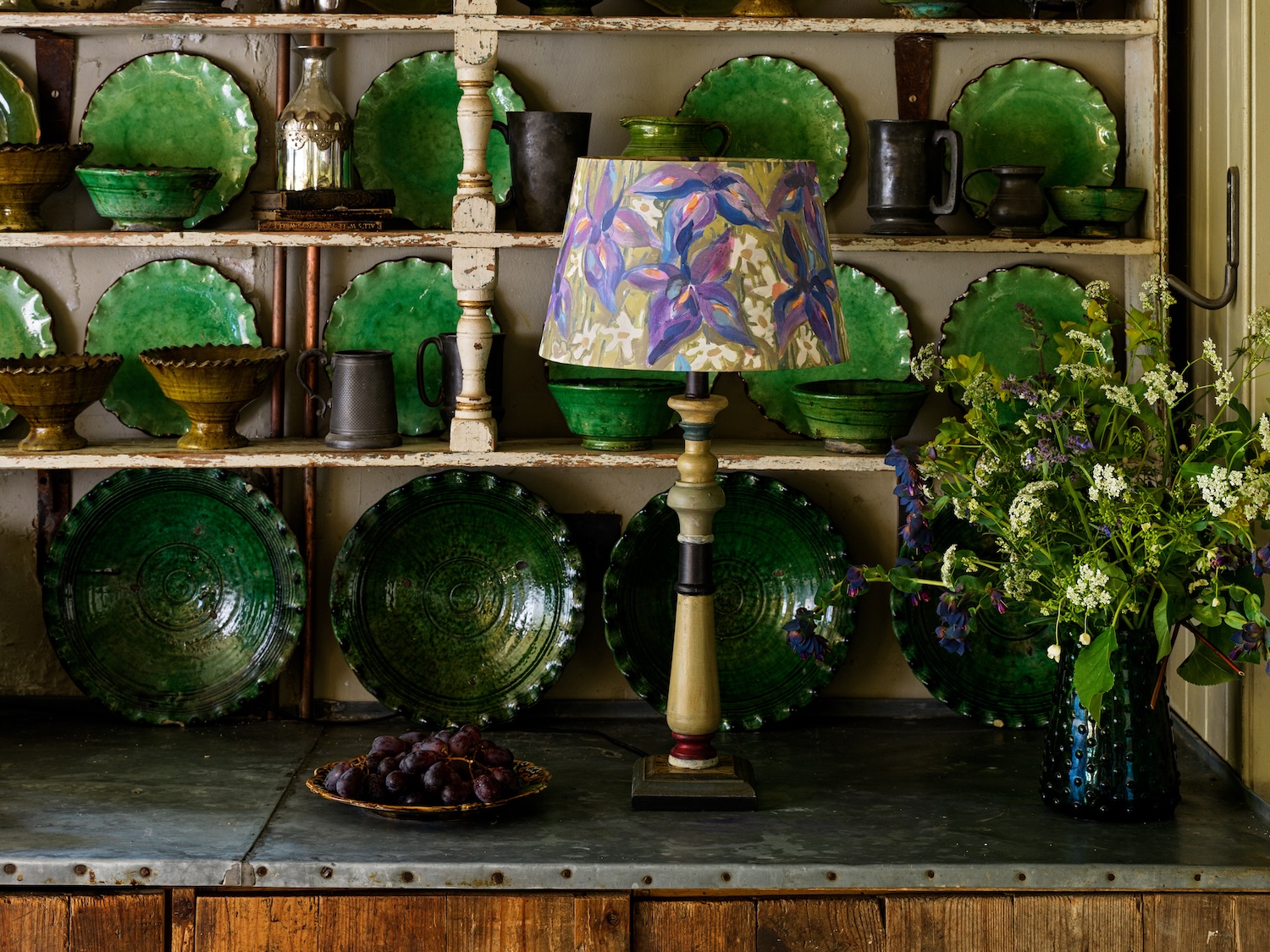
Iris, meanwhile, takes a moodier approach. Rich blue-purple petals sweep across the shade amongst angular green leaves, creating something painterly and almost impressionistic. McCall describes the appeal simply: “The bold shapes and colours of blue-purple inky irises really pop with a background of spikey green leaves.”
Then comes Peony, softer and more romantic, with loose pink blooms against pale green. “We love big blousy peonies in the summer,” McCall says, describing pink and green as the perfect combination for a restful, feminine bedroom.
Each of the floral designs is shown as a 12-inch shade priced at £135, paired in the collection imagery with a £140 hand-painted stemmed base.
From Swallows to Bathers
Bloomsbury Revisited’s accompanying collection expands beyond flowers into what the brand describes as natural forms, drawing upon art history, craftsmanship and the organic world.
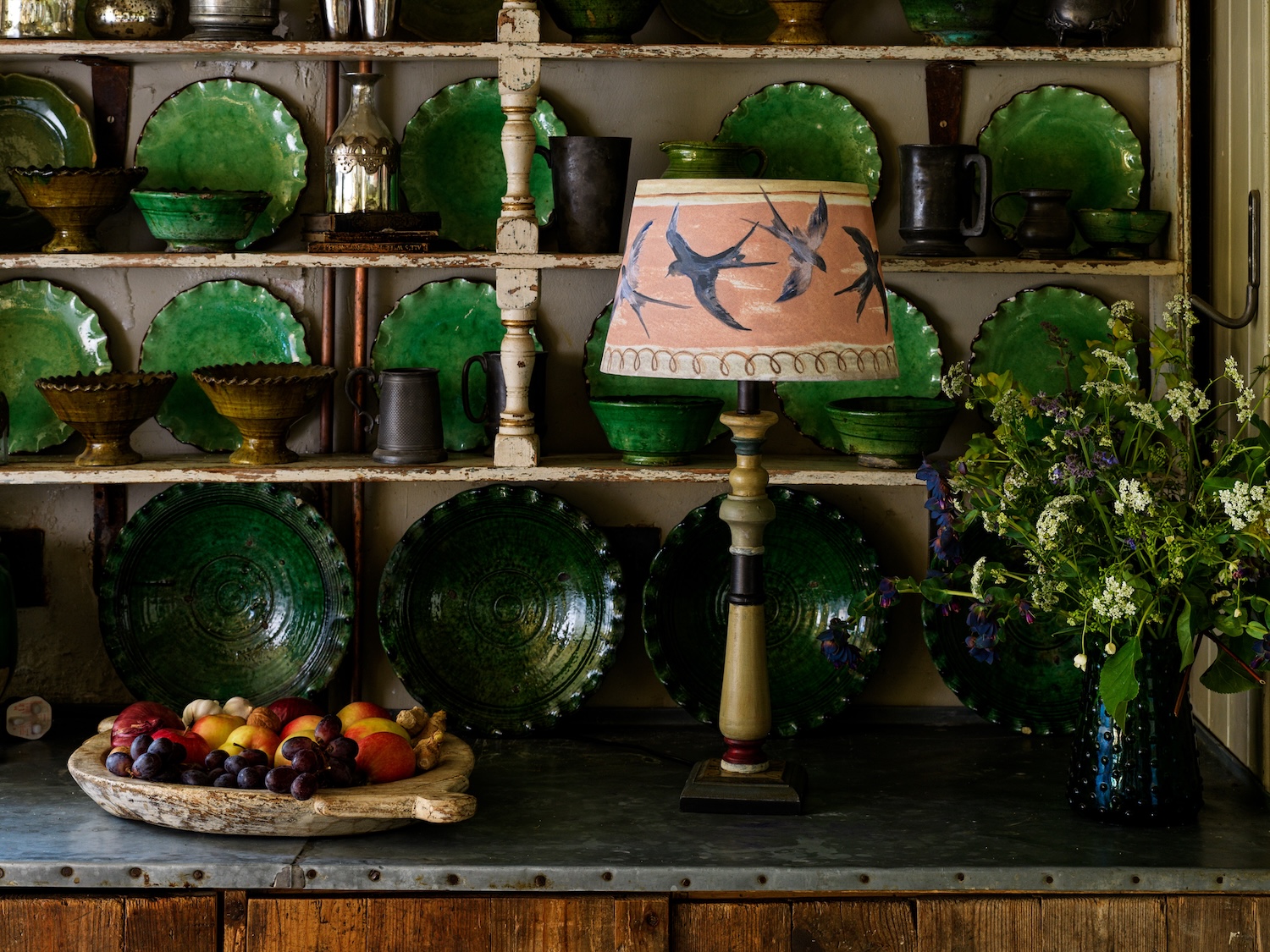
Perhaps the most immediately evocative is Swallow. Dark birds circle across a warm, dusky background, their elongated wings giving the entire shade a sense of movement.
The idea came from watching the birds while travelling in France.
“Recently in France, watching swallows dipping down, taking single mouthfuls of water from the clear cool river before soaring together in the hot summer sky always fills one’s soul with joy,” McCall explains. “We hope a bit of that wonder is given to anyone using our shades.”
It captures something integral to the Bloomsbury Revisited aesthetic: decoration not simply as embellishment, but as a way of preserving a memory, landscape or feeling inside the home.
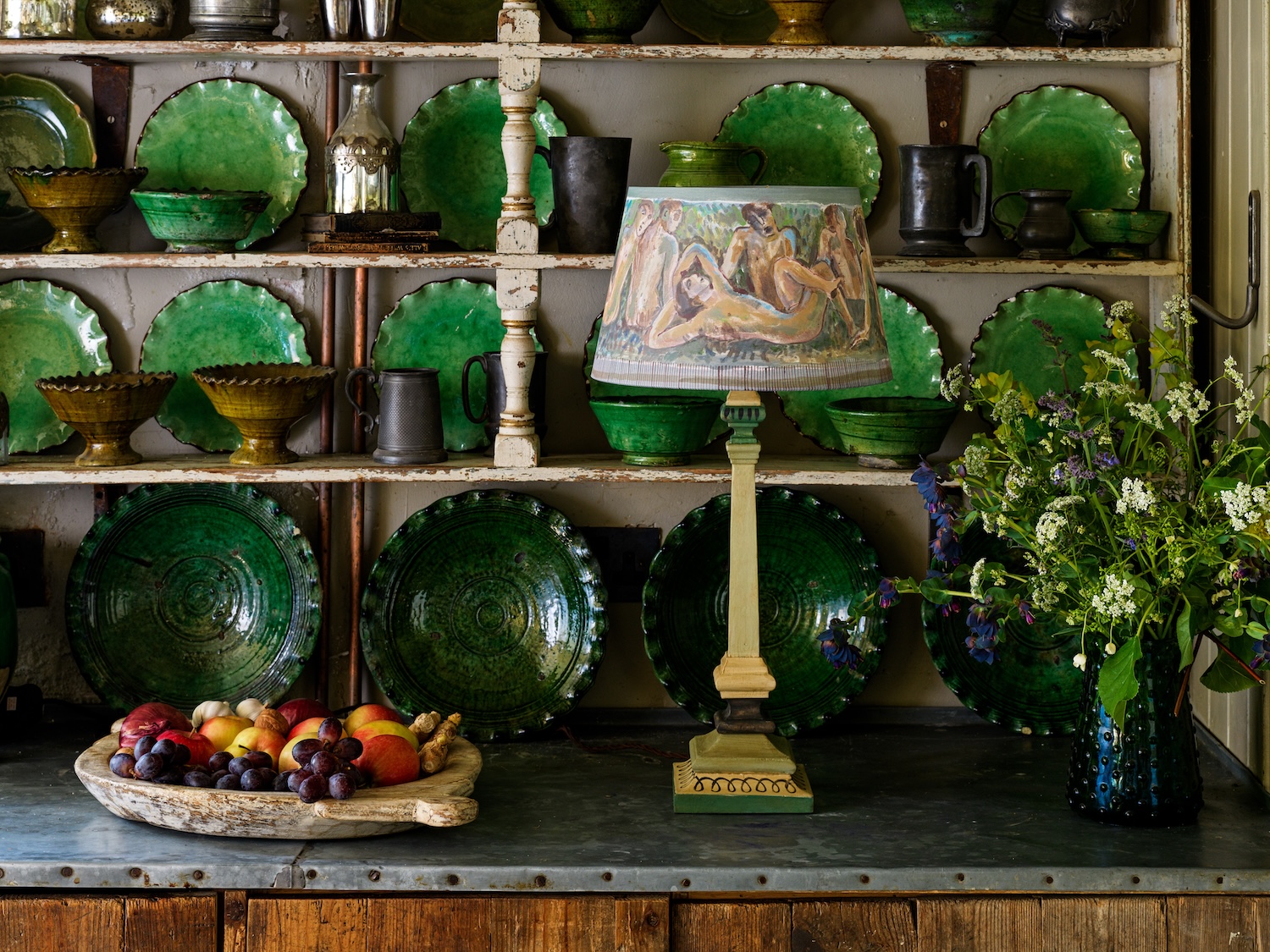
With Bathers, the references turn explicitly towards painting. Groups of loosely rendered figures appear beside water in muted greens, blues and earthy flesh tones, recalling the long artistic tradition of the bathing scene.
“Artists have always been drawn to the challenge of painting figures and water,” says McCall. “I often think Duncan Grant would have appreciated those great bathing scenes. There is something endlessly fascinating about describing the human body and water through paint.”
That reference to Grant feels especially fitting for a brand so closely inspired by the Bloomsbury world, where domestic life, art and decoration were rarely treated as separate pursuits.
Horses in Motion
Elsewhere, Lambourne celebrates another of McCall’s enduring subjects: horses.
Rather than appearing neatly posed, they charge around the shade in sweeping strokes of brown, green and ochre, giving the design an appealing sense of speed.
“I never tire of painting horses,” McCall says. “Their movement, elegance and spirit have always inspired me. At Bloomsbury Revisited we love everything about them, and they race around a lampshade rather splendidly.”
The result feels particularly suited to the brand: distinctly British, slightly eccentric and much more interesting than a conventional decorative motif.
The Human Form as Pattern
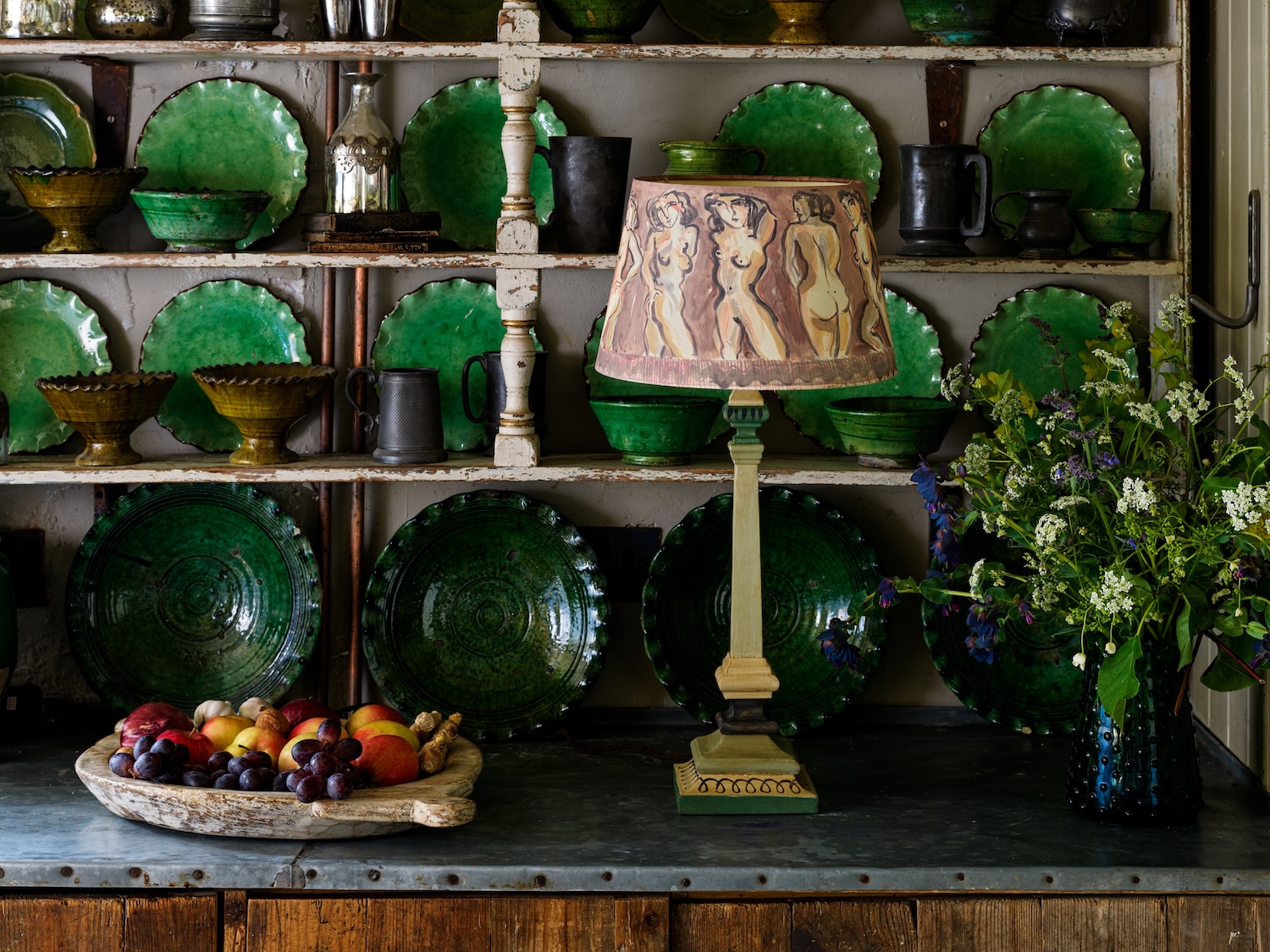
The collection’s Nudes design takes perhaps the most painterly approach of all. Figures move around the shade in loose, expressive outlines, the bodies becoming pattern as much as subject.
For McCall, it draws on more than four decades of working from life.
“Having been drawing and painting the human figure from life for over forty years now, it’s fun to use ideas on a lampshade,” she says. “Bodies make some of the best marks and patterns don’t they!”
It is precisely that willingness to blur the boundaries between fine art and the everyday that makes the collection compelling. A lampshade does not have to quietly disappear into a room; it can carry brushstrokes, tell a story, provoke conversation and change the atmosphere when illuminated.
Bloomsbury Revisited’s shades are made with cream linings and beech-gold fittings, with bespoke hand-painted designs also available. The company can produce its lampshades for table lamps, ceiling pendants or US-style finial fittings.
And perhaps that is the appeal of these latest collections. In an age of rooms increasingly assembled from identical references, Bloomsbury Revisited makes a persuasive case for decorating more personally, with flowers you love, memories of summer skies, figures drawn from life and objects that possess the imperfect individuality of something created by an artist’s hand.